Sauvignon blanc: the aromatic grape that gave us cabernet sauvignon
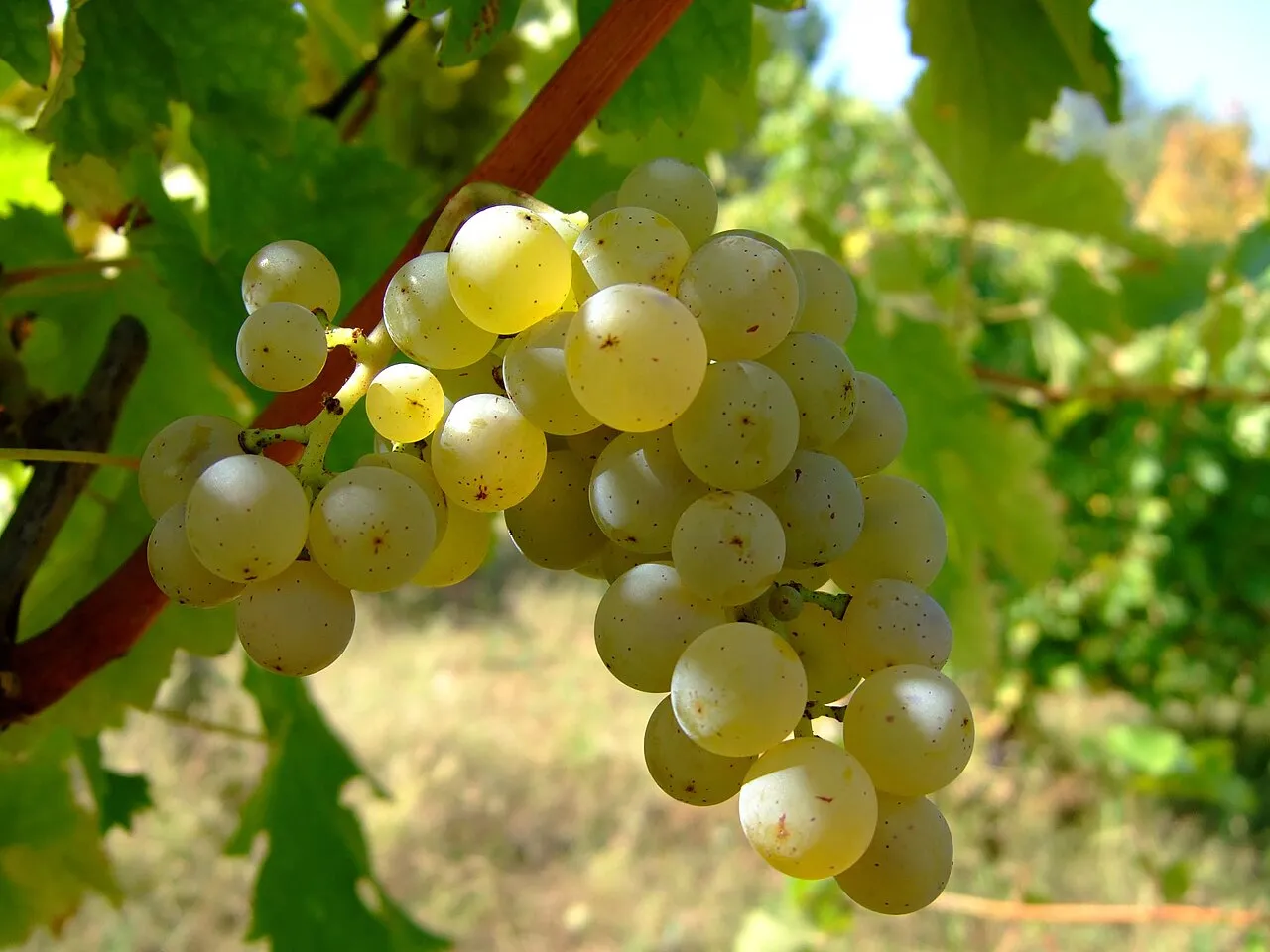
Profile: Sauvignon blanc
| Berry colour | White grape (B) |
|---|---|
| Species / status | Vitis vinifera |
| Origin | France, Loire Valley or South-West France |
| Parentage | Probable descendant of savagnin (DNA analysis); parent of cabernet sauvignon with cabernet franc |
| Synonyms | Sauvignon, Blanc fumé, Fumé blanc (California) |
| French regions | Bordeaux, Burgundy, Languedoc-Roussillon, Loire Valley, Provence, South-West France |
| Grown in | France, New Zealand, Chile, South Africa, United States, Australia, Italy, Austria |
| Typical aromas | citrus (grapefruit, lime), boxwood, blackcurrant bud, cut grass, passion fruit, gunflint |
| Wine style | Lively, expressive dry whites, from the mineral Loire style to the exuberant New Zealand style, plus sweet wines blended with sémillon. |
| Food pairings | goat's cheese (crottin de Chavignol), seafood and grilled fish, asparagus, dishes with fresh herbs |
| Identifiers | VIVC no. 10790, Wikidata Q44542 |
Origin: a grape from central-western France
Sauvignon blanc is a French grape whose birthplace is most probably the Loire Valley, although an origin in South-West France is also put forward. Its name is often linked to the French word sauvage (wild), in reference to leaves said to resemble those of the wild vine, without formal proof.
It has long been grown both in the Centre-Loire (Sancerre, Pouilly) and in Bordeaux, where it is paired with sémillon for dry and sweet whites.
Parentage: son of savagnin, father of cabernet sauvignon
Genetics has clarified the place of sauvignon blanc in the family of French grapes.
- Upstream: ongoing research links it to savagnin, the grape of vin jaune, of which it is thought to be a direct descendant. Chenin shares the same link with savagnin.
- Downstream: DNA analyses by the University of California, Davis, published in the late 1990s, showed that cabernet sauvignon was born of a natural cross between cabernet franc and sauvignon blanc, probably in Bordeaux in the 18th century.
It is one of the most spectacular cases of parentage revealed by DNA: an aromatic white grape is the father of the world’s most famous red grape. For the method, see the guide on DNA parentage of grape varieties.
Sauvignon also has colour mutations: sauvignon gris (or sauvignon rose), with pinkish berries, is grown in small quantities, notably in Bordeaux and the Loire.
In the vineyard
Sauvignon blanc is a vigorous grape, with fairly late budburst and rather early ripening. Its bunches are small and compact, which makes it susceptible to grey rot; it is also susceptible to powdery mildew and trunk diseases.
Its vigour has to be controlled: too much yield or foliage gives wines dominated by vegetal notes. Conversely, overripe grapes lose their freshness. The choice of harvest date is therefore decisive.
The wines: the chemistry of aromas
Sauvignon blanc is one of the so-called aromatic grapes. Two families of molecules explain its profile:
| Family of molecules | Associated aromas | What favours them |
|---|---|---|
| Methoxypyrazines | Green pepper, cut grass, boxwood | Cool climate, underripe grapes, shade on the bunches |
| Volatile thiols | Grapefruit, blackcurrant bud, passion fruit | Ripeness, fermentation (yeasts release the thiols) |
| Reductive sulphur compounds | Gunflint, flint | Certain soils and winemaking protected from air |
Styles vary widely:
- Centre-Loire (Sancerre, Pouilly-Fumé, Menetou-Salon, Quincy, Reuilly): taut, saline wines with notes of citrus and flint. See the grapes of the Loire Valley.
- Touraine: softer, fruitier wines, often labelled with the grape name.
- Bordeaux: dry whites from Entre-deux-Mers, Graves or Pessac-Léognan, often blended with sémillon, sometimes aged in barrel. See the grapes of Bordeaux.
- Sweet wines: Sauternes, Barsac, Monbazillac, as a supporting grape to sémillon.
Where it is grown
In France, sauvignon blanc is found in the Loire Valley, Bordeaux, South-West France (Bergerac, Côtes de Duras, Côtes de Gascogne) and as IGP in the Languedoc. It is also widely planted abroad.
New Zealand, and in particular the Marlborough region, built its international reputation on this grape from the 1980s, with a very expressive, thiol-rich style. Chile, South Africa, California, Australia, north-eastern Italy and Austrian Styria also produce it.
Fumé blanc, sauvignonasse: the pitfalls of the name
The name “sauvignon” has created several confusions that are worth knowing when reading a label:
- Fumé blanc: a marketing term launched by Robert Mondavi in California in 1968, in reference to Pouilly-Fumé. It denotes a sauvignon blanc, often aged in barrel.
- Sauvignonasse: a different grape (also known as friulano or sauvignon vert). In Chile, some of the vines sold as sauvignon blanc were in fact sauvignonasse, a confusion that ampelographers began to unravel in the early 1990s.
- Pouilly-Fumé and Pouilly-Fuissé: the first is a Loire sauvignon, the second a chardonnay from the Mâconnais. The comparison chardonnay or sauvignon blanc details what sets the two grapes apart.
On these questions of vocabulary, see also the guide synonyms and homonyms.
Genealogy of Sauvignon blanc
Identified parents (Wikidata): Savagnin.
Offspring profiled on this site: Cabernet sauvignon.
Further reading
- Chardonnay or sauvignon blanc: 10 differences to know
- Grape DNA parentage: how genetics rewrote history
- Clones and mass selection: how a grape variety is propagated
- Ampelography: identifying a grape variety by its leaves and bunches
- Grape name on the label: the 85% rule
- Single-varietal or blend: two philosophies of wine
Frequently asked questions
What is the difference between sauvignon blanc and cabernet sauvignon?
Sauvignon blanc is a white grape; cabernet sauvignon is a red grape. Yet they belong to the same family: DNA analyses published in the late 1990s showed that cabernet sauvignon comes from a natural cross between cabernet franc and sauvignon blanc. Sauvignon blanc is therefore one of the two parents of cabernet sauvignon.
Why does sauvignon blanc smell of boxwood or grapefruit?
These aromas come from two families of molecules. Methoxypyrazines give the vegetal notes (green pepper, grass, boxwood), especially in underripe grapes. Volatile thiols, released during fermentation, bring the notes of grapefruit, blackcurrant bud and passion fruit.
Are Pouilly-Fumé and Pouilly-Fuissé the same wine?
No. Pouilly-Fumé is a Loire wine, from Pouilly-sur-Loire (Nièvre), made from sauvignon blanc. Pouilly-Fuissé is a Burgundy wine, from the Mâconnais, made from chardonnay. Only the similarity of the names brings them together.
Is sauvignon blanc used for sweet wines?
Yes, in blends. In Sauternes, Barsac and the other sweet wines of Bordeaux and Bergerac, it accompanies sémillon, often with a little muscadelle. It brings freshness and acidity to grapes affected by noble rot.
Related grapes
- Sémillon (white, France, Bordeaux region)
- Chenin blanc (white, France, Loire Valley (Anjou-Touraine))
- Savagnin (white, Europe, precise origin debated (Jura and Central Europe))
- Chardonnay (white, France, Burgundy)
- Colombard (white, France, Charentes)
- Gros manseng (white, France, Pyrenean foothills (Béarn, Basque Country))
- Trousseau (black, France, Jura)
- Duras (black, France, Tarn (Gaillac))