Cabernet franc or cabernet sauvignon: the parent and the child
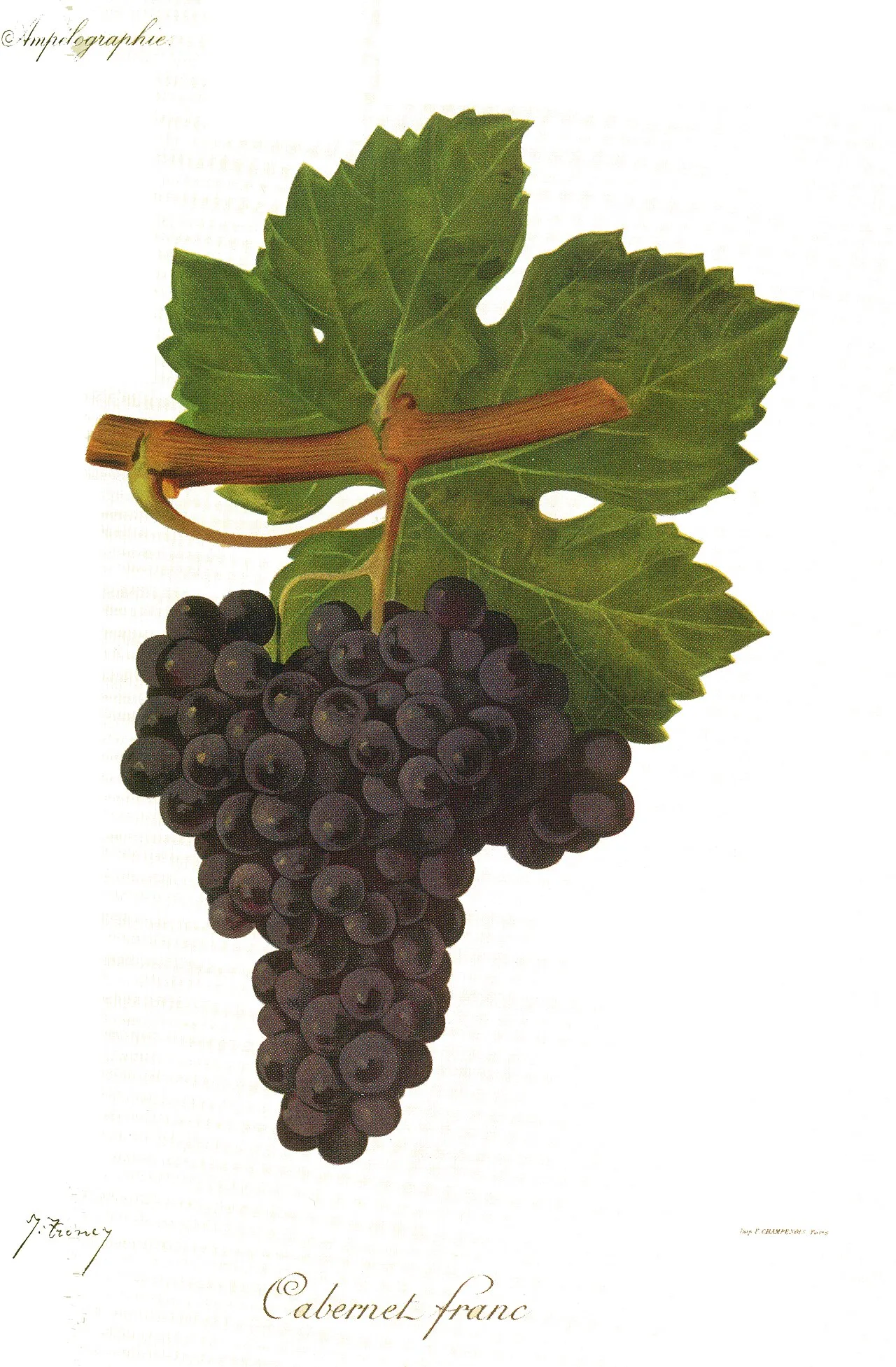
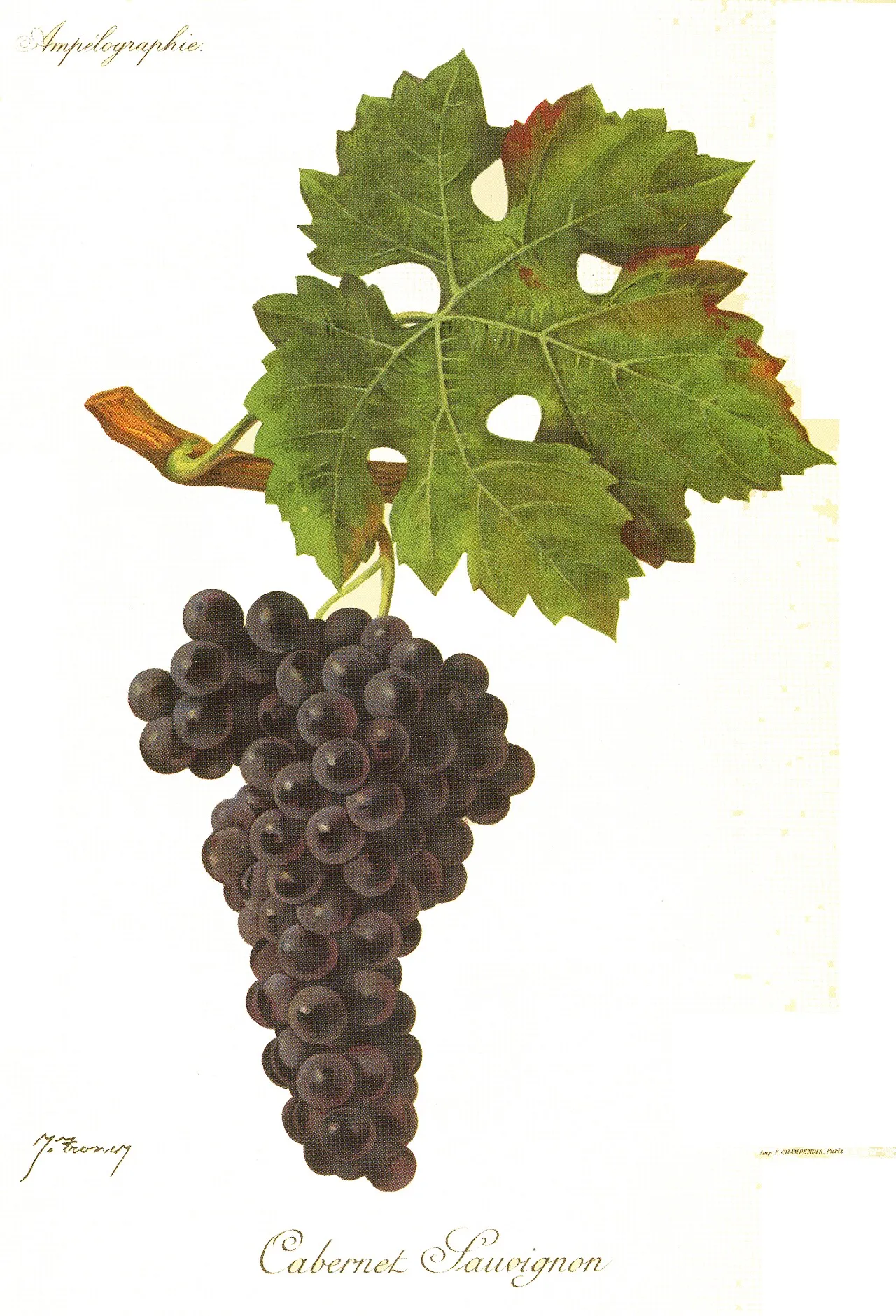
Cabernet franc and Cabernet sauvignon: side-by-side comparison
| Criterion | Cabernet franc | Cabernet sauvignon |
|---|---|---|
| Origin | South-west France, established in the Libournais in the 17th century | Bordeaux region |
| Parentage | Parent of cabernet sauvignon, merlot and carménère | Cabernet franc × sauvignon blanc (DNA analysis, 1997) |
| Berry colour | Black, thinner skin | Black, small thick-skinned berries |
| Ripening | Buds and ripens about a week earlier | Late |
| Favourable climate | Temperate and cool (Loire), limestone and clay soils | Warmer, free-draining gravel soils |
| Aromas | Raspberry, cherry, violet, pencil lead, green pepper if underripe | Blackcurrant, cedar, mint, green pepper if underripe |
| Structure | Medium body, fine tannins, fresh acidity | Fuller body, firm tannins, deeper colour |
| Regions | Loire (Touraine, Saumur, Anjou), Bordeaux Right Bank | Bordeaux Left Bank, worldwide |
| Flagship appellations | Chinon, Bourgueil, Saumur-Champigny, Saint-Émilion | Pauillac, Saint-Julien, Margaux, Pessac-Léognan |
| Ageing | Often drunk young; the best age well | Long ageing |
| Food pairings | Charcuterie, poultry, rillettes, goat's cheeses | Red meat, lamb, game, mature cheeses |
Verdict: fragrance versus power
Cabernet franc makes lighter, fresher and more fragrant wines; cabernet sauvignon makes darker, more tannic wines, better built for ageing. The first excels in temperate climates, the second needs warmth. They are not two variants of the same grape, but a parent and its descendant.
A lineage established by DNA
Cabernet franc is an old grape from south-west France, established in the Libournais in the 17th century. Cabernet sauvignon was born later from a spontaneous cross between cabernet franc and sauvignon blanc. This parentage was demonstrated in 1997 by Carole Meredith’s team at the University of California, Davis.
Cabernet franc is also one of the parents of merlot and carménère. It is therefore the common stock of most of the great Bordeaux grapes (see DNA parentage of grape varieties).
In the vineyard: a week apart
Cabernet franc buds and ripens at least a week before cabernet sauvignon. This relative earliness allows it to ripen in cooler regions, such as Touraine or Anjou, where cabernet sauvignon struggles to reach ripeness.
Cabernet sauvignon, with small thick-skinned berries, is later-ripening and more resistant to rot. It needs warm soils, such as the gravels of the Médoc.
In the glass
Cabernet franc suggests raspberry, cherry, violet and sometimes pencil lead. Its tannins are finer, its acidity livelier. In cool years, notes of green pepper or leaf appear.
Cabernet sauvignon suggests blackcurrant, cedar and mint. It is deeper in colour, more tannic, and often benefits from several years of ageing.
Where they are found
Cabernet franc is the great red grape of the Loire Valley: Chinon, Bourgueil, Saint-Nicolas-de-Bourgueil, Saumur-Champigny, Anjou. In Bordeaux, it plays an important role on the Right Bank, blended with merlot, notably in Saint-Émilion. It is also grown in South-West France and in the Basque Country, where it is known as acheria.
Cabernet sauvignon dominates the Left Bank of Bordeaux and has spread throughout the world: California, Chile, Australia, South Africa, Italy.
When to choose one or the other
Choose a Loire cabernet franc for a fresh, fruity red, served lightly chilled with charcuterie, poultry or a goat’s cheese. Terroir cuvées (tuffeau, clay-limestone) also offer fine bottles for ageing.
Choose a cabernet sauvignon for a structured red to lay down, with red meat, lamb or game.
To complete the family picture, see merlot or cabernet sauvignon.
Frequently asked questions
Is cabernet franc the parent of cabernet sauvignon?
Yes. In 1997, a DNA analysis published by Bowers and Meredith showed that cabernet sauvignon is the result of a natural cross between cabernet franc and sauvignon blanc. Cabernet franc is also one of the parents of merlot and carménère.
Which of the two is lighter?
In general, cabernet franc. It makes less coloured and less tannic wines, with livelier fruit, above all in the Loire. A cabernet franc from a warm terroir or old vines can, however, be as structured as a cabernet sauvignon.
Why does cabernet franc sometimes smell of green pepper?
Both cabernets contain methoxypyrazines, compounds responsible for green pepper notes. They decrease as the grapes ripen. Cabernet franc, grown in cool climates, can keep these notes when the grapes are picked underripe.
What is cabernet franc called in the Loire?
It is traditionally called "breton" there. In the Bordeaux region, it has also been known as "bouchet", notably in Saint-Émilion and Pomerol.