The grape varieties of the Rhône Valley
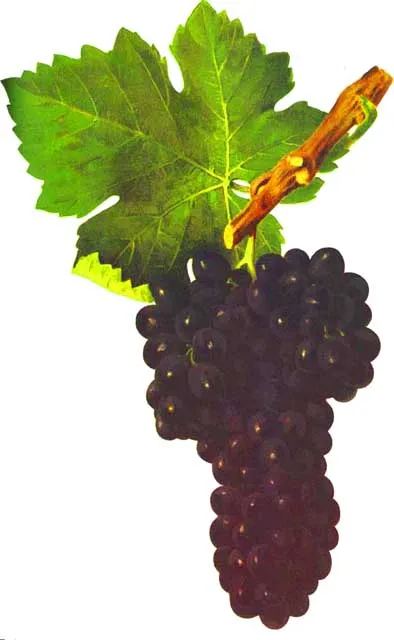
Main grapes: Rhône Valley
Secondary and minor grapes
- Cinsault (black, France, Languedoc (probable))
- Carignan (black, Spain, Aragon (Cariñena region))
- Clairette (white, France, Midi)
- Piquepoul blanc (white, France, Languedoc)
- Muscat à petits grains (white, Mediterranean basin (precise origin unknown))
- Marselan (black, France, Hérault (Languedoc))
- Ugni blanc (white, Italy, central Italy)
- Vermentino (white, Western Mediterranean (exact origin unknown))
Other grapes grown: Grenache blanc, Grenache gris, Bourboulenc, Counoise, Vaccarèse, Muscardin, Terret noir, Picardan, Calitor, Caladoc.
Two vineyards, two approaches
The wine-growing Rhône Valley is divided into two areas separated by a zone almost without vines, south of Valence.
- The northern Rhône, from Vienne to Valence, with steep slopes of granite and schist, is a single-varietal vineyard: syrah for reds.
- The southern Rhône, from Montélimar to Avignon and beyond, with soils of rounded pebbles, limestone and sand, is a blending vineyard dominated by grenache noir.
The comparison grenache or syrah sums up what distinguishes these two pillars.
The northern Rhône
| Appellation | Colour | Grapes |
|---|---|---|
| Côte-Rôtie | Red | Syrah, with up to 20% viognier |
| Condrieu | White | Viognier |
| Château-Grillet | White | Viognier |
| Saint-Joseph | Red / white | Syrah (up to 10% marsanne and roussanne) / marsanne, roussanne |
| Crozes-Hermitage | Red / white | Syrah (marsanne and roussanne as complements) / marsanne, roussanne |
| Hermitage | Red / white | Syrah (up to 15% marsanne and roussanne) / marsanne, roussanne |
| Cornas | Red | Syrah exclusively |
| Saint-Péray | White, sparkling | Marsanne, roussanne |
Marsanne and roussanne are often blended in the whites; their differences are explained in marsanne or roussanne. Viognier, almost vanished in the 1960s, is now planted worldwide.
The southern Rhône
The south is dominated by grenache noir, a late-ripening, drought-resistant grape that brings alcohol, roundness and fruit. It is almost always blended with:
- syrah, for colour and structure;
- mourvèdre, for tannins and ageing potential;
- cinsault, for finesse, especially in rosés;
- carignan, as a complement.
| Appellation | Colour | Dominant grapes |
|---|---|---|
| Côtes du Rhône | Red, rosé | Grenache, syrah, mourvèdre as principal grapes |
| Côtes du Rhône Villages | Red | Mainly grenache, with syrah and mourvèdre |
| Châteauneuf-du-Pape | Red, white | Mainly grenache in red; up to thirteen historic grapes |
| Gigondas, Vacqueyras, Rasteau, Cairanne | Red | Mainly grenache, with syrah and mourvèdre |
| Tavel | Rosé only | Grenache, cinsault, among others |
| Lirac | Red, rosé, white | Grenache, syrah, mourvèdre, cinsault |
| Beaumes-de-Venise (muscat) | Vin doux naturel | Muscat à petits grains |
| Clairette de Die | Sparkling | Muscat à petits grains and clairette |
For whites, the south blends grenache blanc, clairette, bourboulenc, roussanne, viognier and marsanne, as well as picpoul in some appellations.
The thirteen grapes of Châteauneuf-du-Pape
Châteauneuf-du-Pape is famous for its list of thirteen historic grapes, red and white, that may go into its wines. Alongside grenache, syrah, mourvèdre and cinsault, it includes varieties that have become rare: counoise, vaccarèse, muscardin, terret noir, as well as whites such as clairette, bourboulenc, roussanne and picpoul. The specification sets no minimum for any grape, but grenache remains the large majority.
Known grape rules
The specifications distinguish principal and accessory grapes, with thresholds most often expressed on the estate’s plantings. For Côtes du Rhône, the principal grapes in red are grenache, syrah and mourvèdre. The thresholds have been revised several times; refer to the latest approved version, available on the INAO website (see reading an AOC specification).
Forgotten grapes and recent developments
Counoise, vaccarèse, muscardin and terret noir nearly disappeared; they are attracting renewed interest for their freshness and moderate alcohol. With warming, the southern Rhône is seeking to limit rising alcohol levels and falling acidity. Adaptation varieties such as marselan or caladoc are grown mainly as IGP and studied by some appellations.
Frequently asked questions
What is the grape of the northern Rhône?
Syrah is the only black grape of the great northern appellations: Côte-Rôtie, Hermitage, Crozes-Hermitage, Saint-Joseph and Cornas. It may be complemented there by white grapes in some appellations (viognier in Côte-Rôtie, marsanne and roussanne in Hermitage and Saint-Joseph), but Cornas is 100% syrah.
How many grape varieties are permitted in Châteauneuf-du-Pape?
Thirteen grapes are traditionally mentioned. The specification lists more, around eighteen, because it counts colour variants separately (grenache noir, blanc and gris, for example). Grenache is the large majority there, with no required minimum.
What is the difference between Côtes du Rhône and Côtes du Rhône Villages?
Both mainly combine grenache, syrah and mourvèdre for reds. Côtes du Rhône Villages comes from a more restricted area, with stricter rules on grapes and yields, including a minimum share of grenache in the plantings.
Which grape is Condrieu made from?
Condrieu is made solely from viognier, as is Château-Grillet, a small appellation enclosed within its area. Viognier makes broad whites with aromas of apricot, peach and flowers.