The grape varieties of the Loire Valley
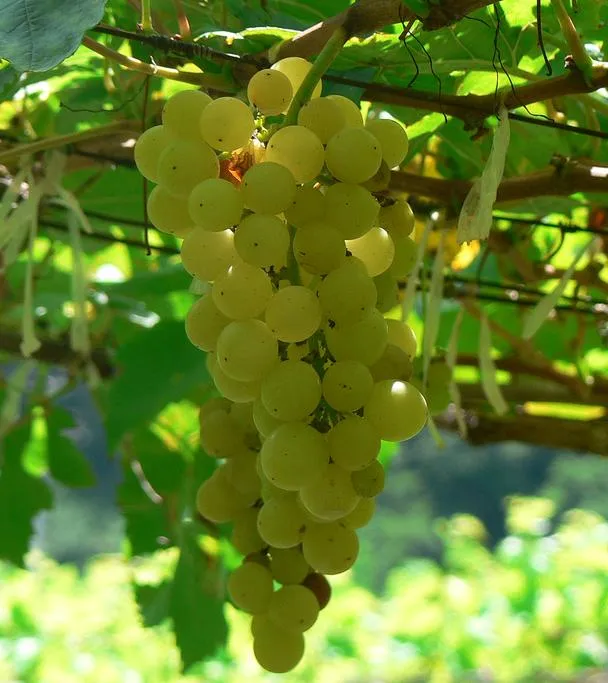
Main grapes: Loire Valley
- Chenin blanc (white, France, Loire Valley (Anjou-Touraine))
- Sauvignon blanc (white, France, Loire Valley or South-West France)
- Cabernet franc (black, France, South-West (Libournais probable))
- Melon de Bourgogne (white, France, Burgundy)
Secondary and minor grapes
- Gamay (black, France, Burgundy)
- Malbec (Côt) (black, France, Quercy (Lot))
- Pinot noir (black, France, Burgundy)
- Cabernet sauvignon (black, France, Bordeaux area)
- Chardonnay (white, France, Burgundy)
- Chasselas (white, Switzerland, west of the country (Lake Geneva region))
- Pinot meunier (black, France, north-east (pinot mutation))
- Pinot gris (grey, France, Burgundy (pinot mutation))
Other grapes grown: Grolleau, Grolleau gris, Pineau d'Aunis, Romorantin, Folle blanche, Tressallier, Menu pineau (arbois).
The longest vineyard in France
The Loire Valley is a group of vineyards spread along the Loire and its tributaries, from the Auvergne to the estuary. It offers one of the most varied ranges of grapes in France, with no single dominant grape at regional level.
It is generally divided into four main areas, to which are added more isolated vineyards upstream.
The sub-regions
- Pays nantais: the domain of melon de Bourgogne, the grape of muscadet, and of folle blanche for gros-plant.
- Anjou-Saumur: the kingdom of chenin (dry, medium-sweet, sweet and sparkling wines) and cabernet franc, with grolleau for rosés.
- Touraine: chenin in Vouvray and Montlouis, cabernet franc in Chinon and Bourgueil, sauvignon, gamay and côt in the Touraine appellation.
- Centre-Loire: sauvignon blanc in Sancerre, Pouilly-Fumé, Menetou-Salon, Quincy and Reuilly; pinot noir for red and rosé.
- Upstream and outlying vineyards: Saint-Pourçain, Côte roannaise, Côtes du Forez, Châteaumeillant, Coteaux du Vendômois, Haut-Poitou, Fiefs vendéens.
Grapes by main appellation
| Appellation | Colour | Principal grape(s) |
|---|---|---|
| Muscadet (and designations) | White | Melon de Bourgogne |
| Gros-plant du Pays nantais | White | Folle blanche |
| Savennières, Coteaux du Layon, Quarts de Chaume | White | Chenin |
| Anjou rouge, Saumur-Champigny | Red | Cabernet franc (cabernet sauvignon possible) |
| Rosé d’Anjou | Rosé | Grolleau, cabernets, gamay, côt, among others |
| Vouvray, Montlouis-sur-Loire | White, sparkling | Chenin |
| Chinon, Bourgueil | Red | Cabernet franc |
| Touraine | Red, white, rosé | Gamay, côt, cabernet franc; sauvignon blanc |
| Cour-Cheverny | White | Romorantin |
| Sancerre, Menetou-Salon | White / red | Sauvignon blanc / pinot noir |
| Pouilly-Fumé | White | Sauvignon blanc |
| Pouilly-sur-Loire | White | Chasselas |
| Coteaux du Vendômois | Rosé (gris), red | Pineau d’Aunis |
| Saint-Pourçain | White | Chardonnay and tressallier, among others |
The great grapes
Chenin is the most versatile grape of the Loire. Its high acidity and its susceptibility to noble rot allow every style, from the mineral dry wines of Savennières to the sweet wines of the Layon. It also produces a large share of the sparkling wines (Crémant de Loire, sparkling Vouvray and Saumur).
Sauvignon blanc finds its most famous expression in the Centre-Loire, on flint, limestone and marl. The comparison chardonnay or sauvignon blanc shows what sets it apart from the neighbouring Burgundy whites.
Cabernet franc, locally called breton, is the great red grape of Touraine and Saumur. Its fresh, fragrant wines (red fruit, violet, sometimes green pepper) are detailed in cabernet franc or cabernet sauvignon.
Melon de Bourgogne is Burgundian in name only: driven out of Burgundy, it found refuge in the Pays nantais, where its spread is traditionally associated with the replanting that followed the great winter of 1709.
The secondary grapes
- Gamay is present in Touraine, the Côte roannaise and the Côtes du Forez.
- Côt, the local name for malbec, is historic in Touraine.
- Chasselas survives in Pouilly-sur-Loire, where it long dominated before sauvignon.
- Pinot meunier and pinot gris (locally called malvoisie in the Coteaux d’Ancenis) go into little-known wines such as Touraine Noble-Joué.
Forgotten grapes and revivals
Pineau d’Aunis, a black grape with a peppery character, has been saved in the Loir valley and the Coteaux du Vendômois. Romorantin, a rare white grape, is the signature of Cour-Cheverny. Tressallier is specific to Saint-Pourçain. Menu pineau (or arbois), grolleau gris and folle blanche complete this list of local grapes, several of which are enjoying renewed interest among growers.
Recent developments
Warming benefits the ripening of cabernet franc, whose vegetal notes are fading, and the consistency of the sweet wines. It also exposes the vines to spring frosts and episodes of drought. The interprofession and several appellations are studying new varieties, including resistant grape varieties, to prepare for the future.
Frequently asked questions
What are the main grape varieties of the Loire?
For whites, chenin (Anjou, Saumur, Vouvray, Montlouis), sauvignon blanc (Sancerre, Pouilly-Fumé, Touraine) and melon de Bourgogne (muscadet). For reds, cabernet franc dominates (Chinon, Bourgueil, Saumur-Champigny), followed by gamay, côt and pinot noir.
Which grape is muscadet made from?
Muscadet is made exclusively from melon de Bourgogne, a white grape born in Burgundy from a cross between pinot and gouais blanc. It is often aged on its lees, which gives it texture and a slight spritz.
What is romorantin?
It is a rare white grape, grown around Cheverny, and the only grape of the Cour-Cheverny appellation. It makes dry, acidic wines with good ageing potential, sometimes sweet in great years.
Does the Loire Valley produce red wines?
Yes. Cabernet franc makes fresh, fragrant reds there, notably in Chinon, Bourgueil, Saint-Nicolas-de-Bourgueil and Saumur-Champigny. Pinot noir is grown in Sancerre and Menetou-Salon, gamay and côt in Touraine, pineau d'Aunis in the Coteaux du Vendômois.