Syrah or shiraz: what is the difference?
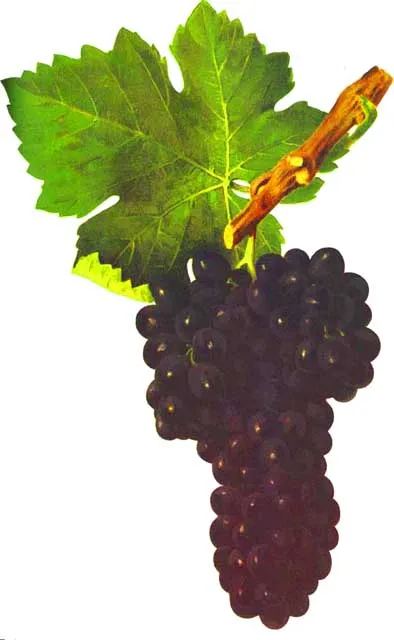
Syrah and Shiraz: side-by-side comparison
| Criterion | Syrah | Shiraz |
|---|---|---|
| Nature | Original name of the grape, used in France and most European countries | Synonym for the same grape, adopted in Australia and South Africa |
| Origin | France, Rhône Valley | Same origin: vines imported into Australia in the 1830s |
| Parentage | Dureza × mondeuse blanche (DNA analysis) | Identical |
| Typical climate | Temperate to Mediterranean (northern Rhône, Languedoc) | Hot and sunny (Barossa Valley, McLaren Vale) |
| Dominant aromas | Black pepper, violet, black olive, fresh black fruit | Very ripe black fruit, jam, chocolate, sweet spices, eucalyptus |
| Structure | Marked acidity, firm tannins, moderate alcohol | Full body, higher alcohol, rounded tannins |
| Usual ageing | Used barrels or large casks, discreet oak | More new oak, often American oak |
| Flagship appellations | Hermitage, Côte-Rôtie, Cornas, Saint-Joseph, Crozes-Hermitage | Barossa Valley, McLaren Vale, Hunter Valley |
| Common blends | With grenache and mourvèdre in the southern Rhône; with viognier in Côte-Rôtie | With cabernet sauvignon or in GSM blends |
| Food pairings | Game, lamb with herbs, peppery dishes | Grilled meats, barbecue, spicy and sweet-and-savoury dishes |
Verdict: one grape, two signatures
Syrah and shiraz refer to exactly the same grape. The difference is not botanical but cultural and stylistic. A wine labelled “syrah” most often aims for the freshness, pepper and tautness of the northern Rhône. A wine labelled “shiraz” generally announces a sunnier, riper and more generous style, inherited from Australia.
This rule is not compulsory: some cool-climate Australian producers choose the name syrah to signal a more restrained style, and vice versa.
A single origin: the Rhône Valley
Syrah was born in south-eastern France. A genetic study carried out in the late 1990s by Carole Meredith’s team (University of California, Davis), with French researchers, established that it descends from a natural cross between dureza, a black grape from the Ardèche, and mondeuse blanche, a grape from Savoie. It is therefore related to mondeuse noire.
The stories that have it coming from Shiraz, in Persia, or from Syracuse, in Sicily, rest on no evidence. The guide DNA parentage of grape varieties explains how these lineages are established.
Where does the name shiraz come from?
Syrah was introduced into Australia in the early 1830s, notably with the collection of cuttings gathered in Europe by James Busby. The names recorded at the time (“scyras”, “ciras”) evolved into shiraz, which took hold throughout the country. South Africa also widely uses this name.
On the question of multiple names for the same grape, see the guide synonyms and homonyms.
The differences that matter in the glass
Climate is the first factor. On the granite slopes of Côte-Rôtie or Hermitage, syrah ripens slowly and keeps its acidity; it develops aromas of black pepper (linked to rotundone), violet and olive. In the hotter Barossa Valley, the grapes reach higher ripeness: candied black fruit, more marked alcohol, denser texture.
Winemaking widens the gap. The classic shiraz style makes more use of new oak, often American, which brings notes of vanilla, coconut or chocolate. The Rhône syrah style often favours used barrels or large casks.
Blending also differs. In the southern Rhône, syrah complements grenache and mourvèdre; in Côte-Rôtie, it can be co-fermented with a little viognier. Australia makes shiraz-cabernet blends and “GSM” blends (grenache, shiraz, mourvèdre), directly inspired by the Rhône.
When to choose one or the other
Choose a Rhône-style syrah if you like digestible, peppery, taut reds, to serve with game, lamb with herbs or bistro cooking. The northern Rhône appellations are the reference; Languedoc and neighbouring Savoie offer other expressions. See the grapes of the Rhône Valley.
Choose an Australian-style shiraz if you are looking for a powerful, fruity, enveloping wine, suited to grilled meats and spicy dishes.
In both cases, read the label beyond the name: the production region, the climate and the ageing say more than the choice between syrah and shiraz. To compare syrah with its southern partner, see grenache or syrah.
Not to be confused
Petite sirah is not a syrah: it is durif, the result of a cross between syrah and peloursin. The similarity of the names fuels the confusion, notably in the United States.
Frequently asked questions
Are syrah and shiraz the same grape?
Yes. It is a single, genetically identical vine variety. Shiraz is the name adopted in Australia in the 19th century, which became common in several New World countries. On a label, the choice of name mainly tells you about the style the producer is aiming for.
Does syrah come from the city of Shiraz, in Iran?
No. It is a persistent legend. DNA analyses have shown that syrah descends from two grapes of south-eastern France, dureza and mondeuse blanche. It is therefore native to the Rhône Valley, with no link to Persia.
Is petite sirah a syrah?
No. Petite sirah, grown mainly in California, is durif, a grape bred in France in the 19th century by crossing syrah and peloursin. It is therefore a descendant of syrah, not a synonym.
Why do Rhône wines not state "syrah" on the label?
In Rhône AOCs, it is the appellation that is put forward: Hermitage, Cornas or Côte-Rôtie are enough to indicate a syrah-based wine. The grape name appears more often on IGP wines and Vins de France, as well as on New World wines.