The grape varieties of Beaujolais
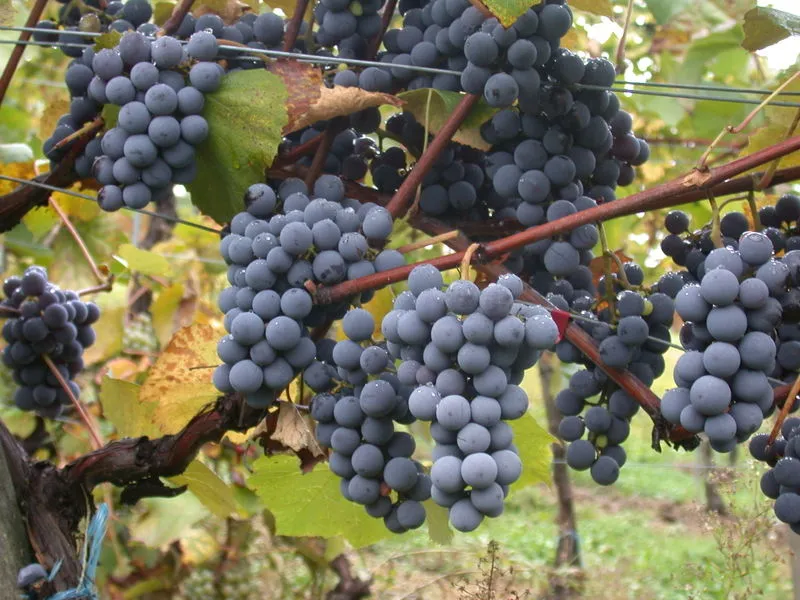
Main grapes: Beaujolais
- Gamay (black, France, Burgundy)
Secondary and minor grapes
- Chardonnay (white, France, Burgundy)
- Pinot noir (black, France, Burgundy)
- Aligoté (white, France, Burgundy)
A vineyard built on a single grape
Beaujolais is a vineyard located between Mâcon and Lyon, mainly in the Rhône department and partly in Saône-et-Loire. It is one of the few great French vineyards to rely almost entirely on a single black grape: gamay.
Gamay found its chosen ground here after being banished from the Côte d’Or at the end of the 14th century. Born of a natural cross between pinot and gouais blanc, it shares its parents with chardonnay and aligoté, as the guide DNA parentage of grape varieties explains.
Sub-regions and soils
Beaujolais is divided into two main areas:
- the north, with soils of pink granite, schist and ancient volcanic rock, home to the ten crus and the Beaujolais-Villages appellation;
- the south, also called the “pays des pierres dorées” (land of golden stones), with more clay-limestone soils, which produces mainly the Beaujolais appellation and a large part of Beaujolais nouveau.
This contrast in soils explains much of the diversity of the wines: more structured and suited to ageing on the granites of the north, lighter and fruitier in the south.
Grapes by appellation
| Appellation | Colour | Grape(s) |
|---|---|---|
| Beaujolais | Red, rosé | Gamay |
| Beaujolais | White | Chardonnay |
| Beaujolais-Villages | Red, rosé, white | Gamay; chardonnay for the whites |
| Beaujolais nouveau (primeur) | Red, rosé | Gamay |
| The ten crus | Red | Gamay |
| Coteaux bourguignons (shared area) | Red, rosé, white | Gamay, pinot noir, chardonnay, among others |
The ten crus are: Brouilly, Côte de Brouilly, Chénas, Chiroubles, Fleurie, Juliénas, Morgon, Moulin-à-Vent, Régnié and Saint-Amour. Régnié is the most recent, recognised in 1988.
Gamay noir à jus blanc
Gamay is an early-ripening, productive grape, with compact bunches and juicy berries. The full name, “gamay noir à jus blanc” (black gamay with white juice), distinguishes it from the teinturier gamays, whose pulp is coloured (see the guide teinturier grapes).
Its wines are recognisable by their fruit (cherry, raspberry, redcurrant), their supple tannins and their freshness. The most structured crus, such as Moulin-à-Vent or Morgon, can age for several years. The comparison with its Burgundian neighbour is detailed in gamay or pinot noir.
Beaujolais winemaking
Semi-carbonic maceration is the traditional winemaking method of the region: whole bunches are placed in the vat, and some of the berries ferment inside before bursting. This technique accentuates the fruit and limits tannin extraction. Many growers also use more classic methods, with destemming, for the crus intended for ageing.
Secondary grapes
Chardonnay makes white Beaujolais, a minority production, mainly in the north of the region, bordering the Mâconnais. Aligoté and pinot noir are present marginally, notably for the regional Burgundy appellations whose area includes Beaujolais.
Known grape rules
The specifications for Beaujolais and the crus require gamay for the reds. They permit, in limited proportion, accessory white grapes (chardonnay, aligoté, melon de Bourgogne) under certain conditions, a practice of interplanting inherited from old vineyards. The detailed thresholds appear in the specifications published by INAO.
Part of the Beaujolais area can also produce some regional Burgundy appellations, such as Coteaux bourguignons, created in 2011, which permit gamay. This administrative link illustrates the closeness between Beaujolais and the rest of Burgundy, even though the two vineyards have quite distinct identities.
Recent developments
Gamay, being early-ripening, is directly affected by climate warming: earlier harvests, higher alcohol levels, risk of drought on shallow granite soils. The vineyard has also shrunk considerably since the early 2000s, owing to the commercial difficulties of Beaujolais nouveau. At the same time, the crus and single-plot winemaking are attracting a new generation of growers.
Frequently asked questions
What is the grape of Beaujolais?
Gamay noir à jus blanc, generally simply called gamay. It is the grape of all red and rosé Beaujolais, including Beaujolais nouveau and the ten crus. White Beaujolais is made from chardonnay.
What are the 10 crus of Beaujolais?
Brouilly, Côte de Brouilly, Chénas, Chiroubles, Fleurie, Juliénas, Morgon, Moulin-à-Vent, Régnié and Saint-Amour. Régnié is the most recently recognised cru, in 1988. All are red gamay wines, located in the north of Beaujolais.
What is the difference between Beaujolais and Burgundy?
Beaujolais is administratively attached to the Burgundy wine region in some classifications, but its red wines rely on gamay, whereas Burgundy reds rely on pinot noir. The soils also differ: granites and ancient volcanic rocks in northern Beaujolais, limestones and marls in the Côte d'Or.
When is Beaujolais nouveau released?
Beaujolais nouveau (or Beaujolais primeur) goes on sale on the third Thursday of November. It is a gamay wine made quickly, often by semi-carbonic maceration, to be drunk young.