The grape varieties of Provence
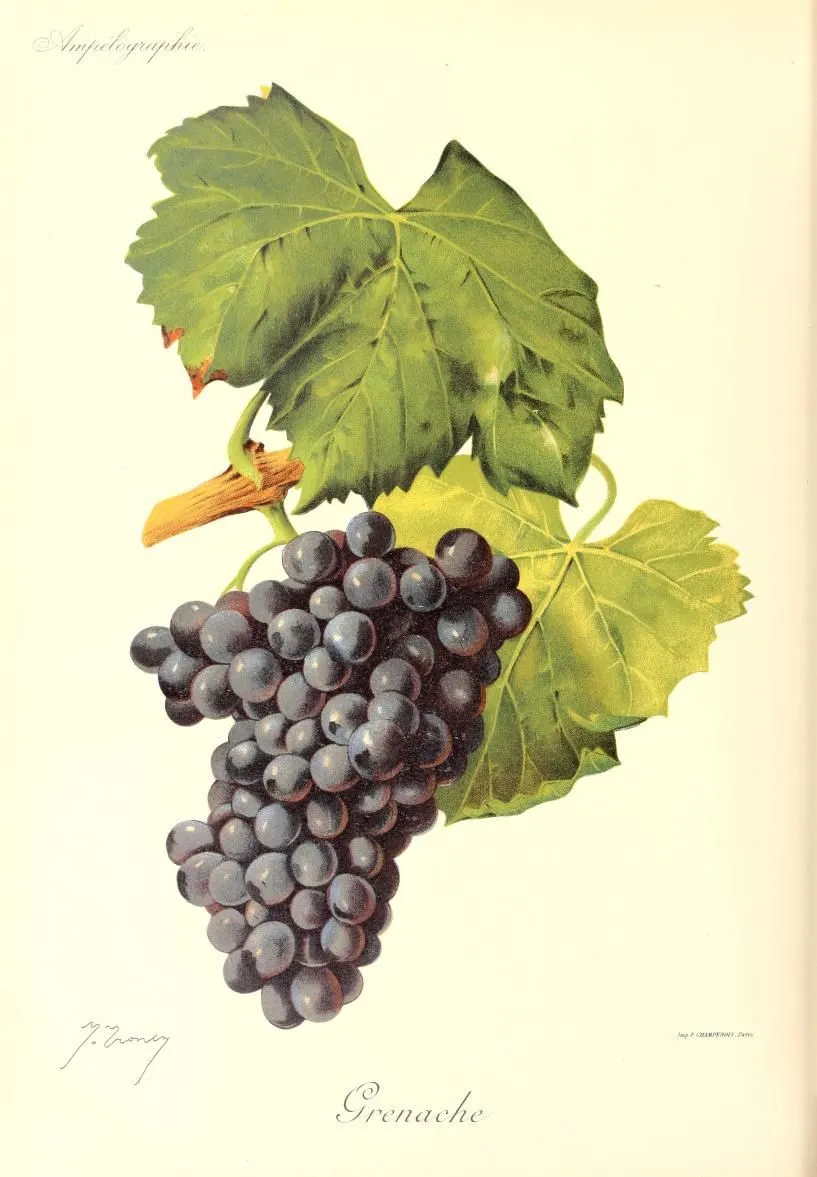
Main grapes: Provence
- Grenache noir (black, Spain, Aragon (origin disputed with Sardinia))
- Cinsault (black, France, Languedoc (probable))
- Syrah (black, France, northern Rhône Valley)
- Mourvèdre (black, Spain, Valencia region)
- Vermentino (white, Western Mediterranean (exact origin unknown))
Secondary and minor grapes
- Carignan (black, Spain, Aragon (Cariñena region))
- Cabernet sauvignon (black, France, Bordeaux area)
- Ugni blanc (white, Italy, central Italy)
- Clairette (white, France, Midi)
- Sémillon (white, France, Bordeaux region)
- Marsanne (white, France, northern Rhône valley)
- Xinomavro (black, Greece, Macedonia)
Other grapes grown: Tibouren, Braquet, Folle noire, Calitor, Barbaroux, Caladoc, Agiorgitiko, Calabrese (nero d'Avola), Moschofilero, Verdejo, Bourboulenc, Grenache blanc.
The rosé vineyard
Wine-growing Provence stretches from the Alpes-Maritimes to the Bouches-du-Rhône, by way of the Var, the historic cradle of the vineyard. It is the leading French vineyard for rosé wines: the great majority of its production is rosé, which strongly steers its grape varieties towards those suited to this style.
The Mediterranean climate, hot and dry, tempered by the mistral, favours heat-resistant grapes.
The appellations
- Côtes de Provence, the largest, with terroir designations: Sainte-Victoire, Fréjus, La Londe, Pierrefeu, Notre-Dame des Anges.
- Coteaux d’Aix-en-Provence and Coteaux Varois en Provence.
- Bandol, Cassis, Bellet and Palette, small historic appellations.
- Les Baux-de-Provence and Pierrevert.
Grapes by appellation
| Appellation | Colour | Dominant grapes |
|---|---|---|
| Côtes de Provence | Rosé, red | Grenache, cinsault, syrah, mourvèdre, tibouren |
| Côtes de Provence | White | Rolle (vermentino), clairette, sémillon, ugni blanc |
| Coteaux d’Aix-en-Provence | Rosé, red | Grenache, cinsault, syrah, mourvèdre, cabernet sauvignon, carignan |
| Coteaux Varois en Provence | Rosé, red | Grenache, cinsault, syrah, mourvèdre |
| Bandol | Red, rosé | Mourvèdre (majority in red), grenache, cinsault |
| Cassis | White | Marsanne, clairette, ugni blanc, among others |
| Bellet | Red, rosé / white | Braquet, folle noire / rolle |
| Palette | Red, rosé, white | A large number of old grapes |
The red and rosé grapes
Grenache noir brings alcohol and roundness to the rosés. Cinsault, lightly coloured, gives them finesse and freshness. Syrah completes them with its colour and aromas.
Mourvèdre is the king grape of Bandol. Late-ripening, it needs heat and the proximity of the sea to ripen. In red, it makes up at least half of the plantings; the wines are aged at least eighteen months in barrel and age for a long time.
Tibouren is the local grape of the Var, with delicate rosés. Carignan and cabernet sauvignon complete the blends, the latter mainly in Coteaux d’Aix-en-Provence and Les Baux.
The white grapes
Vermentino, called rolle in Provence, is the main white grape. It makes aromatic wines (citrus, pear, fennel) and may go into the rosés.
In Cassis, a small appellation on the Mediterranean shore, the whites combine marsanne and clairette, among others.
Known grape rules
- The specifications distinguish principal and accessory grapes, with ceilings for some grapes such as cabernet sauvignon or carignan.
- In Bandol, mourvèdre makes up between 50% and 95% of the plantings for reds, according to the 2022 text.
- Several appellations allow the addition of a share of white grapes, notably rolle, in the rosés.
Local and forgotten grapes
Provence preserves rare grapes: braquet and folle noire in Bellet, on the hills of Nice; barbaroux and calitor, old grapes admitted in a few appellations; and in Palette, near Aix, a collection of old varieties. The Centre de recherche et d’expérimentation sur le vin rosé, in Vidauban, studies the adaptation of grapes to the rosé style.
Recent developments: the adaptation varieties
In response to warming, Côtes de Provence has added varieties of interest for adaptation purposes (VIFA) to its specification, in limited proportions:
| Variety | Origin | Colour |
|---|---|---|
| Agiorgitiko | Greece | Black |
| Calabrese (nero d’Avola) | Sicily | Black |
| Moschofilero | Greece | Pink (Rs) |
| Verdejo | Spain | White |
| Xinomavro | Greece | Black |
Caladoc and rousseli, grapes already known in France, have also been introduced in Côtes de Provence. These varieties remain under observation and may be confirmed or withdrawn. See the guide grape varieties and climate change.
Frequently asked questions
Which grapes make Provence rosé?
Provence rosés mainly blend grenache noir, cinsault and syrah, sometimes with mourvèdre, tibouren or carignan. Rolle (vermentino), a white grape, may also go into the rosés of several appellations in small proportions.
What is the grape of Bandol?
Mourvèdre. In red, it makes up between half and nearly all of the blend according to the specification, complemented by grenache and cinsault. Red Bandols are aged at least eighteen months in barrel before release.
What is tibouren?
It is a black grape grown almost exclusively in Provence, notably in the Var. It makes fine, fragrant rosés with notes of garrigue, and appears in several specifications, including that of Côtes de Provence.
Does Provence accept new grape varieties?
Yes. Côtes de Provence has added varieties of interest for adaptation purposes, such as agiorgitiko, calabrese, moschofilero, verdejo and xinomavro, in limited proportions. Caladoc and rousseli have also been introduced. These grapes are in an observation period.