The grape varieties of Corsica
Main grapes: Corsica
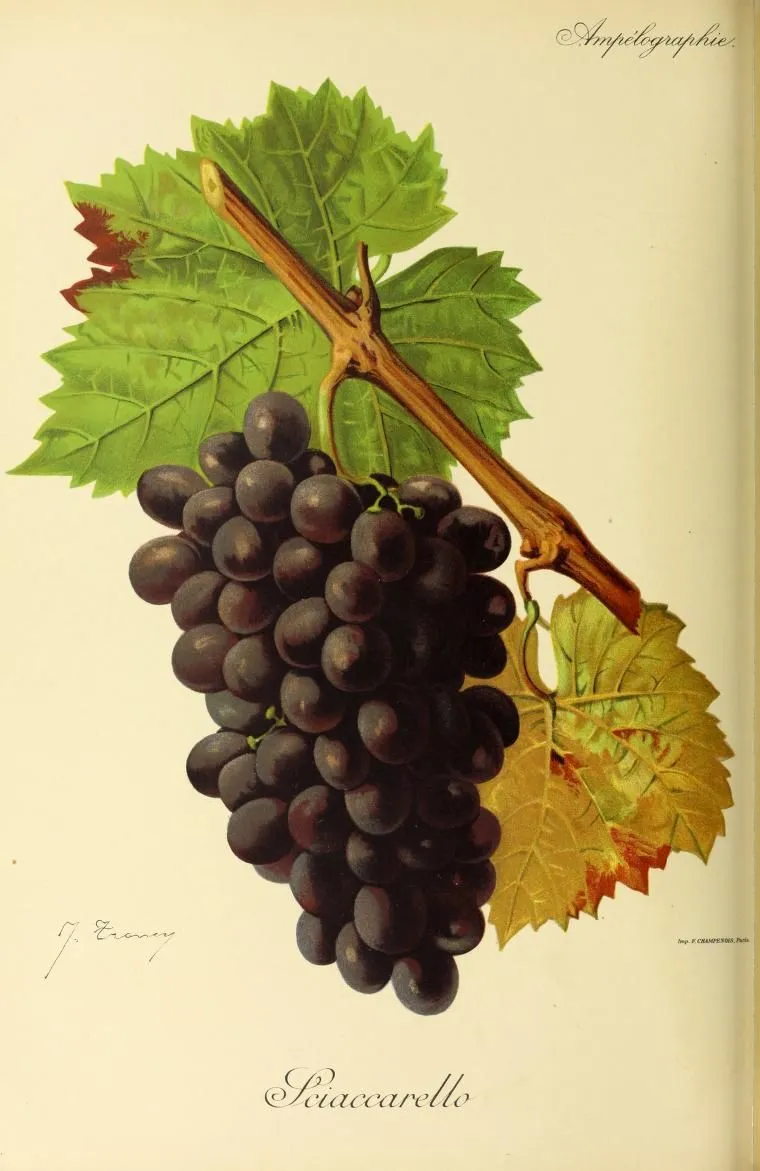
- Sciaccarellu (black, Italy, Tuscany (probable), grown in Corsica)
- Vermentino (white, Western Mediterranean (exact origin unknown))
- Sangiovese (black, Italy, Tuscany)
Secondary and minor grapes
- Grenache noir (black, Spain, Aragon (origin disputed with Sardinia))
- Cinsault (black, France, Languedoc (probable))
- Carignan (black, Spain, Aragon (Cariñena region))
- Muscat à petits grains (white, Mediterranean basin (precise origin unknown))
- Syrah (black, France, northern Rhône Valley)
- Mourvèdre (black, Spain, Valencia region)
- Ugni blanc (white, Italy, central Italy)
Other grapes grown: Niellucciu, Biancu gentile, Barbarossa, Aleaticu, Carcaghjolu neru, Minustellu, Morescola, Genovese, Codivarta.
An island and mountain vineyard
The Corsican vineyard mainly occupies the island’s coastal areas and valleys, on varied soils: schists in the north (Cap Corse, Patrimonio), granites in the south and west (Ajaccio, Sartène, Figari), clays and limestones on the eastern plain. The Mediterranean climate is tempered there by altitude and the sea.
Corsica stands out for its own grapes, linked to the island’s Italian history, and for a heritage of old varieties among the richest in France.
The appellations
- Patrimonio, the first Corsican AOC (1968), at the head of the Gulf of Saint-Florent;
- Ajaccio, on the west coast;
- Vin de Corse, a regional appellation, with geographical designations: Calvi, Coteaux du Cap Corse, Figari, Porto-Vecchio, Sartène;
- Muscat du Cap Corse, a vin doux naturel.
The Île de Beauté IGP covers a large share of production.
Grapes by appellation
| Appellation | Colour | Dominant grapes | Complements |
|---|---|---|---|
| Patrimonio | Red | Niellucciu (large majority) | Grenache, sciaccarellu, vermentinu |
| Patrimonio | White | Vermentinu | |
| Ajaccio | Red, rosé | Sciaccarellu | Barbarossa, niellucciu, vermentinu, grenache, cinsault, carignan |
| Vin de Corse (and designations) | Red, rosé | Niellucciu, sciaccarellu, grenache | Cinsault, carignan, syrah, mourvèdre, among others |
| Vin de Corse | White | Vermentinu | Ugni blanc, among others |
| Muscat du Cap Corse | Vin doux naturel | Muscat à petits grains |
The three great grapes
Niellucciu is the great red grape of the north of the island. Genetic analyses have linked it to Tuscan sangiovese. In Patrimonio it makes structured reds, with aromas of red fruit, spices and garrigue, and rosés with character.
Sciaccarellu is the grape of the south and west, notably of Ajaccio and Sartène. Lightly coloured, it makes reds that look light but are fragrant, peppery and suited to ageing, as well as fine rosés. Its name is said to evoke the crunch of its berries between the teeth.
Vermentino, called vermentinu in Corsican, is the island’s white grape. It makes aromatic dry whites (citrus, white flowers, almond) and may be used as a complement in some reds and rosés.
The complementary grapes
Grenache noir, cinsault and carignan have long been present, mainly on the eastern plain. Syrah and mourvèdre were planted more recently.
Muscat à petits grains makes Muscat du Cap Corse, a vin doux naturel from the far north of the island.
Known grape rules
- In Patrimonio, niellucciu is the large majority in the reds; the whites rely on vermentinu.
- In Ajaccio, sciaccarellu is the dominant grape of the reds, with a minimum proportion set by the specification.
- For Vin de Corse, the Corsican grapes (niellucciu, sciaccarellu) and grenache must together make up a large share of the reds and rosés.
The exact thresholds appear in the specifications published by INAO (see reading an AOC specification).
Forgotten grapes and revivals
Corsica has carried out major work to safeguard its old grapes, with a regional conservatory. Several varieties have thus been replanted: biancu gentile, an aromatic white grape; carcaghjolu neru, minustellu and morescola for reds; genovese and codivarta for whites. Aleaticu is used for sweet wines. These grapes remain little known but bring a strong identity. See the guide grape variety conservatories.
Recent developments
The island heavily restructured its vineyard from the 1970s and 1980s, uprooting productive grapes planted for table wines in favour of island grapes. Today, promoting the old varieties, later-ripening or more drought-resistant, is one of the responses to climate change.
Frequently asked questions
What are the grape varieties of Corsica?
The three emblematic grapes are niellucciu and sciaccarellu for reds and vermentinu for whites. Grenache, cinsault, carignan, syrah and mourvèdre are also grown, as well as muscat à petits grains for Muscat du Cap Corse.
Is niellucciu the same grape as sangiovese?
Genetic analyses link niellucciu to sangiovese, the Tuscan grape, to the point that it is often regarded as a Corsican form of it. It is thought to have been introduced to the island during the period of Genoese or Pisan rule, but this history remains debated.
What is the first appellation of Corsica?
Patrimonio, in the north of the island, was the first Corsican appellation d'origine contrôlée, recognised in 1968. Its reds rely very largely on niellucciu, its whites on vermentinu.
What is sciaccarellu?
It is a Corsican black grape, grown mainly in the south and west of the island, the dominant grape of the Ajaccio appellation. It makes pale, spicy, peppery reds and rosés on granite soils.