Sangiovese: the great Tuscan grape, also called nielluccio in Corsica
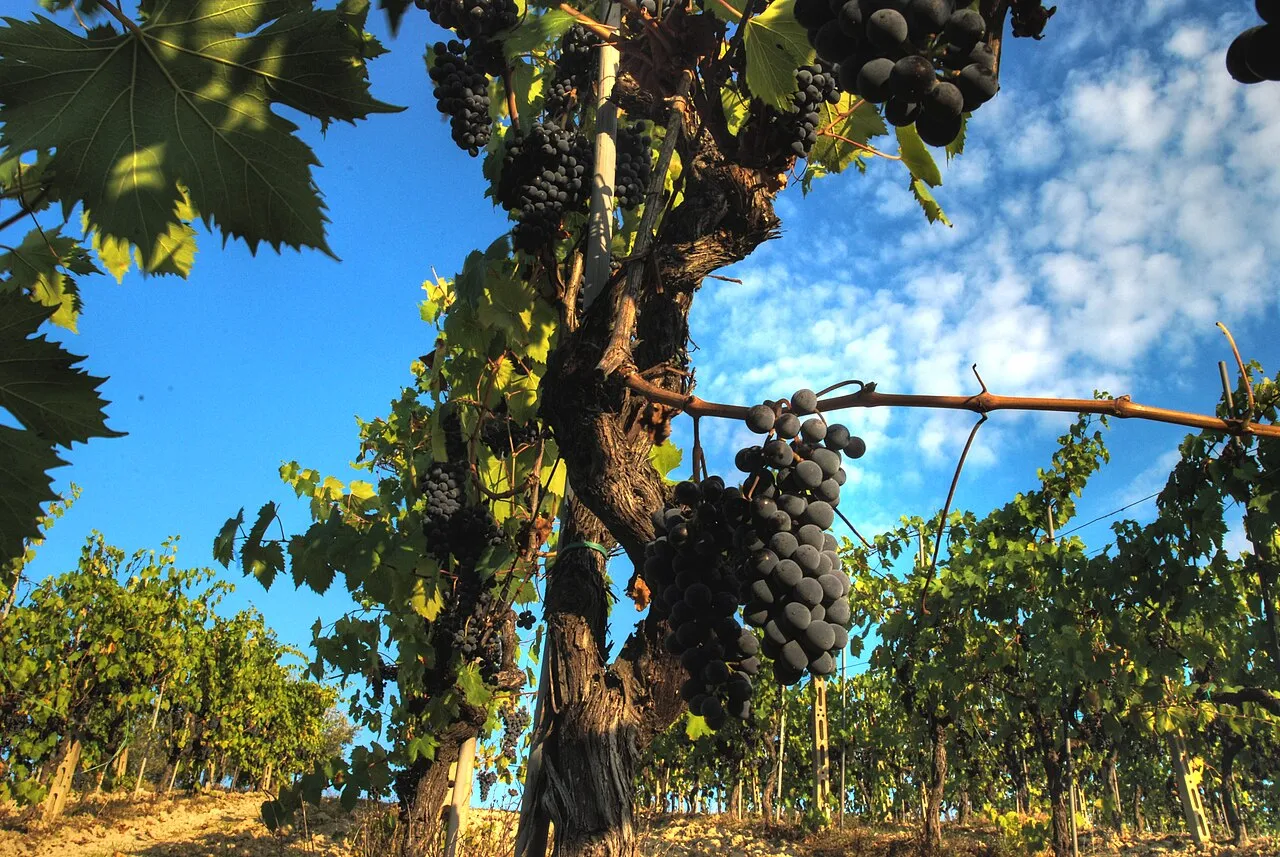
Profile: Sangiovese
| Berry colour | Black grape (N) |
|---|---|
| Species / status | Vitis vinifera |
| Origin | Italy, Tuscany |
| Parentage | Ciliegiolo × Calabrese di Montenuovo (DNA analysis, direction of descent debated) |
| Synonyms | Nielluccio (Corsica), Brunello (Montalcino), Prugnolo gentile (Montepulciano), Morellino (Scansano), Sangiovese di Romagna |
| French regions | Corsica |
| Grown in | Italy, France, United States, Argentina, Australia |
| Typical aromas | sour cherry, morello cherry, tea leaf, dried herbs, violet, leather and undergrowth (with age) |
| Wine style | Medium-coloured reds with marked acidity and firm tannins, from fruity Chianti to long-lived Brunello. |
| Food pairings | bistecca alla fiorentina, pasta with tomato sauce, pecorino, feathered game, Corsican charcuterie |
| Identifiers | VIVC no. 10680, Wikidata Q509162 |
Origin: the grape of central Italy
Sangiovese is Italy’s most planted grape and the mainstay of Tuscan reds. The generally accepted first mention dates from 1590: the Florentine agronomist Giovanvettorio Soderini describes a grape named “sangiogheto”. The popular etymology, sanguis Jovis (“blood of Jupiter”), is often cited, without proof.
Parentage: between Tuscany and southern Italy
A genetic study published in 2004 by researchers at the San Michele all’Adige institute proposed that sangiovese is the result of a cross between ciliegiolo, a Tuscan grape, and calabrese di Montenuovo, a rare variety from southern Italy. Sangiovese would therefore have roots in both central and southern Italy.
Another study proposed the reverse, making ciliegiolo a descendant of sangiovese. This question of the direction of descent is still debated by geneticists. See our guide on DNA parentage of grape varieties.
One grape, many names
Sangiovese is a highly variable variety: many clones and local selections have adapted to each terroir and received their own name.
| Local name | Where | Emblematic wine |
|---|---|---|
| Sangiovese | Tuscany | Chianti, Chianti Classico |
| Brunello | Montalcino | Brunello di Montalcino (100% sangiovese) |
| Prugnolo gentile | Montepulciano | Vino Nobile di Montepulciano |
| Morellino | Scansano (Maremma) | Morellino di Scansano |
| Sangiovese di Romagna | Emilia-Romagna | Romagna Sangiovese |
| Nielluccio | Corsica | Patrimonio, Corse |
Beware a classic trap: Vino Nobile di Montepulciano is a sangiovese wine produced in the Tuscan town of Montepulciano, whereas Montepulciano d’Abruzzo is made from another grape, montepulciano. On these confusions, see synonyms and homonyms.
In the vineyard
Sangiovese ripens late and needs warmth to reach good ripeness. Its skins are relatively thin, which makes it susceptible to rot in rainy autumns. Its quality depends heavily on the clone, the exposure and the yield: planted on the plains at high yields, it gives dilute, acidic wines.
The wines: acidity, cherry and firm tannins
Sangiovese makes reds of medium colour, with marked acidity and firm tannins. When young, it evokes sour cherry, morello cherry, tea leaf and dried herbs. With age, it develops notes of leather, undergrowth and tobacco.
From Chianti to the Super Tuscans
In the 19th century, Baron Bettino Ricasoli set a recipe for Chianti combining sangiovese with canaiolo. In the 20th century, regulations required a share of white grapes (trebbiano, the French ugni blanc, and malvasia), to the detriment of quality.
From the 1970s, Tuscan producers stepped outside these rules to make wines from pure sangiovese or blended with cabernet sauvignon and merlot: these are the “Super Tuscans”, initially sold as simple table wine. The Chianti Classico rules have since been reformed: white grapes are no longer permitted and sangiovese must make up at least 80% of the blend.
Brunello di Montalcino, made from sangiovese alone, is associated with the Biondi-Santi family, which produced its first modern cuvées at the end of the 19th century.
The little-known angle: nielluccio, the sangiovese of Corsica
In France, sangiovese is grown mainly in Corsica, under the name nielluccio. According to tradition, it was introduced to the island during the period of Pisan rule, in the Middle Ages.
Nielluccio is the dominant red grape in the north of the island, particularly in the Patrimonio appellation, near Saint-Florent, where it makes structured reds on clay-limestone soils, as well as rosés. With sciaccarellu and vermentino, it forms the trio of Corsica’s emblematic grapes.
Compared with its Tuscan cousins, the nielluccio of Patrimonio keeps sangiovese’s tension and cherry, often with notes of maquis and spice linked to the island climate.
Tasting notes
A sangiovese wine is often recognised by a few traits:
- a medium ruby colour, rarely very dark, which quickly takes on orange tints;
- a nose of sour cherry, morello cherry, dried herbs and sometimes tea leaf;
- a taut palate, carried by acidity, with firm tannins on the finish.
This acidity makes it a food wine par excellence, at ease with tomato, pasta and grilled meats.
Frequently asked questions
Are nielluccio and sangiovese the same grape?
Yes. Nielluccio, the main red grape of northern Corsica and of the Patrimonio appellation, corresponds to sangiovese, of which it is the Corsican name. According to tradition, it was introduced to the island during the period of Pisan rule. Centuries of separate cultivation may have selected local forms, but the variety is the same.
Which wines are made from sangiovese?
The best known are Tuscan: Chianti and Chianti Classico, Brunello di Montalcino (100% sangiovese), Rosso di Montalcino, Vino Nobile di Montepulciano and Morellino di Scansano. It is also the basis of Sangiovese di Romagna and goes into many "Super Tuscans" alongside Bordeaux grapes. In France, it makes red Patrimonio in Corsica.
Where does the name sangiovese come from?
The most often cited etymology is the Latin sanguis Jovis, "blood of Jupiter". It remains a tradition rather than a demonstrated fact. The generally accepted first mention of the grape dates from 1590, in the form "sangiogheto", in a text by the Tuscan agronomist Giovanvettorio Soderini.
What is the difference between Chianti and Brunello di Montalcino?
Both are based on sangiovese, but Brunello di Montalcino must be made from 100% of this grape and comes from a warmer area around Montalcino. It is more structured and subject to longer ageing. Chianti, and in particular Chianti Classico, allows a share of other red grapes.
Related grapes
- Sciaccarellu (black, Italy, Tuscany (probable), grown in Corsica)
- Vermentino (white, Western Mediterranean (exact origin unknown))
- Nebbiolo (black, Italy, Piedmont)
- Grenache noir (black, Spain, Aragon (origin disputed with Sardinia))
- Cabernet sauvignon (black, France, Bordeaux area)
- Merlot (black, France, Bordeaux (Libournais))