Nebbiolo: the pale, tannic grape of Barolo and Barbaresco
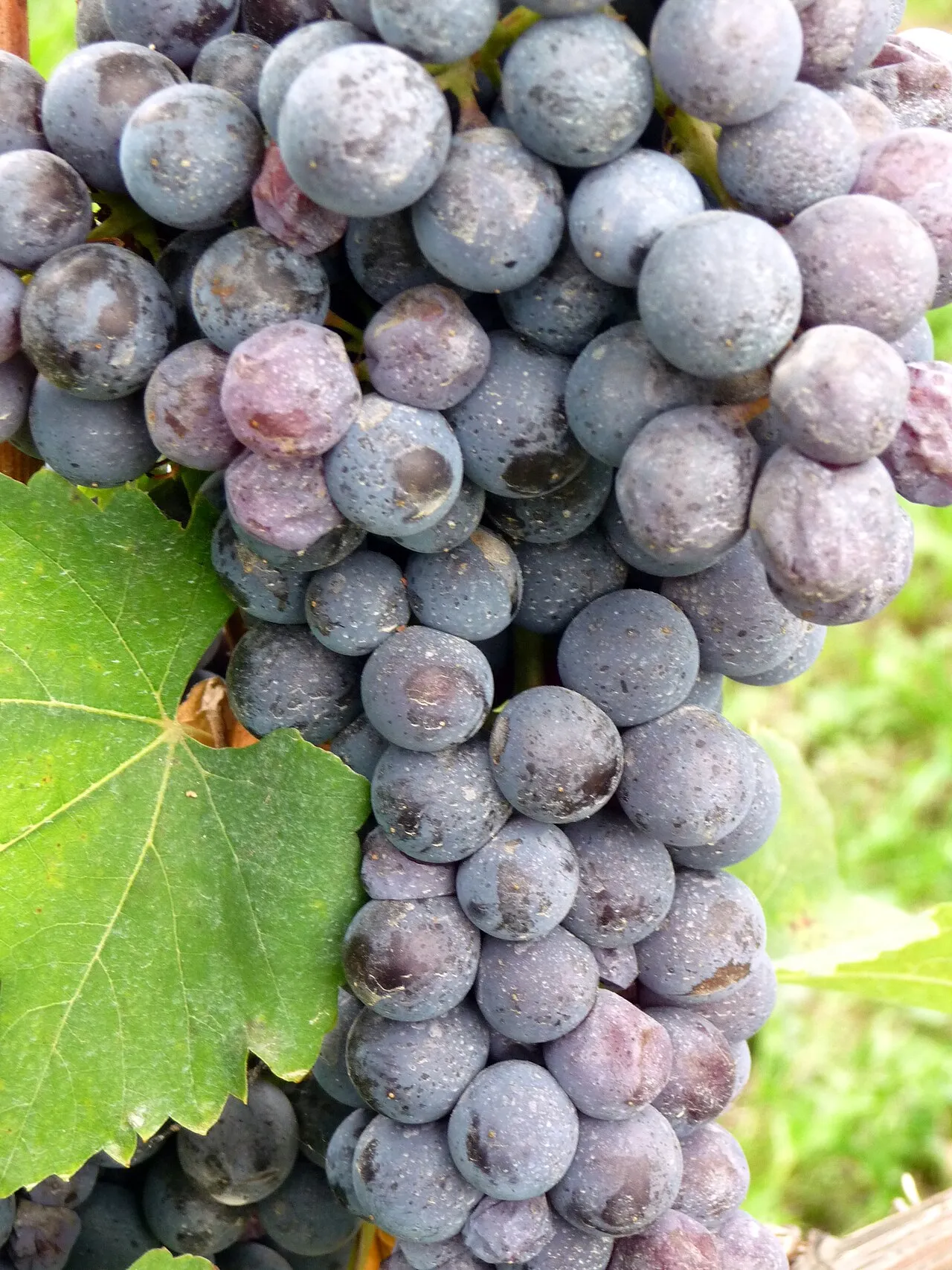
Profile: Nebbiolo
| Berry colour | Black grape (N) |
|---|---|
| Species / status | Vitis vinifera |
| Origin | Italy, Piedmont |
| Synonyms | Spanna (Novara and Vercelli), Chiavennasca (Valtellina), Picotener (Aosta Valley, Carema), Prunent (Val d'Ossola) |
| Grown in | Italy, United States, Argentina, Australia, Mexico |
| Typical aromas | rose, tar, cherry, violet, liquorice, truffle and tobacco (with age) |
| Wine style | Pale-coloured reds, very tannic and acidic, aromatic (rose, tar), which often need several years of ageing. |
| Food pairings | dishes with Alba white truffle, brasato al Barolo, game, mushroom risotto, mature cheeses |
| Identifiers | VIVC no. 8417, Wikidata Q202290 |
Origin: a Piedmontese grape since the Middle Ages
Nebbiolo is the great grape of Piedmont. Its first explicit mention dates from 1268: a document cites a wine called nibiol produced near Turin, in the Rivoli area. It has therefore been grown in north-west Italy since at least the 13th century.
Its name is generally tied to nebbia, the fog that covers the hills of the Langhe in October, when this late grape is harvested. Other leads exist (the word nobile, or the bloom that veils the berries), without certainty.
Genetic research has revealed parentage links between nebbiolo and several grapes of Piedmont and Lombardy, as well as with freisa. These parentages are detailed in our guide on DNA parentage of grape varieties.
One grape, several names
Nebbiolo changes name depending on the valleys, a sign of its age and variability:
| Local name | Zone | Emblematic wines |
|---|---|---|
| Nebbiolo | Langhe and Roero (Piedmont) | Barolo, Barbaresco, Roero, Langhe Nebbiolo |
| Spanna | Upper Piedmont (Novara, Vercelli) | Gattinara, Ghemme |
| Chiavennasca | Valtellina (Lombardy) | Valtellina Superiore, Sforzato di Valtellina |
| Picotener | Aosta Valley, Carema | Donnas, Carema |
In the vineyard: demanding and late
Nebbiolo buds early and ripens very late, often the last of the Piedmontese grapes. It is therefore exposed to spring frost and autumn rain. It is sensitive to coulure (flower drop) and prefers well-exposed calcareous marls.
It is also reputed to travel poorly: outside its native hills, it rarely makes wines as complex. Like pinot noir, it is a grape very sensitive to place.
The colour paradox
The most disconcerting angle on nebbiolo is its colour. A young Barolo is not black like a syrah: it is light ruby and quickly takes on orange or brick hints. Yet on the palate, it is one of the most tannic and acidic wines in Europe.
The explanation is biochemical: nebbiolo contains few stable anthocyanins, but a lot of tannins. Hence the famous description of nebbiolo wines, “tar and roses”, which combines a delicate floral perfume with a severe structure.
| Marker | Nebbiolo | Pinot noir | Syrah |
|---|---|---|---|
| Colour | Pale, quickly orange | Pale | Deep |
| Tannins | Very high | Low to medium | Medium to high |
| Acidity | High | High | Medium |
| Typical aromas | Rose, tar, cherry | Red fruit, undergrowth | Black fruit, pepper, violet |
The wines: Barolo, Barbaresco and the others
Barolo and Barbaresco are DOCGs made with 100% nebbiolo. Barolo must be aged for more than three years before release, part of it in wood; Barbaresco has a shorter minimum ageing period, of a little over two years. Their riserva versions are aged even longer.
Traditionalists and modernists
From the 1980s, a quarrel stirred Barolo. The traditionalists practised long macerations (several weeks) and ageing in large old foudres. The modernists shortened macerations, controlled temperatures and used new barriques to obtain wines more accessible when young. Today, many producers combine both approaches.
Sforzato from Valtellina
In Valtellina, in Lombardy, nebbiolo (chiavennasca) is grown on terraces on steep slopes. Sforzato di Valtellina is made from grapes dried after the harvest (passerillés), in the manner of amarone, which gives a more concentrated and more alcoholic dry wine.
Where it is grown
Almost all nebbiolo grows in Piedmont and Lombardy, with a small presence in the Aosta Valley. Outside Italy, it is found in small quantities in California, Washington State, Virginia, Mexico (Baja California), Argentina and Australia. In Greece, xinomavro from Naoussa is often compared with nebbiolo for its tannic profile and pale colour, with no parentage between them.
Frequently asked questions
Why is Barolo so pale when it is so tannic?
Nebbiolo contains few stable anthocyanins, the pigments that colour wine, but a lot of tannins in its seeds and skins. It therefore makes a wine with a pale colour, which quickly takes on orange hints, while being very structured on the palate. Judging a nebbiolo by its colour is a frequent mistake.
Where does the name nebbiolo come from?
The most widespread explanation ties it to nebbia, "fog" in Italian, in reference to the autumn mists of the Langhe at harvest time, which is late for this grape. Other hypotheses mention the word nobile ("noble") or the bloom that covers the berries like a veil. None is proven.
What is the difference between Barolo and Barbaresco?
Both are Piedmontese DOCGs of 100% nebbiolo, located on either side of Alba in the Langhe. Barolo, to the south-west of Alba, is generally more powerful and must be aged longer before release. Barbaresco, to the north-east, is often described as suppler and earlier maturing.
Is nebbiolo grown in France?
It is not significantly planted there. Nebbiolo remains a grape closely tied to its terroir of origin: almost all the plantings are in north-west Italy, with small plantings in the United States, Argentina, Australia and Mexico.
Related grapes
- Sangiovese (black, Italy, Tuscany)
- Pinot noir (black, France, Burgundy)
- Xinomavro (black, Greece, Macedonia)
- Tempranillo (black, Spain, north of the peninsula (Rioja, Ebro valley))
- Syrah (black, France, northern Rhône Valley)