Pinot noir: the Burgundy grape with a fertile genetic instability
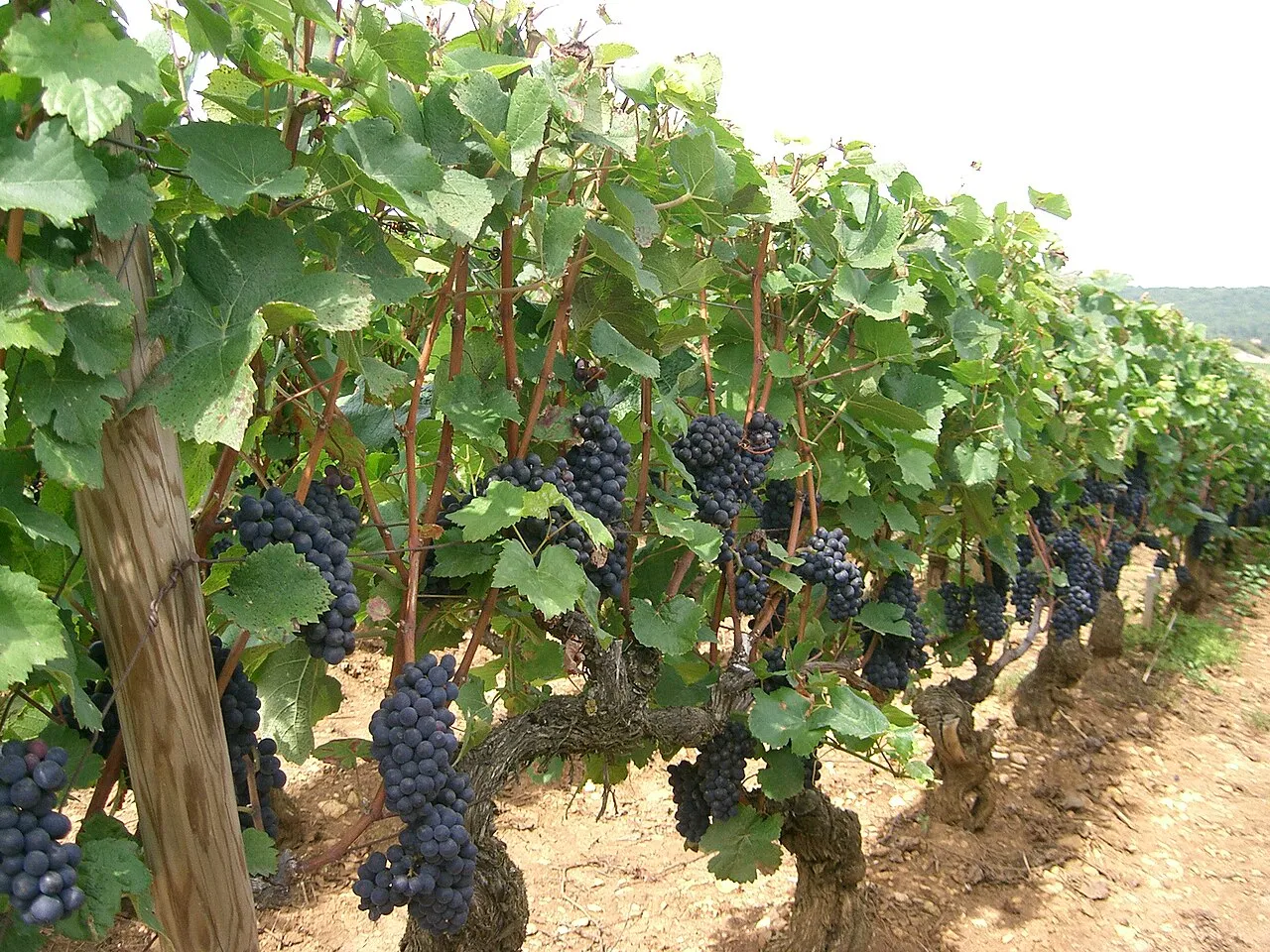
Profile: Pinot noir
| Berry colour | Black grape (N) |
|---|---|
| Species / status | Vitis vinifera |
| Origin | France, Burgundy |
| Synonyms | Noirien, Spätburgunder (Germany), Blauburgunder (Austria, Switzerland), Pinot nero (Italy) |
| French regions | Alsace, Beaujolais, Burgundy, Champagne, Jura, Loire Valley, Savoie |
| Grown in | France, Germany, United States, New Zealand, Switzerland, Italy, Australia, Chile, South Africa |
| Typical aromas | cherry, raspberry, wild strawberry, violet, undergrowth and mushroom (mature wines), sweet spices |
| Wine style | Light-coloured reds with fine tannins and fresh acidity, very sensitive to terroir, and base wines for sparkling wines. |
| Food pairings | roast poultry, boeuf bourguignon, oeufs en meurette (eggs poached in red wine), washed-rind cheeses such as époisses |
| Identifiers | VIVC no. 9279, Wikidata Q223701 |
Origin: a very old Burgundy grape
Pinot noir is one of the oldest grapes still grown in France. It has been associated with Burgundy since the Middle Ages, when the Cistercian monasteries and the Dukes of Burgundy helped build its reputation.
Its name is thought to come from the shape of its bunch, small and tight, which recalls a pine cone (pomme de pin). This explanation is the most commonly accepted, without being proven.
A major ancestor of the grapes of the north-east
The DNA study published in 1999 in Science showed that pinot, crossed with gouais blanc, gave rise to many grapes: chardonnay, gamay, aligoté, melon de Bourgogne and others. See the guide DNA parentage of grape varieties.
The angle to know: a genetically unstable grape
Pinot noir is known for its genetic instability. Propagated for centuries by cuttings, it has accumulated mutations, some of which were selected and became grapes in their own right.
| Form | Colour code | Nature of the difference |
|---|---|---|
| Pinot noir | N | Reference form |
| Pinot gris | G | Colour mutation (pinkish-grey berries) |
| Pinot blanc | B | Colour mutation (white berries) |
| Meunier | N | Mutation of the outer cell layer (downy leaves) |
This phenomenon is detailed in our guide on colour mutations. It also explains the very large number of approved pinot noir clones: clonal selection made it possible to choose more or less productive types, with looser or tighter bunches. See clones and mass selection.
The first vine genome
In 2007, a French-Italian consortium published the first complete sequence of a vine genome. The plant sequenced was not a commercial pinot noir but a nearly homozygous line derived from pinot noir by successive self-pollinations, called PN40024. This choice was meant to simplify the assembly of the genome. Pinot noir thus serves as the genetic reference for all cultivated vines.
In the vineyard
Pinot noir is early: it buds and ripens early, which suits it to cool climates. Its compact, thin-skinned bunches make it susceptible to grey rot, and it reacts badly to high yields. It is also exposed to spring frosts.
It strongly expresses the place where it is planted, which explains the fine hierarchy of Burgundy’s climats, from village to grand cru.
The wines
Pinot noir makes lightly coloured reds with fine tannins and lively acidity. Young, they recall cherry, raspberry and violet; with age, undergrowth, mushroom and leather.
It is rarely blended in red Burgundy. In Champagne, by contrast, it is blended, or made as blanc de noirs. In Alsace, it is the only black grape permitted in the Alsace AOC. It also makes rosés, crémants and light reds in the Loire (Sancerre, Menetou-Salon), the Jura and Savoie.
To compare it with its Beaujolais descendant, see gamay or pinot noir.
Where it is grown
In France: Burgundy, Champagne, Alsace, the Loire Valley, the Jura, Savoie. Outside France: Germany (Spätburgunder), Switzerland, Oregon and California, New Zealand (Central Otago, Marlborough), Australia, Chile and South Africa.
Genealogy of Pinot noir
Offspring profiled on this site: Gamay, Pinotage, Chardonnay, Melon de Bourgogne, Aligoté.
Further reading
- Gamay or pinot noir: 10 differences to know
- N, B, G, Rs codes: the official colour of grape varieties explained
- Teinturier grapes: red-fleshed varieties, alicante and the gamays
- Colour mutations: pinot gris, grenache blanc and multicoloured grapes
- Grape DNA parentage: how genetics rewrote history
- Clones and mass selection: how a grape variety is propagated
- Single-varietal or blend: two philosophies of wine
- Grape variety conservatories: Vassal and vine collections
- Reading an AOC specification: grapes, yields, rules
Frequently asked questions
Is pinot noir the parent of chardonnay?
Yes. A DNA study published in 1999 in the journal Science showed that chardonnay, gamay, aligoté and melon de Bourgogne are the result of natural crosses between pinot and gouais blanc. Pinot is therefore one of the great ancestors of the grapes of north-eastern France.
What is the difference between pinot noir, pinot gris and pinot blanc?
They are colour mutations of the same variety. Pinot gris has pinkish-grey berries and pinot blanc white berries, but their DNA is almost identical to that of pinot noir. The differences concern the genes that control pigment production in the skin.
Why is pinot noir difficult to grow?
It has thin skin and compact bunches, which make it susceptible to grey rot. It buds early, so it is exposed to spring frosts, and reacts strongly to excessive yields. It also needs a fairly cool climate to keep its delicate aromas.
Is pinot noir used in champagne?
Yes. It is one of the three main grapes of Champagne, with meunier and chardonnay, and is widely planted there, notably on the Montagne de Reims and in the Côte des Bar. A "blanc de noirs" champagne can be made from pinot noir, meunier, or both.
Related grapes
- Chardonnay (white, France, Burgundy)
- Pinot meunier (black, France, north-east (pinot mutation))
- Pinot gris (grey, France, Burgundy (pinot mutation))
- Pinot blanc (white, France, Burgundy (pinot mutation))
- Gamay (black, France, Burgundy)
- Trousseau (black, France, Jura)