The grape varieties of the Alsace vineyard
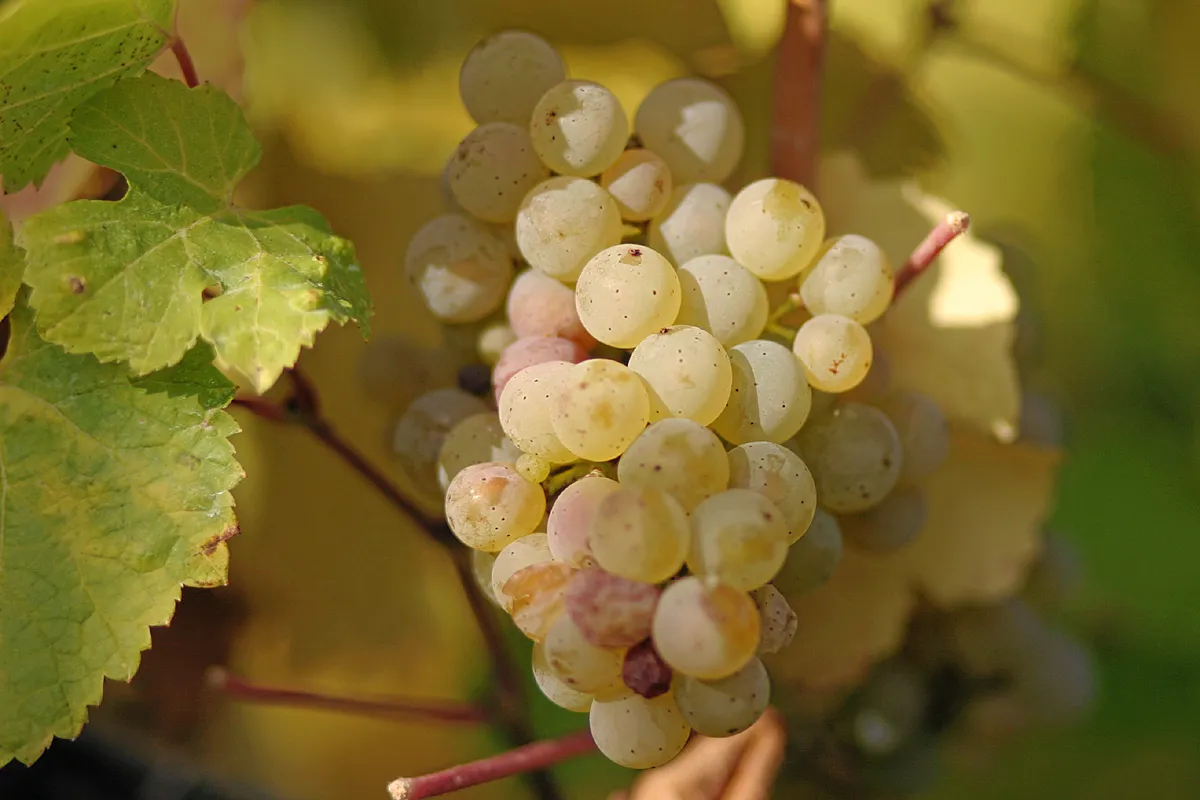
Main grapes: Alsace
- Riesling (white, Germany, Rhine Valley)
- Gewurztraminer (pink, Central Europe, South Tyrol (traminer lineage))
- Pinot gris (grey, France, Burgundy (pinot mutation))
- Pinot blanc (white, France, Burgundy (pinot mutation))
- Sylvaner (white, Central Europe, probably Austria)
- Pinot noir (black, France, Burgundy)
Secondary and minor grapes
- Muscat à petits grains (white, Mediterranean basin (precise origin unknown))
- Chardonnay (white, France, Burgundy)
- Chasselas (white, Switzerland, west of the country (Lake Geneva region))
Other grapes grown: Auxerrois, Muscat ottonel, Savagnin rose (klevener de Heiligenstein).
A vineyard of varietal wines
The Alsace vineyard stretches along a narrow strip at the foot of the Vosges, from the north of the Bas-Rhin to the south of the Haut-Rhin. Sheltered from the rain by the mountains, it enjoys a semi-continental, dry and sunny climate that favours aromatic white wines.
Its distinctive feature is the grape name on the label: unlike Burgundy or Bordeaux, Alsace sells its wines under the name of their grape. This choice is explained in the guide the grape name on the label.
The appellations
Alsace has three appellations:
- Alsace (regional appellation), which may be followed by the name of a commune or named site since the 2011 reform;
- Alsace grand cru, with 51 delimited named sites, each of which became a separate appellation in 2011;
- Crémant d’Alsace, a sparkling wine made by the traditional method.
There are also the vendanges tardives and sélection de grains nobles designations, reserved for wines from overripe or botrytised grapes.
Grapes by appellation
| Appellation | Permitted grapes | Notes |
|---|---|---|
| Alsace | Riesling, gewurztraminer, pinot gris, muscats, sylvaner, pinot blanc, auxerrois, chasselas, pinot noir, savagnin rose | Wines generally single-varietal; blends possible (edelzwicker, gentil) |
| Alsace grand cru | Riesling, gewurztraminer, pinot gris, muscats | Exceptions: sylvaner on the Zotzenberg, blends on the Altenberg de Bergheim and the Kaefferkopf, pinot noir on the Hengst and the Kirchberg de Barr |
| Crémant d’Alsace | Pinot blanc, auxerrois, pinot gris, pinot noir, riesling, chardonnay | Rosé from pinot noir only |
| Klevener de Heiligenstein | Savagnin rose | Area limited to around Heiligenstein |
The great white grapes
Riesling makes dry, taut, mineral wines capable of long ageing. A late-ripening grape, it succeeds on the varied soils of the grands crus (granite, sandstone, limestone, schist).
Gewurztraminer is the most emblematic grape of Alsace: pink berries, aromas of lychee and rose, full and sometimes sweet wines. It is an aromatic mutation of savagnin rose. The two grapes are compared in riesling or gewurztraminer.
Pinot gris, long sold under the name “tokay d’Alsace” until this was compulsorily abandoned in 2007, makes rich, smoky whites.
Alsace muscat comes from muscat à petits grains (white or pink) and muscat ottonel. It is generally made dry, which sets it apart from the muscats of southern France.
The base grapes and pinot noir
Sylvaner makes fresh, thirst-quenching wines. It obtained grand cru status on the Zotzenberg alone (2005 decree).
Pinot blanc is often blended with auxerrois, to the point that the “pinot blanc” designation can refer to a wine made from both grapes. They are the pillars of crémant.
Pinot noir is the only red grape of Alsace. Long made as a light red or rosé, it is gaining concentration with climate warming.
Rare and forgotten grapes
Chasselas was once very widespread; it survives mainly in blends. Savagnin rose is grown only in the Heiligenstein area, north of Barr, under the name klevener de Heiligenstein. It should not be confused with “clevner”, an old Alsace name for the pinots. These name confusions are covered in the guide synonyms and homonyms.
Recent developments
The recognition of pinot noir as grand cru is the most notable development. Announced in May 2022, it covers the Hengst (Wintzenheim) and the Kirchberg de Barr, from the 2022 vintage, with a maximum yield lower than that of the whites. Other named sites have begun the same process.
The warmer climate makes ripening easier, notably for pinot noir, but raises the question of acidity in early-ripening grapes such as gewurztraminer and pinot gris.
Frequently asked questions
What are the grape varieties of Alsace?
The main ones are riesling, gewurztraminer, pinot gris, pinot blanc, sylvaner, muscat and pinot noir, the only red grape. Auxerrois, often blended with pinot blanc, and chasselas are also grown, as well as savagnin rose for klevener de Heiligenstein.
Which grapes are permitted in Alsace grand cru?
Riesling, gewurztraminer, pinot gris and the muscats are the traditional grand cru grapes. Sylvaner is permitted on the Zotzenberg, blends are allowed on the Altenberg de Bergheim and the Kaefferkopf, and pinot noir has been recognised since the 2022 vintage on the Hengst and the Kirchberg de Barr.
Why is the grape written on Alsace wines?
Alsace chose long ago to make varietal wines, in the manner of the neighbouring Germanic vineyards. The consumer therefore first identifies the riesling or gewurztraminer, then possibly the grand cru, the commune or the named site.
Which grapes are used to make crémant d'Alsace?
Crémant d'Alsace is made mainly from pinot blanc and auxerrois, with also pinot gris, pinot noir (the only grape permitted for rosé), riesling and chardonnay. Chardonnay is permitted in Alsace only for crémant.