Muscat à petits grains: the ancestor of the muscat family
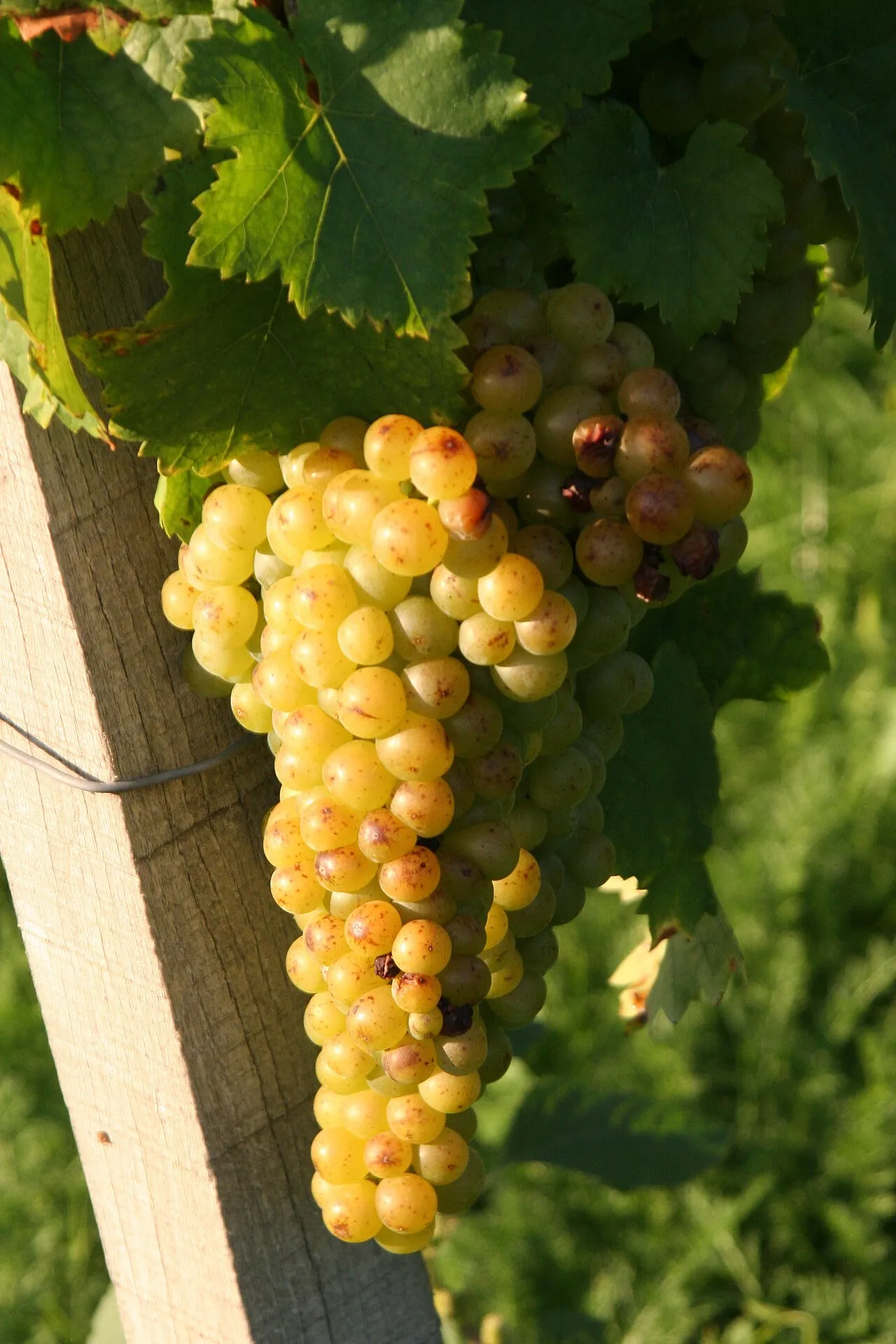
Profile: Muscat à petits grains
| Berry colour | White grape (B) |
|---|---|
| Species / status | Vitis vinifera |
| Origin | Mediterranean basin (precise origin unknown) |
| Parentage | Parents unknown; parent of muscat of Alexandria (DNA analysis) |
| Synonyms | Muscat blanc à petits grains, Muscat de Frontignan, Muscat de Lunel, Moscato bianco (Italy), Muskateller (Germany, Austria), Moschato (Greece) |
| French regions | Alsace, Corsica, Languedoc-Roussillon, Provence, Rhône Valley |
| Grown in | France, Italy, Greece, Spain, Portugal, Australia, Germany, Austria |
| Typical aromas | fresh grape, rose, orange blossom, citrus and orange peel, lychee, honey and candied fruit (VDN) |
| Wine style | From very aromatic dry white to fortified vins doux naturels, including low-alcohol sweet sparkling wines. |
| Food pairings | fruit desserts, lemon tart, melon (VDN), blue cheeses, asparagus (dry Alsace muscat) |
| Identifiers | VIVC no. 8193, Wikidata Q1499340 |
Origin: one of the oldest cultivated grapes
Muscat à petits grains is often presented as one of the oldest grapes still grown. Its exact place of origin remains unknown, somewhere in the Mediterranean basin; accounts that trace it back to ancient Greece or Egypt are not proven. Its parents have not been identified.
It has long been grown in Languedoc, notably around Frontignan, from which it takes one of its names.
The muscat family: one parent, many descendants
The name “muscat” designates a family of grapes with musky aromas, not a single variety. Muscat à petits grains holds a central place in it, as it is the parent of several others. DNA analyses have notably established that:
- muscat of Alexandria comes from a natural cross between muscat à petits grains and axina de tres bias, a non-muscat table grape;
- muscat rouge de Madère has muscat à petits grains and mammolo, a Tuscan grape, as its parents;
- muscat of Hamburg, a black table grape, is a grandchild of muscat à petits grains, via muscat of Alexandria.
Muscats à petits grains and muscats of Alexandria have crossed several times and given at least fourteen varieties. See DNA parentage of grape varieties.
In the vineyard
Muscat à petits grains is a grape with small round berries, in tight bunches, of medium ripening. It is sensitive to powdery mildew, grey rot and attacks by insects drawn to its sweet, fragrant berries. Its yields are modest.
There are forms with pink or red berries, arising from mutations, grouped under the same name of muscat à petits grains.
The aromas: the chemistry of terpenes
Muscat has the particularity of tasting of grapes. Its aromas of fresh grape, rose, orange blossom and citrus come from compounds called terpenes, such as linalool and geraniol, present in abundance in the berries.
As these aromas are already in the fruit, muscat is one of the few grapes whose wine directly evokes the grape one eats.
The wines: dry, sweet, sparkling
| Style | Appellations or regions | Particularity |
|---|---|---|
| Vin doux naturel | Muscat de Frontignan, de Lunel, de Mireval, de Saint-Jean-de-Minervois, de Beaumes-de-Venise, du Cap Corse, de Rivesaltes | Fermentation stopped by fortification with alcohol |
| Sweet sparkling | Clairette de Die (méthode dioise ancestrale), moscato d’Asti and Asti (Italy) | Low alcohol, natural sugars |
| Dry white | Alsace muscat, Languedoc IGP | Nose of fresh grape, dry palate |
| Sweet, not fortified | Samos (Greece), various late-harvest wines | According to local rules |
Vins doux naturels
In France, muscat à petits grains is the great grape of white vins doux naturels, made by fortification (mutage): neutral alcohol is added during fermentation to stop it and keep part of the sugars. See the grapes of Languedoc-Roussillon, of the Rhône Valley and of Corsica.
Clairette de Die
In the Drôme, Clairette de Die made by the méthode dioise ancestrale is a sweet, low-alcohol sparkling wine, of which muscat à petits grains is the majority grape, along with clairette.
Alsace muscat
In Alsace, the muscat appellation covers muscat à petits grains (white and pink) and muscat ottonel. The wines there are generally dry. Muscat is among the grapes admitted for grand cru. See the grapes of Alsace.
Where it is grown
Outside France, muscat à petits grains is found in Italy (moscato bianco, Piedmont), in Greece (Samos, Patras, Cephalonia), in Spain, Portugal, Germany and Austria (Muskateller), and in Australia, where the sweet muscats of Rutherglen come from a dark-berried form.
Genealogy of Muscat à petits grains
Offspring profiled on this site: Muscat d'Alexandrie.
Further reading
Frequently asked questions
What is the difference between muscat à petits grains and muscat of Alexandria?
Muscat à petits grains has small berries and aromas considered finer. Muscat of Alexandria, with large berries, is one of its descendants, coming from a natural cross with axina de tres bias according to DNA analysis. It serves as both a table grape and a wine grape, with more pronounced aromas.
What is a vin doux naturel?
It is a wine whose fermentation is stopped by adding neutral alcohol (fortification, or mutage), which keeps part of the grape's sugars. Muscat à petits grains is one of the main grapes of the vins doux naturels of Languedoc, Roussillon, the Rhône and Corsica.
Is muscat always sweet?
No. Alsace muscat is most often dry, with a very recognisable nose of fresh grape. There are also dry muscats in Languedoc. But a large part of the world production of muscat à petits grains goes into sweet wines or sweet sparkling wines.
Does muscat à petits grains exist in red?
Yes. There are forms with pink or red berries, born of colour mutations, such as muscat à petits grains rouge. The muscats of Rutherglen, in Australia, come from a dark-berried form of this grape.
Related grapes
- Muscat d'Alexandrie (white, Mediterranean basin (precise origin undetermined))
- Muscat de Hambourg (black, United Kingdom, England (Wrest Park, Bedfordshire))
- Clairette (white, France, Midi)
- Gewurztraminer (pink, Central Europe, South Tyrol (traminer lineage))
- Viognier (white, France, northern Rhône Valley)
- Grenache noir (black, Spain, Aragon (origin disputed with Sardinia))