The grape varieties of the Jura vineyard
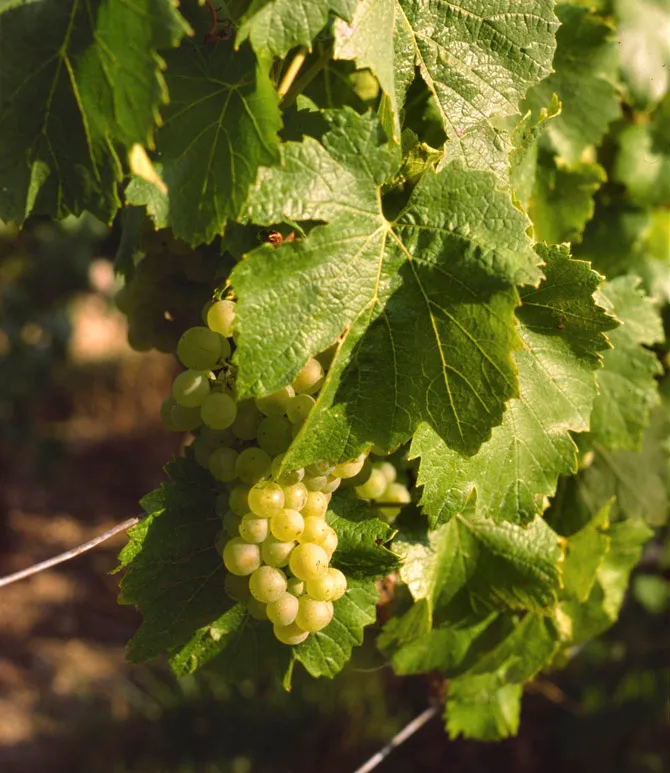
Main grapes: Jura
- Chardonnay (white, France, Burgundy)
- Savagnin (white, Europe, precise origin debated (Jura and Central Europe))
- Poulsard (black, France, Jura)
- Trousseau (black, France, Jura)
- Pinot noir (black, France, Burgundy)
Other grapes grown: Melon à queue rouge, Enfariné, Petit béclan, Gueuche, Argant.
A small vineyard with a strong identity
The Jura vineyard covers about 2,000 hectares on the first plateaux and slopes of the Jura massif, between Salins-les-Bains and Saint-Amour. Its marl and limestone soils, its semi-continental climate and a tradition of oxidative ageing make it one of the most singular vineyards in France.
It relies on only five grapes, two of which are specifically from the Jura.
The appellations
The Jura has seven appellations:
- Arbois (with the Arbois-Pupillin designation);
- Côtes du Jura;
- L’Étoile, devoted to white wines;
- Château-Chalon, reserved for vin jaune;
- Crémant du Jura;
- Macvin du Jura, a liqueur wine obtained by fortifying grape must with marc;
- Marc du Jura, a spirit.
Grapes by appellation and type of wine
| Appellation or wine | Grapes |
|---|---|
| Arbois, Côtes du Jura (whites) | Chardonnay, savagnin |
| Arbois, Côtes du Jura (reds, rosés) | Poulsard, trousseau, pinot noir |
| L’Étoile | Mainly chardonnay and savagnin (whites, vin jaune, vin de paille) |
| Château-Chalon | Savagnin exclusively (vin jaune) |
| Vin jaune (all appellations) | Savagnin exclusively |
| Vin de paille | Dried grapes: notably chardonnay, savagnin, poulsard |
| Crémant du Jura | Mainly chardonnay, pinot noir and trousseau, with other grapes as complements |
| Macvin du Jura | The five Jura grapes |
The white grapes
Chardonnay is the most planted grape in the Jura. It is made there in an ouillé (topped-up) style, taut and mineral, or in an oxidative style, aged under veil. It is also the base of crémant. Old local synonym: “melon d’Arbois”.
Savagnin is the emblematic grape of the Jura. It is the only one permitted for vin jaune, aged for more than six years in barrel without topping up, largely under a veil of yeast that gives it its aromas of walnut, curry and spices. Savagnin is also an old and genetically important grape: it is related to many European grapes, including sauvignon blanc, and gewurztraminer is an aromatic form of it.
The black grapes
Poulsard, or ploussard, is a local grape with a thin, lightly coloured skin. It makes pale, delicate reds with aromas of small red fruits, and goes into vin de paille and crémant.
Trousseau is more coloured and more structured. It likes warm, gravelly soils, notably around Montigny-lès-Arsures, near Arbois. It is known in Portugal as bastardo.
Pinot noir is grown as a complement, on its own or blended with poulsard and trousseau.
Rules and styles
The Jura stands out for the coexistence of two families of white wines:
- ouillé wines, whose barrels are regularly topped up, in a style close to white Burgundy;
- sous voile wines, not topped up, of which vin jaune is the most accomplished expression.
Vin de paille is a sweet wine made from grapes dried for several weeks before pressing. Macvin combines grape must and marc du Jura.
Forgotten grapes
Before the phylloxera crisis, the Jura grew many other varieties. Several have virtually disappeared and survive only in collections or with a few growers: enfariné, petit béclan, gueuche, argant and melon à queue rouge, a local form of chardonnay. These grapes now belong mainly to grape variety conservatories.
Recent developments
Like other northern vineyards, the Jura suffers spring frosts and hailstorms that have sharply reduced several recent harvests. Warming is also changing the ripeness of poulsard and savagnin. Some growers are interested in old grapes for their freshness, and the vineyard follows closely the national discussions on resistant grape varieties.
Frequently asked questions
What are the grape varieties of the Jura?
Five grapes are permitted in the Jura appellations: chardonnay and savagnin for whites, poulsard, trousseau and pinot noir for reds. Chardonnay is the most planted, followed by savagnin.
Which grape is vin jaune made from?
Vin jaune is made exclusively from savagnin. The wine is aged under a veil of yeast, without topping up, for more than six years, then bottled in the 62 cl clavelin. Château-Chalon is an appellation reserved for vin jaune.
Poulsard or ploussard: what is the difference?
None: they are two names for the same black Jura grape. The form "ploussard" is in common use around Pupillin, near Arbois. Poulsard makes very pale reds, almost rosé, fine and fruity.
What is ouillé chardonnay in the Jura?
An ouillé wine is one whose barrels are regularly topped up to avoid contact with air. It contrasts with the oxidative "sous voile" (under veil) style typical of the Jura. Chardonnay and savagnin can be made in both styles.