Poulsard or ploussard: the Jura grape with almost rosé-like wines
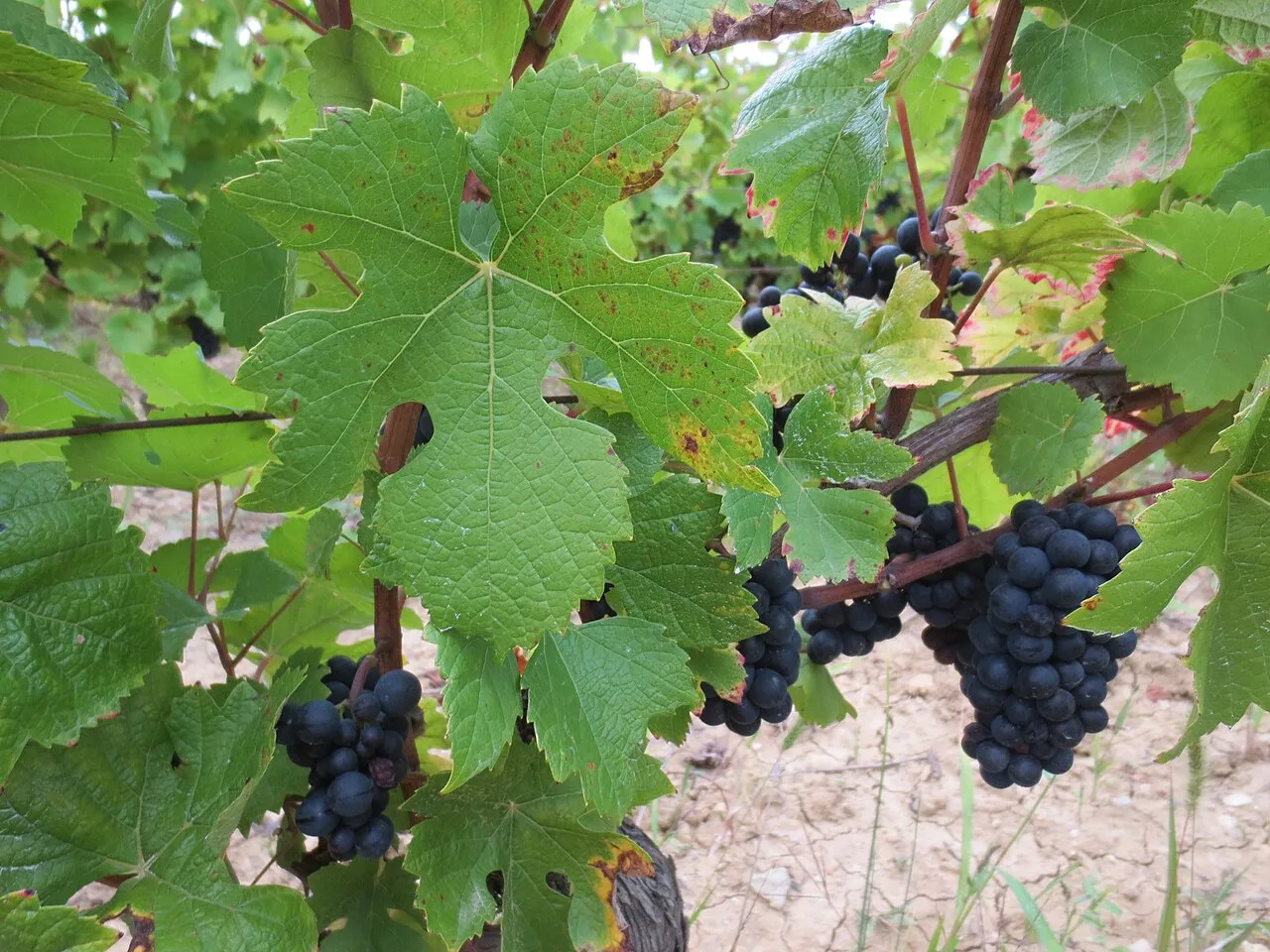
Profile: Poulsard
| Berry colour | Black grape (N) |
|---|---|
| Species / status | Vitis vinifera |
| Origin | France, Jura |
| Synonyms | Ploussard (Pupillin and Jura), Pulsard, Mècle, Plant d'Arbois |
| French regions | Jura |
| Grown in | France |
| Typical aromas | redcurrant, strawberry, morello cherry, undergrowth, sweet spices, smoky notes |
| Wine style | Very pale, light, low-tannin and aromatic reds, as well as rosés and crémants, often blended with trousseau or pinot noir. |
| Food pairings | Jura charcuterie, Morteau sausage, poultry, young Comté |
| Identifiers | VIVC no. 9643, Wikidata Q1409433 |
Origin: a Jura grape attested since the 15th century
Poulsard is a black grape from the Jura, where it has been grown since at least the 15th century. It has many local names: ploussard, pulsard, mècle, plant d’Arbois.
The name ploussard is used mainly around Pupillin, a wine village next to Arbois that claims the title of “world capital of ploussard”. It is accepted on labels throughout the Jura.
Its genetic parentage has not been established by consensus. Poulsard also exists in white-, pink- and muscat-berried forms, regarded as variants of the grape. See colour mutations.
In the vineyard
Poulsard has several weaknesses:
- it buds early, which exposes it to spring frosts;
- it is susceptible to downy mildew, powdery mildew and grey rot;
- its yields are low.
Its berries are oval, light purple to black, with a very thin skin. It does well on the marls of the Jura.
Formerly the most planted grape in the Jura, it has declined but remains one of the region’s main grapes, with chardonnay, savagnin, pinot noir and trousseau.
The angle to know: a “red” that looks like a rosé
What sets poulsard apart is its lack of pigments. Its thin skin contains few anthocyanins, so its red wines stay very pale, sometimes the colour of a deep rosé, even after long maceration.
This paleness often misleads consumers. It does not mean the wine is simple: a well-ripened poulsard offers aromas of redcurrant, strawberry, morello cherry, undergrowth and sometimes smoke, with fresh acidity and light tannins.
| Grape | Colour of the wines | Tannins | Role in the Jura |
|---|---|---|---|
| Poulsard | Very pale | Very light | Light reds, rosés, crémants |
| Trousseau | Deeper | More marked | More structured reds |
| Pinot noir | Light to medium | Fine | Reds, blends, crémants |
Poulsard has benefited from the recent interest in light red wines served cool and in Jura wines in general. It is often made with few additives, which has contributed to its reputation among lovers of so-called “natural” wines.
The wines
Poulsard is used for:
- light, aromatic reds, made on their own or blended with trousseau and pinot noir;
- rosés and blancs de noirs;
- Crémants du Jura.
It is permitted in several Jura appellations, notably Arbois, Côtes du Jura, Crémant du Jura and Macvin du Jura.
Where it is grown
Poulsard is practically confined to the Jura, with a particular presence around Arbois and Pupillin. It is one of the little-known regional grapes presented in the section rare and forgotten grapes.
To find out how the grape can appear on the label under its name or its synonym, see the grape name on the label.
Frequently asked questions
Poulsard or ploussard, what is the difference?
There is none: it is the same grape. The name ploussard is used mainly around Pupillin, near Arbois, and it is accepted on labels throughout the Jura as a synonym of poulsard.
Why does poulsard make such pale wines?
Its skin is very thin and poor in pigments. Even after several days of maceration, its red wines stay light in colour, sometimes close to a deep rosé. This paleness does not prevent a real aromatic structure.
Which wines are made with poulsard?
It is used mainly to make light reds, rosés and crémants in the Jura, notably in the Arbois, Côtes du Jura and Crémant du Jura appellations. It is often blended with trousseau or pinot noir, but also made on its own.
Is poulsard difficult to grow?
Yes. It buds early, which exposes it to spring frosts, and it is susceptible to downy mildew, powdery mildew and grey rot. Its yields are low.
Related grapes
- Trousseau (black, France, Jura)
- Savagnin (white, Europe, precise origin debated (Jura and Central Europe))
- Pinot noir (black, France, Burgundy)
- Chardonnay (white, France, Burgundy)
- Gamay (black, France, Burgundy)