Marsanne or roussanne: the white duo of the Rhône
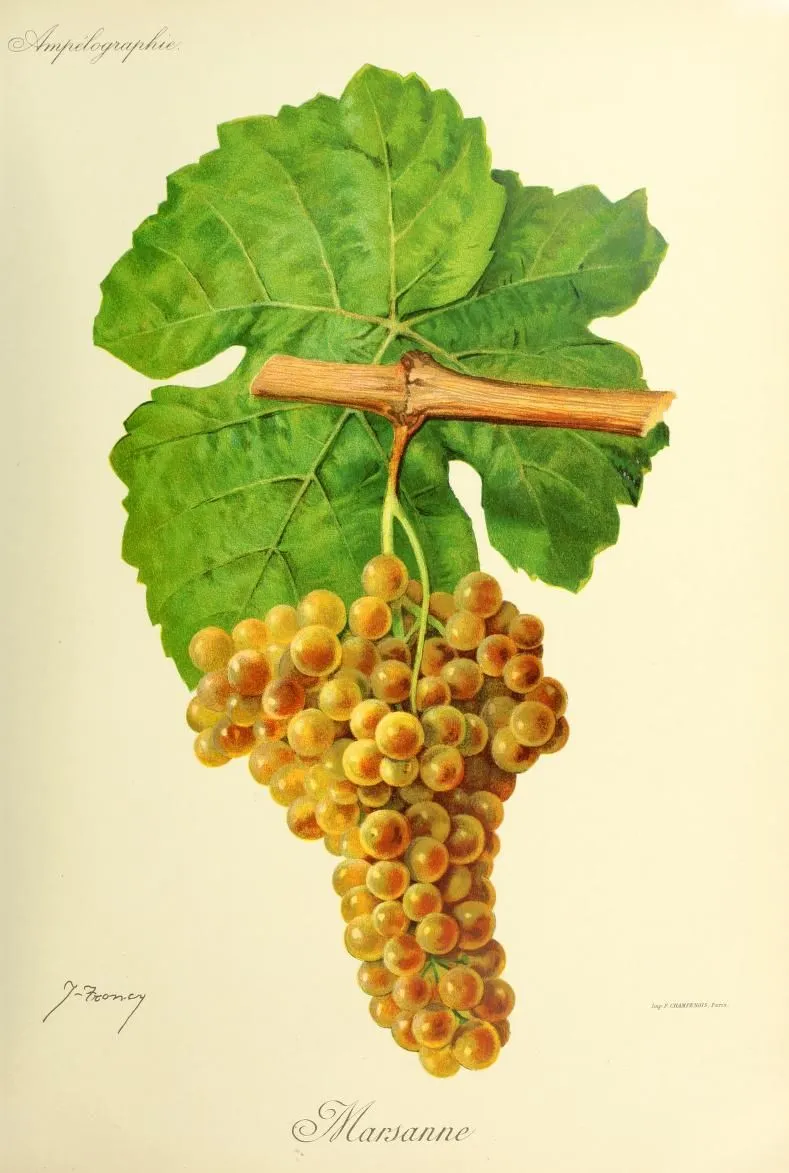
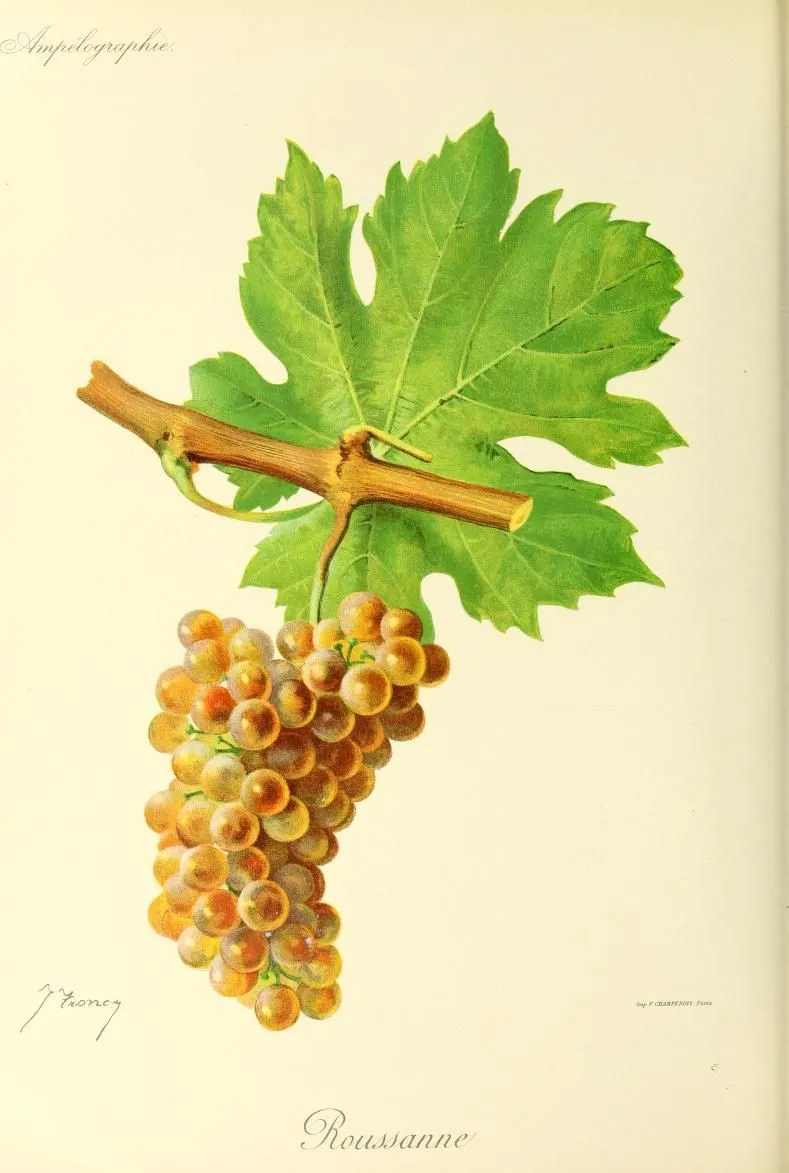
Marsanne and Roussanne: side-by-side comparison
| Criterion | Marsanne | Roussanne |
|---|---|---|
| Origin | Northern Rhône, probably linked to the village of Marsanne (Drôme) | Northern Rhône |
| Berry colour | White (B), golden when ripe | White (B), russet when ripe, hence its name |
| Cultivation | Vigorous, reliable, easier | Irregular yields, more temperamental |
| Susceptibilities | Can lack acidity in hot climates | Powdery mildew, rot, drought, wind |
| Ripening | Mid to late season | Late |
| Aromas | Almond, white fruit, honey, beeswax with age | Herbal tea, lime blossom, pear, flowers, honey |
| Structure | Full, round, substantial body | Finer, more aromatic, better-preserved acidity |
| Flagship appellations | White Hermitage, white Saint-Joseph, Saint-Péray | White Châteauneuf-du-Pape, Chignin-Bergeron, white Hermitage |
| Other regions | Valais (ermitage), Victoria (Australia) | Savoie (bergeron), Languedoc, California |
| Food pairings | Poultry in cream sauce, fish in sauce, veal | Fine fish, shellfish, pressed cheeses |
Verdict: body versus fragrance
Marsanne is the grape of body: full, round and reliable, it makes generous whites that develop notes of honey and wax with age. Roussanne is the grape of fragrance: more delicate to grow, it makes finer, more aromatic and often fresher wines. In the northern Rhône they are frequently blended, and the choice lies as much in the proportion as in the grape.
Two Rhône grapes often confused
Marsanne and roussanne both originate in the northern Rhône. Marsanne probably owes its name to the village of Marsanne, in the Drôme. Roussanne takes its name from the russet colour its berries take on when ripe.
Often planted and blended together, they can be hard for the layperson to tell apart. Misidentifications are not rare either: in California, vines sold as roussanne turned out, in the late 1990s, to be viognier. The guide ampelography: identifying a grape variety shows how they are distinguished.
In the vineyard
Marsanne is vigorous and productive. It is more reliable and less demanding than roussanne, which explains why growers have often preferred it. Poorly managed in a hot climate, it can make heavy wines lacking acidity; in too cool a climate, neutral wines.
Roussanne is late-ripening, with irregular yields, and susceptible to powdery mildew, rot, drought and wind. The selection of better clones has reduced some of these weaknesses. Picked at the right moment, it makes balanced, aromatic wines.
In the glass
Young marsanne suggests almond, white fruit and flowers; with age, it develops notes of honey, beeswax and hazelnut. Its palate is full, sometimes oily.
Roussanne suggests herbal tea, lime blossom, pear and white flowers, and in hot climates honey. It often keeps a livelier acidity.
Where to find them
In the Rhône Valley, both grapes go into the whites of Hermitage, Crozes-Hermitage, Saint-Joseph and Saint-Péray. Roussanne is one of the white grapes of Châteauneuf-du-Pape and of the southern Rhône whites, where it sits alongside clairette and grenache blanc. It is also found in Languedoc.
Roussanne is grown in Savoie under the name bergeron, in Chignin. Marsanne is grown in Switzerland, in the Valais, under the name ermitage, and in Australia, in the state of Victoria, where it has been present since the 19th century.
When to choose one or the other
Choose a marsanne-dominated white for poultry in cream sauce, fish in sauce or veal: its roundness suits rich dishes.
Choose a roussanne for fine fish, shellfish or a pressed cheese, if you prefer a more aromatic, more slender white.
Both can age: a great white Hermitage can be kept for many years. For another duel of whites, see chardonnay or sauvignon blanc.
Frequently asked questions
What is the difference between marsanne and roussanne?
Marsanne is a vigorous, reliable grape that makes full, round wines with notes of almond. Roussanne is more delicate to grow and makes finer, more aromatic wines with notes of herbal tea and pear. They are often blended in Rhône whites.
Why blend marsanne and roussanne?
The blend combines the body and reliability of marsanne with the finesse and aroma of roussanne. Historically, marsanne has often been preferred for its productivity and resistance, which explains its majority share in many northern Rhône vineyards.
Are white grapes permitted in Rhône reds?
Yes, in some appellations. In Hermitage, up to 15% marsanne and roussanne may go into the red wine; in Saint-Joseph and Crozes-Hermitage, a small proportion is also allowed. Cornas, on the other hand, is 100% syrah.
What is bergeron?
It is the Savoyard name for roussanne, grown in Chignin, in the Combe de Savoie. There it makes the cru Chignin-Bergeron, a fuller and more aromatic white than wines made from jacquère.