The grape varieties of the Savoie vineyard
Main grapes: Savoie
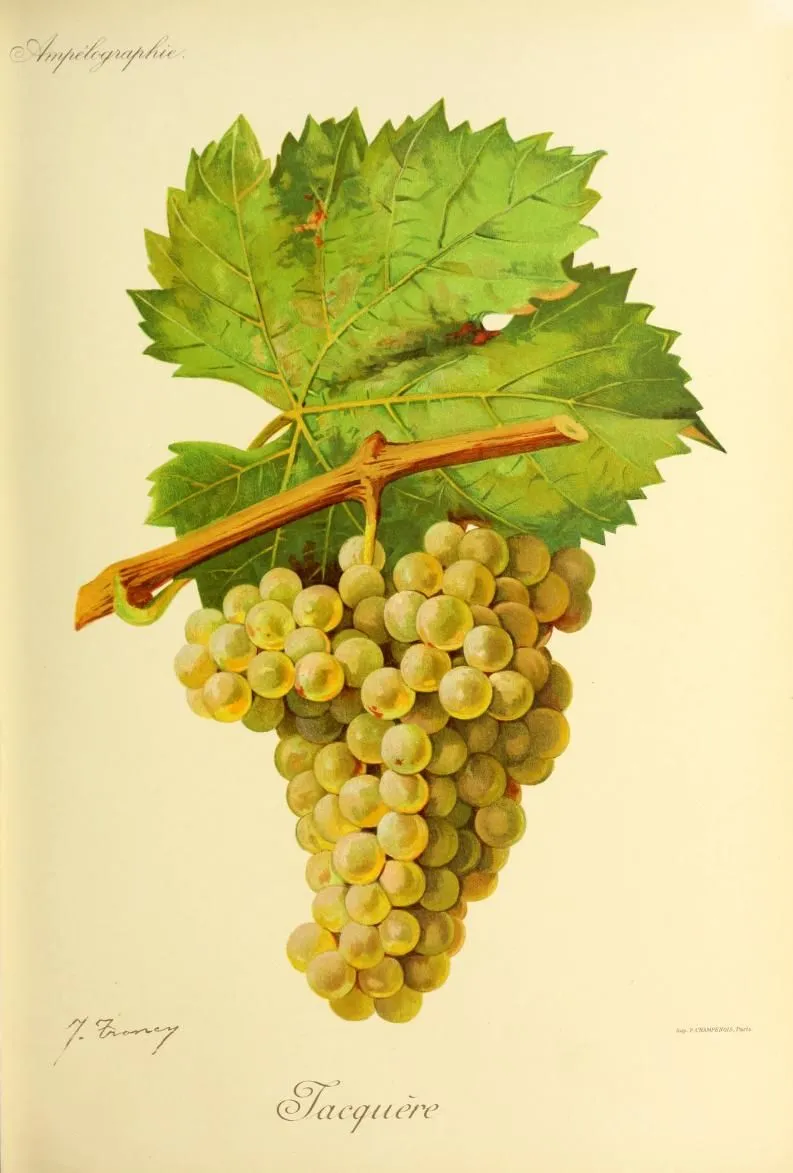
- Jacquère (white, France, Savoie)
- Altesse (white, France, Savoie (origin disputed))
- Mondeuse noire (black, France, Dauphiné (probable), Savoie)
- Roussanne (white, France, northern Rhône Valley)
- Chasselas (white, Switzerland, west of the country (Lake Geneva region))
Secondary and minor grapes
- Gamay (black, France, Burgundy)
- Pinot noir (black, France, Burgundy)
- Chardonnay (white, France, Burgundy)
Other grapes grown: Gringet, Persan, Molette, Mondeuse blanche, Étraire de la Dui, Douce noire.
A fragmented Alpine vineyard
The Savoie vineyard is a collection of small islands of vines spread across Savoie, Haute-Savoie and part of the Isère and the Ain, from the shores of Lake Geneva to the Combe de Savoie. These plots occupy well-exposed slopes, often on limestone scree or glacial moraines.
Its originality lies in its local grapes, little grown outside the Alps. The vineyard is overwhelmingly white.
The appellations and crus
Savoie has four appellations:
- Vin de Savoie, which may be followed by sixteen cru designations: Abymes, Apremont, Arbin, Ayze, Chautagne, Chignin, Chignin-Bergeron, Crépy, Cruet, Jongieux, Marignan, Marin, Montmélian, Ripaille, Saint-Jean-de-la-Porte, Saint-Jeoire-Prieuré;
- Roussette de Savoie, with four crus: Frangy, Marestel, Monterminod, Monthoux;
- Seyssel;
- Crémant de Savoie, recognised in 2014.
Grapes by appellation and by cru
| Appellation or cru | Colour | Grape(s) |
|---|---|---|
| Apremont, Abymes | White | Jacquère |
| Chignin | White / red | Jacquère / mondeuse, gamay, pinot noir |
| Chignin-Bergeron | White | Roussanne (bergeron) |
| Arbin, Saint-Jean-de-la-Porte | Red | Mondeuse noire |
| Crépy, Marignan, Marin, Ripaille | White | Chasselas |
| Ayze | White, sparkling | Gringet |
| Roussette de Savoie and its crus | White | Altesse |
| Seyssel | White, sparkling | Altesse; molette for the sparkling wines |
| Crémant de Savoie | Sparkling | Mainly jacquère and altesse |
The white grapes
Jacquère is the most planted grape in Savoie. Productive and late-ripening, it makes light, low-alcohol wines with floral and mineral notes, to drink young.
Altesse, or roussette, is the noble grape of Savoie whites. Its richer wines can age and develop notes of honey and dried fruit.
Roussanne, called bergeron, is a Rhône grape acclimatised in Chignin, where it ripens on warm slopes.
Chasselas occupies the French shores of Lake Geneva (Crépy, Marignan, Marin, Ripaille), in continuity with the neighbouring Swiss vineyard.
Gringet is grown only around Ayze, in the Arve valley, where it makes still and sparkling whites. It was long wrongly regarded as a form of savagnin.
The black grapes
Mondeuse noire is the great red grape of Savoie. It makes deeply coloured, peppery wines with black fruit and marked acidity, particularly in Arbin. It is related to syrah: mondeuse blanche, a Savoie grape, is one of the parents of syrah.
Gamay and pinot noir are also grown, notably for light reds and crémant.
Known grape rules
- The crus of the Vin de Savoie appellation are associated with a principal grape: jacquère in Apremont and Abymes, roussanne in Chignin-Bergeron, chasselas on the shores of Lake Geneva, gringet in Ayze, mondeuse in Arbin.
- Roussette de Savoie relies on altesse.
- Crémant de Savoie requires at least 60% jacquère and altesse together, with a minimum share of jacquère, which anchors this crémant in the local grapes.
Forgotten grapes and revivals
Savoie is one of the French regions where the safeguarding of old grapes is most active. Persan, a black grape once renowned, had almost disappeared after phylloxera; it is being replanted by several growers. Mondeuse blanche, douce noire, étraire de la Dui and molette are also part of this heritage. The Centre d’ampélographie alpine Pierre Galet, in Montmélian, preserves and studies these varieties (see grape variety conservatories).
Recent developments
The creation of Crémant de Savoie in 2014 opened a new outlet for jacquère and altesse. Climate warming favours the ripening of mondeuse and roussanne, but raises the question of jacquère’s freshness. The revival of persan and a few other old grapes reflects a growing interest in the genetic diversity of the Alpine vineyard.
Frequently asked questions
What is the most planted grape in Savoie?
Jacquère is the most widely grown grape in the Savoie vineyard. It makes light, crisp dry whites, notably in the Apremont and Abymes crus, at the foot of Mont Granier.
What is the difference between altesse and roussette?
Roussette is another name for altesse, a white Savoie grape. The Roussette de Savoie appellation is made from this grape. It should not be confused with roussanne, called bergeron in Savoie.
What is Chignin-Bergeron?
It is a cru of the Vin de Savoie appellation, made from roussanne, a white Rhône grape locally called bergeron. It makes broader, more aromatic whites than jacquère.
Does Crémant de Savoie exist?
Yes. The Crémant de Savoie appellation was recognised in 2014. It relies mainly on the local grapes, jacquère and altesse, which must make up at least 60% of the blend.