Savagnin: the grape of vin jaune, ancestor of a large family
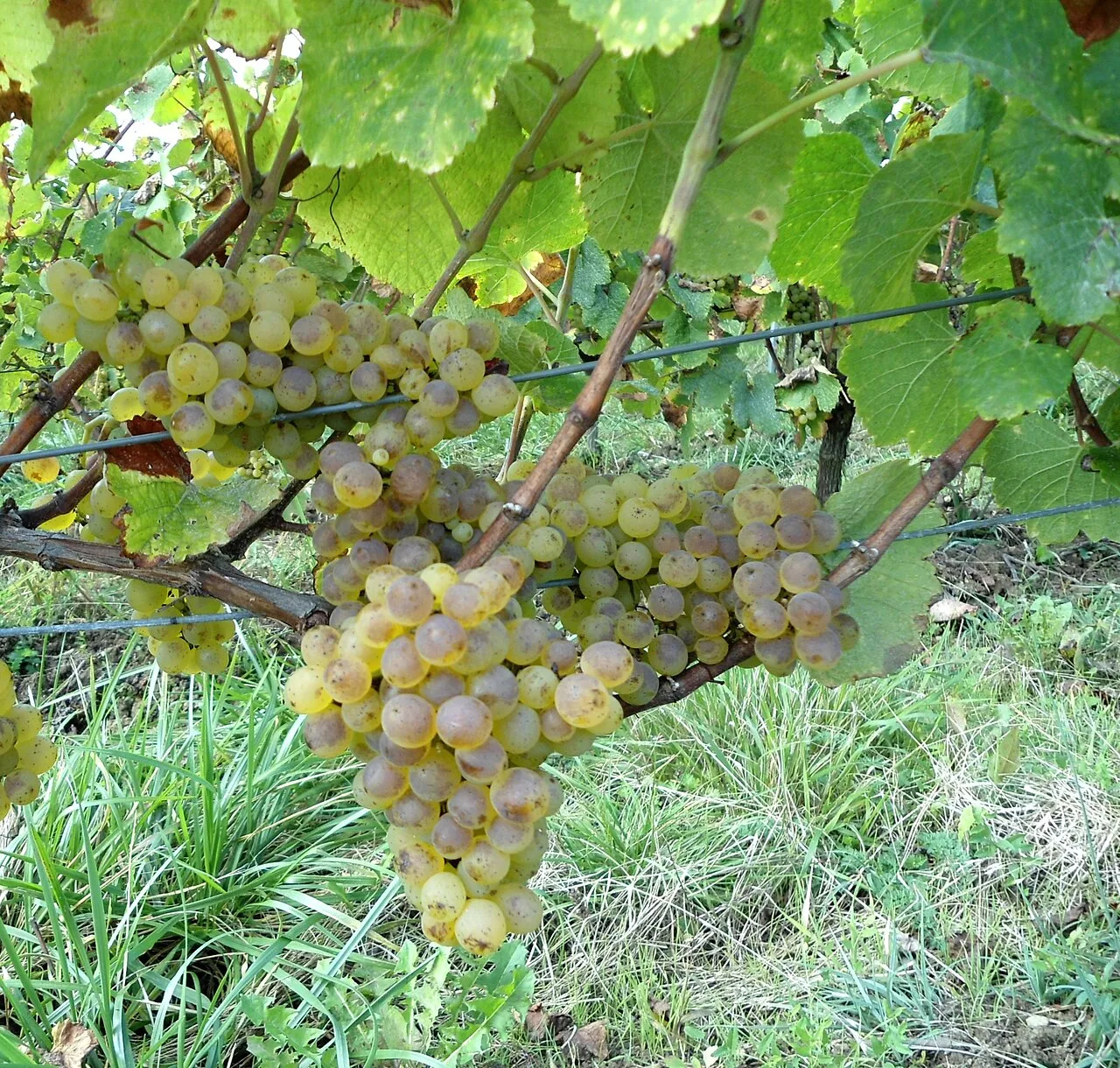
Profile: Savagnin
| Berry colour | White grape (B) |
|---|---|
| Species / status | Vitis vinifera |
| Origin | Europe, precise origin debated (Jura and Central Europe) |
| Parentage | Parents unknown; parent of sylvaner, chenin and grüner veltliner (DNA analyses) |
| Synonyms | Savagnin blanc, Naturé (Jura), Traminer (Germany, Austria), Heida (Valais), Païen (Valais) |
| French regions | Alsace, Jura |
| Grown in | France, Switzerland, Germany, Austria, Australia |
| Typical aromas | fresh walnut, curry and spices, apple, almond, citrus (topped-up savagnin), saline notes |
| Wine style | Taut dry whites in the topped-up version, and oxidative wines aged under a veil of yeast (vin jaune, typé savagnin) of very long ageing potential. |
| Food pairings | aged Comté, chicken with vin jaune and morels, trout, mild curry dishes, walnuts |
| Identifiers | VIVC no. 17636, Wikidata Q1760900 |
Origin: an ancient, well-travelled grape
Savagnin is the great white grape of the Jura, but its precise origin is still debated. It is grown under various names throughout the Alpine arc and in Central Europe, where it is called traminer. Its name is said to be linked to the French word sauvage (wild), without certainty.
Ampelographers long hesitated over the exact identity of traminer and savagnin. Pierre Galet considered traminer identical to the savagnin blanc of the Jura, and the savagnin-traminer group is now regarded as a family of related clones rather than distinct varieties.
The traminer family: savagnin, savagnin rose, gewurztraminer
This is the angle that sets savagnin apart: it heads a family with many names.
| Form | Berry colour | Aromatic profile | Where |
|---|---|---|---|
| Savagnin (blanc), called naturé in the Jura | Greenish white | Discreet | Jura, Valais (heida, païen) |
| Savagnin rose | Pink | Discreet | Alsace (klevener de Heiligenstein) |
| Gewurztraminer (aromatic savagnin rose) | Pink | Very intense (lychee, rose) | Alsace, Germany, Alto Adige |
The shift from one form to another is due to colour and aroma mutations. See the gewurztraminer page and the guide on colour mutations.
A major ancestor of European viticulture
DNA analyses have shown that savagnin is one of the founding grapes of many present-day varieties. Among its established or probable direct descendants:
- sylvaner, born of traminer and österreichisch weiss;
- chenin, whose parent-offspring relationship with savagnin was published in 1999;
- sauvignon blanc, which is thought to descend from it according to ongoing research;
- grüner veltliner, Austria’s emblematic grape.
Through sauvignon blanc, it is also a grandparent of cabernet sauvignon. See DNA parentage of grape varieties.
In the vineyard
Savagnin is a low-yielding grape, with small bunches and small berries, and late ripening. It is valued for its ability to keep high acidity while accumulating sugar, which makes it suitable for long ageing.
Jura wines: topped-up or under veil
In the Jura, savagnin comes in two families, depending on how the wine is aged.
- Topped-up savagnin (ouillé): the barrels are regularly topped up to keep air out. The wine is a dry, taut, saline white with notes of citrus and white fruit.
- Savagnin under veil (called “typé”): the barrel is not topped up; a veil of yeast forms on the surface of the wine and protects it from excessive oxidation while giving it notes of walnut, curry and spice.
Vin jaune
Vin jaune is the extreme form of ageing under veil. Made exclusively from savagnin, it is aged in barrel without topping up for at least 60 months, then sold in the clavelin, a squat 62 cl bottle. Unlike fino sherry, with which it is compared, it is not fortified and is not aged in a solera.
Savagnin is the only grape permitted in vins jaunes, notably those of Château-Chalon, an appellation reserved for vin jaune, and of L’Étoile. Vin jaune is also made in Arbois and Côtes du Jura. See the grapes of the Jura, alongside chardonnay, poulsard and trousseau.
Elsewhere: Valais, Alsace and an Australian mix-up
In Switzerland, in Upper Valais, savagnin goes by the names heida or païen; heida has been mentioned there since 1586. In Alsace, savagnin rose is grown around Heiligenstein under the name klevener de Heiligenstein.
In Australia, one affair made history: vines imported from Spain and sold as albariño turned out to be savagnin. A French expert raised the question during a visit in 2008, DNA tests confirmed it, and the affair was made public in 2009. Producers had to rename their wines. See the guide on synonyms and homonyms.
Genealogy of Savagnin
Offspring profiled on this site: Trousseau, Duras, Sauvignon blanc, Chenin blanc, Sylvaner, Petit manseng, Grüner veltliner.
Further reading
Frequently asked questions
What is the grape of vin jaune?
Vin jaune is made exclusively from savagnin. After fermentation, the wine is aged in barrel without topping up for several years, under a veil of yeast that protects it from excessive oxidation and gives it its notes of walnut and spice. It is sold in a specific bottle, the 62 cl clavelin.
Are savagnin and sauvignon the same grape?
No. Savagnin is a grape of the Jura, sauvignon blanc a grape of the Loire and Bordeaux. They are nevertheless related: research suggests that sauvignon blanc descends from savagnin.
What is the link between savagnin and gewurztraminer?
They belong to the same family, that of traminer, regarded as a set of related clones. Savagnin has white berries and discreet aromas; savagnin rose has pink berries; gewurztraminer is the aromatic pink form, with its scent of lychee and rose.
What is a topped-up (ouillé) savagnin?
It is a savagnin aged with the barrels regularly topped up (ouillage) to avoid contact with air. The wine is then a classic dry white, fresh and saline, without the oxidative notes of vin jaune or "typé" savagnin.
Why was savagnin sold as albariño in Australia?
Cuttings imported from Spain as albariño turned out to be savagnin. A French expert raised the question in 2008 and DNA tests confirmed it; the affair was made public in 2009, forcing Australian producers to rename their wines.
Related grapes
- Gewurztraminer (pink, Central Europe, South Tyrol (traminer lineage))
- Chardonnay (white, France, Burgundy)
- Poulsard (black, France, Jura)
- Trousseau (black, France, Jura)
- Sylvaner (white, Central Europe, probably Austria)
- Sauvignon blanc (white, France, Loire Valley or South-West France)