Duras: the black grape of the Tarn, a pillar of red Gaillac
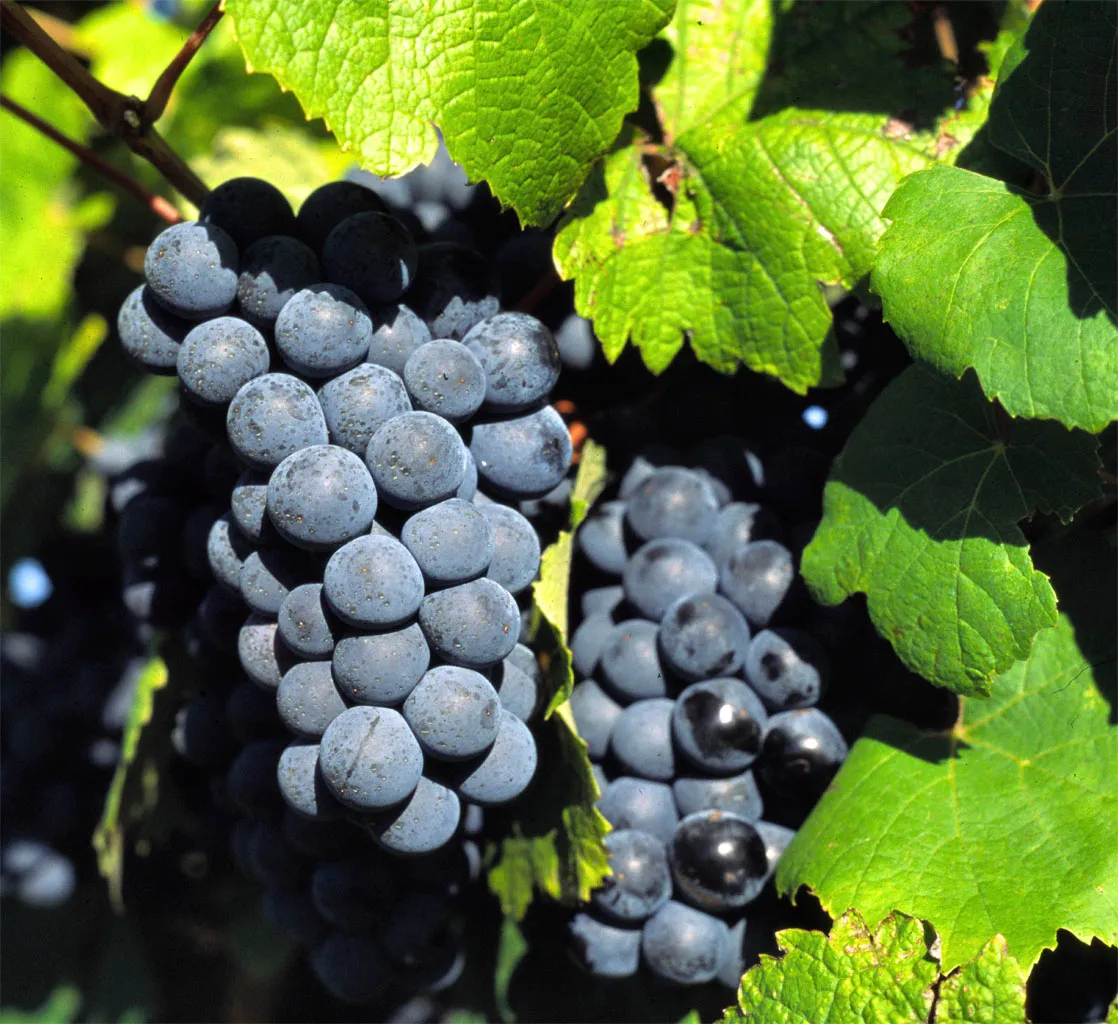
Profile: Duras
| Berry colour | Black grape (N) |
|---|---|
| Species / status | Vitis vinifera |
| Origin | France, Tarn (Gaillac) |
| Parentage | Tressot × Savagnin (DNA analysis) |
| Synonyms | Durazé (Ariège) |
| French regions | South-West France |
| Grown in | France |
| Typical aromas | black pepper, black fruit, blackcurrant, spices, subtle green notes |
| Wine style | Medium-coloured, fairly alcoholic, fruity and peppery reds, most often blended with fer servadou and syrah. |
| Food pairings | cassoulet, Tarn charcuterie, grilled duck breast, civet (game stew), ewe's milk cheeses |
| Identifiers | VIVC no. 3735, Wikidata Q440825 |
Origin: a child of the Tarn
Duras is a black grape from the Tarn. Its age is shown by a vineyard lease dated 8 November 1484, which already mentions it.
Some authors have tried to link it to the duracina cited by the Roman agronomists Cato the Elder and Columella, because the names are similar. This descent has not been demonstrated and should be treated as a hypothesis. The Gaillac grower Robert Plageoles suggested that it might descend from a lambrusque, a wild vine, from the Grésigne forest: this too is a local hypothesis, not an established result.
In the Ariège, it was known as durazé.
Parentage: tressot and savagnin
Genetic analyses identify duras as the offspring of a natural cross between tressot and savagnin. Tressot is an old black grape from the Yonne, now almost extinct. Savagnin, the emblematic white grape of the Jura, is one of the great ancestors of the European vine.
This parentage has an interesting consequence: duras, a typical South-West grape, has genetic roots that point rather to north-eastern France. See our guide on DNA parentage of grape varieties.
In the vineyard
| Trait | Duras |
|---|---|
| Vigour | High |
| Fertility | Good |
| Training | Short pruning (cordon, bush vine) or semi-short |
| Budburst | About 5 days after chasselas |
| Ripening | About 3 weeks after chasselas |
| Susceptibilities | Powdery mildew, downy mildew, mites, eutypa dieback |
| Berries | Small, in medium-sized bunches |
The wines: the peppery signature of Gaillac
Duras makes fairly alcoholic, medium-coloured wines with aromas of black fruit and above all spice, led by pepper. It is rarely sold on its own.
Its real place is in the blend of red Gaillac, alongside fer servadou, locally called braucol, and syrah. Fer servadou brings structure and notes of blackcurrant and green pepper, duras spicy liveliness, syrah colour and fruit.
The overlooked angle: saved by the 1970 appellation
The history of duras shows the effect of an appellation rule on a grape.
In the 19th century, Jules Guyot mentioned it in the Tarn, but as a secondary grape, behind fer servadou, négrette and prunelart. By the late 1960s, it covered only a few dozen hectares.
In 1970, the AOC Gaillac decree listed it as a compulsory grape for red Gaillac. Growers had to plant it to claim the appellation: its area multiplied over some twenty years, reaching several hundred hectares by the mid-1990s.
By contrast, prunelart, thought to have disappeared, was not included in 1970 and had to wait until 2008 to regain its place. To understand how these rules are set, see our guide on reading an AOC specification.
Where it is grown
Duras is grown almost only in its home vineyard, around Gaillac. It is part of the original heritage of this vineyard, one of the oldest in South-West France, together with len de l’el for whites.
Duras and Côtes de Duras: a false friend
The duras grape has no link with the Côtes de Duras appellation, in the Lot-et-Garonne, where Bordeaux grapes dominate. Coincidences of names are common in the vineyard, as explained in our guide on synonyms and homonyms.
Duras and fer servadou: a complementary pair
Red Gaillac relies on combining grapes with different characters. Duras and fer servadou are its two local pillars.
| Point | Duras | Fer servadou (braucol) |
|---|---|---|
| Origin | Tarn | South-West France |
| Colour of the wines | Medium | Deep |
| Main aromas | Pepper, spice, black fruit | Blackcurrant, red fruit, green notes |
| Contribution to the blend | Spice, alcohol, aromatic liveliness | Structure, tannins, freshness |
| Vinified on its own | Rare | More common |
How to taste it
A red Gaillac rich in duras can often be recognised by its peppery note and black fruit, on a rather supple texture. These wines are usually drunk in their first few years, served at around 16 °C, with Tarn cooking: charcuterie, cassoulet, grilled meats.
Genealogy of Duras
Identified parents (Wikidata): Savagnin.
Further reading
Frequently asked questions
Is duras connected with Côtes de Duras?
No. Despite the name, duras has no link with the Côtes de Duras appellation in the Lot-et-Garonne, where mainly Bordeaux grapes are grown. The duras grape is grown almost exclusively in the Gaillac vineyard, in the Tarn.
Who are the parents of duras?
Genetic analyses identify it as a natural cross between tressot, an old black grape from the Yonne, and savagnin, a white grape from the Jura and the ancestor of many varieties. This parentage links it to grape families of north-eastern France rather than to South-West France.
What does a duras wine taste like?
Duras makes medium-coloured, fairly alcoholic wines with black fruit and above all notes of pepper. It is rarely vinified on its own: in Gaillac, it brings spice and aromatic liveliness to blends with fer servadou (braucol) and syrah.
Is duras a rare grape?
It is little known to the general public but is not marginal in Gaillac. Its inclusion in the red Gaillac appellation in 1970 strongly revived plantings, which rose sharply between the late 1960s and the 1990s.
Related grapes
- Fer servadou (black, France, South-West)
- Prunelart (black, France, Tarn (Gaillac))
- Négrette (black, France, South-West (between Toulouse and Albi))
- Syrah (black, France, northern Rhône Valley)
- Savagnin (white, Europe, precise origin debated (Jura and Central Europe))
- Len de l'El (white, France, South-West (Gaillac))
- Trousseau (black, France, Jura)
- Sauvignon blanc (white, France, Loire Valley or South-West France)