Len de l'El: the white grape of Gaillac with an Occitan name
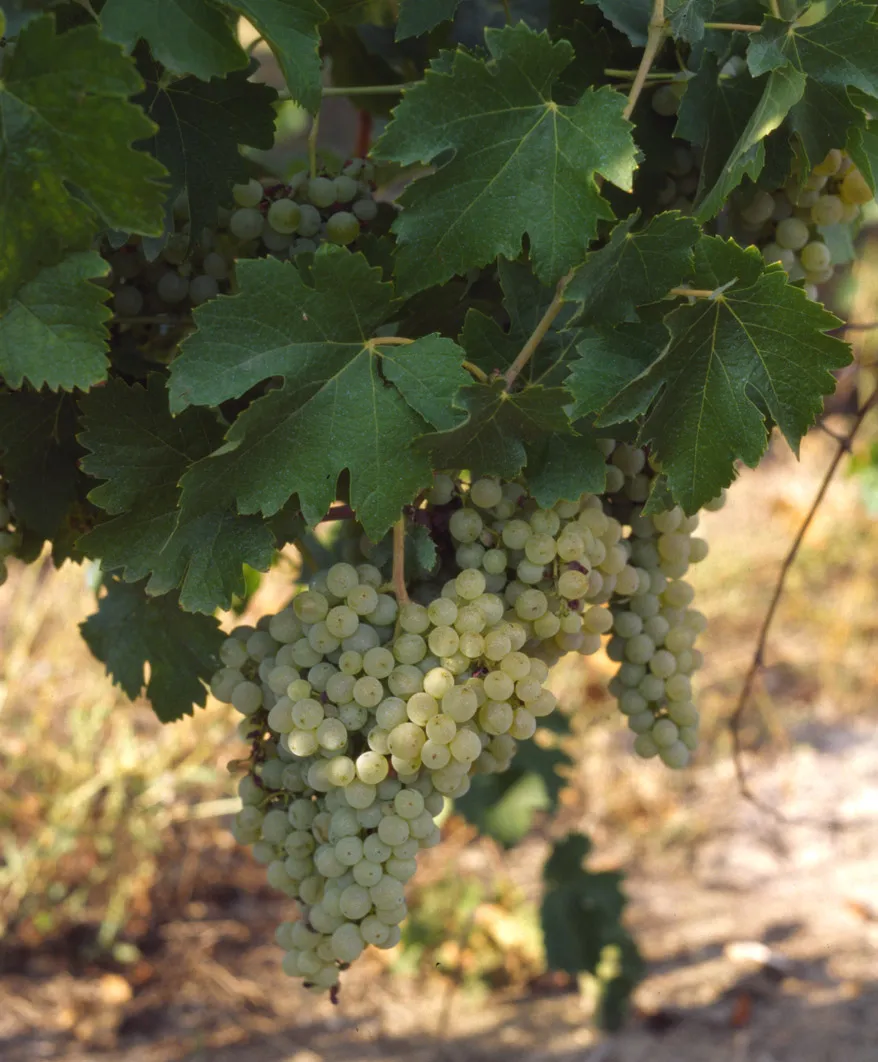
Profile: Len de l'El
| Berry colour | White grape (B) |
|---|---|
| Species / status | Vitis vinifera |
| Origin | France, South-West (Gaillac) |
| Synonyms | Loin de l'œil, Len de l'Elh, Cavalié |
| French regions | South-West France |
| Grown in | France |
| Typical aromas | yellow fruit, ripe pear, exotic fruit, honey (sweet wines), white flowers |
| Wine style | Full, rich, low-acid whites, dry, medium-sweet or sparkling, almost always blended with mauzac. |
| Food pairings | foie gras (sweet wines), roast poultry, river fish in sauce, blue-veined cheeses (sweet wines) |
| Identifiers | VIVC no. 6803, Wikidata Q464799 |
An Occitan name: “far from the eye”
Len de l’el is a native white grape of the Gaillac vineyard, in the Tarn. Its name, from Toulouse Occitan, translates as “far from the eye”. The explanation most often put forward lies in the plant’s morphology: the bunch is attached to the cane by a long stalk, which keeps it away from the bud, called the “eye” by growers.
It is one of the few French grapes whose usual name remains in a regional language. It is also found under spellings such as “len de l’elh” or under the name cavalié.
Origin: a child of the Gaillac terroir
Ampelographers consider len de l’el to originate from the Gaillac region, where vines have been grown since Antiquity. No genetic parentage has been clearly established to date.
It belongs to this heritage of old grapes specific to South-West France, such as mauzac, duras and prunelart, presented in the guide on forgotten grapes of the South-West.
A delicate grape to grow
Len de l’el is not an easy grape:
- it is very prone to rot, which calls for well-ventilated plots, often on free-draining slopes;
- it is vigorous and tends to overproduce if yields are not controlled;
- it ripens earlier than mauzac, by about two weeks according to sources, which complicates the harvest of blends.
Its main winemaking weakness is its lack of acidity: it easily reaches high alcohol levels, but can give heavy wines if picked too ripe.
Its place in the Gaillac AOC
Len de l’el is one of the pillars of white Gaillac. The appellation’s specification requires a minimum share of len de l’el or sauvignon blanc in the whites, and sauvignon may now replace it. Other grapes are allowed in addition, including mauzac, sémillon, muscadelle and ondenc.
| Gaillac style | Role of len de l’el | Profile |
|---|---|---|
| Dry white | Possible main grape, often with mauzac | Round, fruity, low acidity |
| Sweet white | Highly valued for its sugar richness | Yellow fruit, honey, power |
| Sparkling | In the blend | Adds roundness |
| IGP Comté Tolosan | Sometimes made as a single variety | More experimental cuvées |
To understand how a specification sets these proportions, see the guide on reading an AOC specification.
The wines: power and fruit
Len de l’el wines are generally full, powerful and low in acidity, with notes of yellow fruit, ripe pear, sometimes exotic fruit. Jancis Robinson describes them as “powerful and full of character”.
In sweet wines, its ability to concentrate sugars makes it a sought-after partner. In dry wines, it benefits from blending: mauzac brings the liveliness and apple aromas that it lacks. This is why many growers pick mauzac a little earlier, to keep the acidity needed to balance the blend.
A confidential but defended grape
Len de l’el remains a niche grape, almost impossible to find outside Gaillac. It nevertheless benefits from the growing interest in native grapes, and a few estates make it as a single variety to show its character. For this reason it features among the rare and forgotten grapes.
Further reading
Frequently asked questions
What does len de l'el mean?
The name comes from Occitan and corresponds to the French "loin de l'œil" (far from the eye). It is thought to refer to the long stalk that keeps the bunch away from the bud, called the "eye" in viticulture. The two spellings, Occitan and French, designate the same grape.
Where can you find len de l'el?
Len de l'el is almost exclusively grown in the Gaillac vineyard, in the Tarn. It is found in dry, sweet and sparkling white Gaillac, generally blended with mauzac. 100% len de l'el cuvées exist but remain rare.
What is the difference between len de l'el and mauzac?
Both are native white grapes of Gaillac, but they are complementary. Len de l'el ripens earlier, accumulates a lot of sugar and lacks acidity; mauzac is later and livelier, with its apple aromas. Blending them balances the richness of one with the freshness of the other.
Is len de l'el compulsory in white Gaillac?
The Gaillac AOC specification requires whites to contain a minimum share of len de l'el or sauvignon blanc. Sauvignon can therefore replace it, which explains why some white Gaillac contain none.
Related grapes
- Mauzac (white, France, South-West (Gaillac, Limoux))
- Sauvignon blanc (white, France, Loire Valley or South-West France)
- Sémillon (white, France, Bordeaux region)
- Colombard (white, France, Charentes)