Melon de Bourgogne: from the Burgundy vineyard to Muscadet in the Nantes region
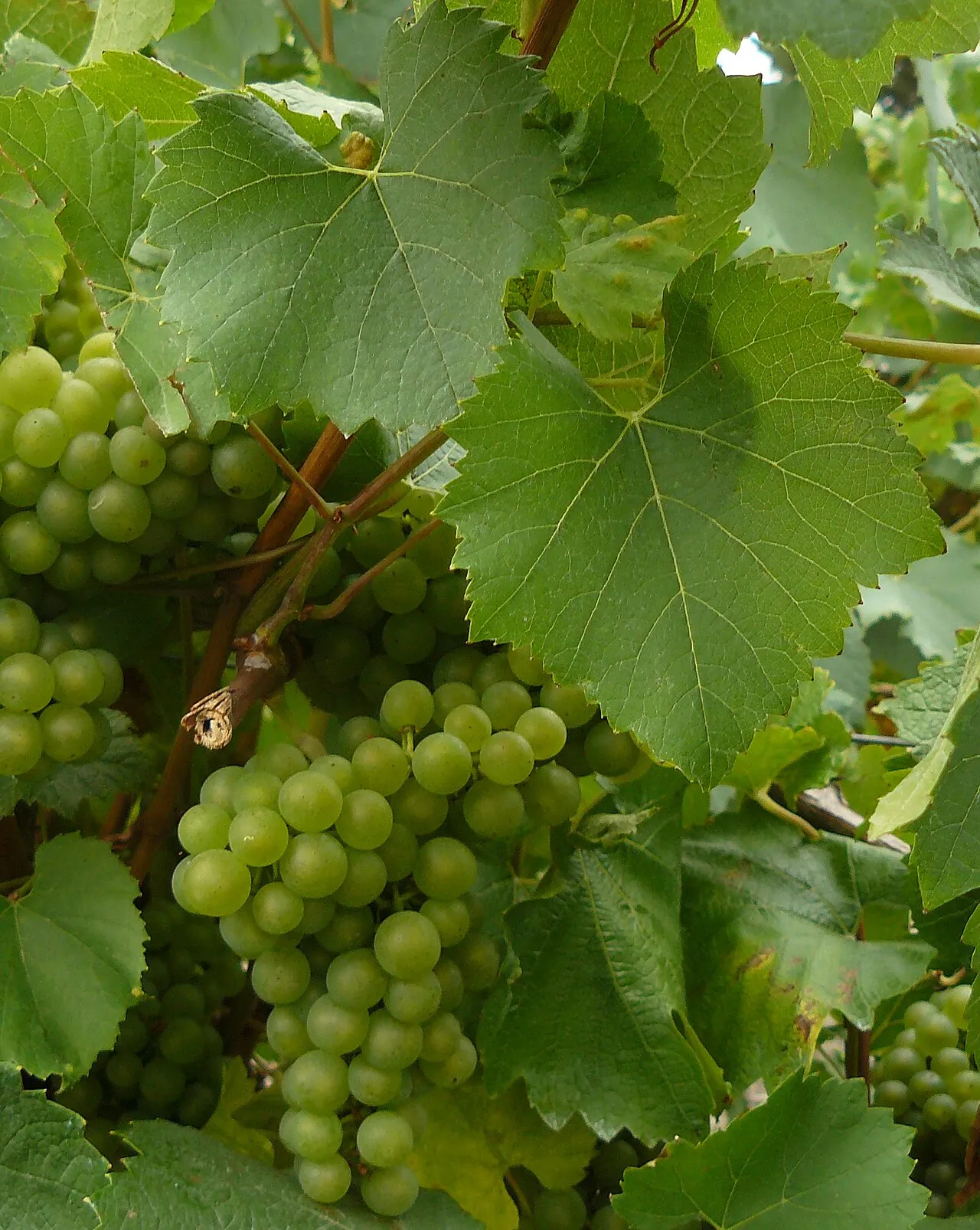
Profile: Melon de Bourgogne
| Berry colour | White grape (B) |
|---|---|
| Species / status | Vitis vinifera |
| Origin | France, Burgundy |
| Parentage | Pinot × Gouais blanc (natural cross, DNA analysis of 1999) |
| Synonyms | Melon, Muscadet |
| French regions | Burgundy, Loire Valley |
| Grown in | France, United States |
| Typical aromas | lemon and citrus, green apple, white flowers, iodine and saline notes, yeast and bread crumb (lees ageing) |
| Wine style | Light, lively, saline dry whites, with volume and a hint of spritz when aged on the lees; ageing potential for the communal crus. |
| Food pairings | oysters, moules marinières, seafood, fish with beurre blanc, fried fish |
| Identifiers | VIVC no. 7615, Wikidata Q1417652 |
Origin: a Burgundian child of pinot and gouais
Melon de Bourgogne was, as its name says, born in Burgundy. The genetic analysis published in 1999 in the journal Science showed that it comes from a natural cross between pinot and gouais blanc. It therefore shares both its parents with chardonnay, gamay and aligoté.
In Burgundy, it was grown for a long time before being set aside in favour of grapes considered nobler. It is marginal there today. See the grapes of Burgundy and the guide on DNA parentage of grape varieties.
From the frost of 1709 to the Nantes region
Melon found a second homeland in the Nantes region, at the mouth of the Loire. According to tradition, its spread there is linked to the great winter of 1709, which destroyed much of the vineyard: melon, more resistant to cold, is said to have been favoured when replanting. This account is widespread, but the details of this spread are poorly documented.
There, melon sits alongside folle blanche, known locally as gros-plant, which makes another regional dry white, Gros Plant du Pays nantais.
In the vineyard
Melon de Bourgogne is an early grape, reputed to be fairly resistant to winter cold, but sensitive to spring frost, downy mildew and grey rot. It is productive, with compact bunches.
Its earliness lets it ripen in the cool oceanic climate of the Nantes region, while keeping lively acidity.
Muscadet: appellations and ageing on the lees
Melon is the sole grape of Muscadet wines. The name “muscadet”, which also designates the grape in the region, is said to come from a musky note attributed to the wine, with no link to the muscats.
| Appellation | Location |
|---|---|
| Muscadet | Regional appellation, the widest area |
| Muscadet Sèvre et Maine | South-east of Nantes, around the Sèvre and Maine valleys; most of the production |
| Muscadet Coteaux de la Loire | Upstream of Nantes, along the river |
| Muscadet Côtes de Grandlieu | Around Lake Grand-Lieu |
Ageing on the lees
The term “sur lie” marks an emblematic technique. The wine is kept on its fine lees (dead yeast) during the winter following the harvest, without racking, then bottled according to rules set by the specification.
This prolonged contact brings volume on the palate, bread-crumb notes and sometimes a slight spritz due to residual carbon dioxide. See reading an AOC specification.
The communal crus
Since the 2010s, communal crus of Muscadet Sèvre et Maine have been recognised, notably Clisson, Gorges and Le Pallet. They rest on delimited terroirs (granite, gabbro, gneiss depending on the case) and on much longer ageing on the lees. These wines are meant for keeping, in contrast to the image of a simple wine long associated with Muscadet. See the grapes of the Loire Valley.
Melon outside France: a lost identity in California
The most surprising angle on melon is found in the United States. In California, some of the vines planted and sold as pinot blanc turned out to be melon de Bourgogne. It was only after ampelographic examination that the confusion was corrected. Melon and pinot blanc do indeed look alike in the vineyard, all the more as they share pinot ancestry.
Outside France, however, melon remains very little grown: the Nantes region holds most of the world’s plantings.
Genealogy of Melon de Bourgogne
Identified parents (Wikidata): Pinot noir and Gouais.
Further reading
Frequently asked questions
Is Muscadet a grape?
Muscadet is the name of the appellation, but also a local name for the grape, whose official name is melon de Bourgogne (or melon B.). All the wines of the Muscadet AOCs are made from this single grape. Muscadet has no connection with the muscats.
What does "sur lie" mean on a Muscadet label?
The term indicates that the wine was aged on its fine lees, that is the dead yeast left after fermentation, during the winter following the harvest, without racking, then bottled within the deadlines set by the specification. This ageing brings volume, bread notes and sometimes a slight spritz.
Why does a grape called "de Bourgogne" grow near Nantes?
Melon was born in Burgundy, where it was largely pulled up. It took hold in the Nantes region, tradition linking its spread to the rebuilding of the vineyard after the great winter of 1709. It found an adopted home there, where it became the grape of Muscadet.
Related grapes
- Chardonnay (white, France, Burgundy)
- Aligoté (white, France, Burgundy)
- Gamay (black, France, Burgundy)
- Chenin blanc (white, France, Loire Valley (Anjou-Touraine))
- Pinot blanc (white, France, Burgundy (pinot mutation))
- Aramon noir (black, France, Languedoc)
- Blaufränkisch (black, Central Europe, probably Lower Styria (present-day Slovenia))
- Pinotage (black, South Africa, Stellenbosch)