Meunier: the floury pinot that became a pillar of champagne
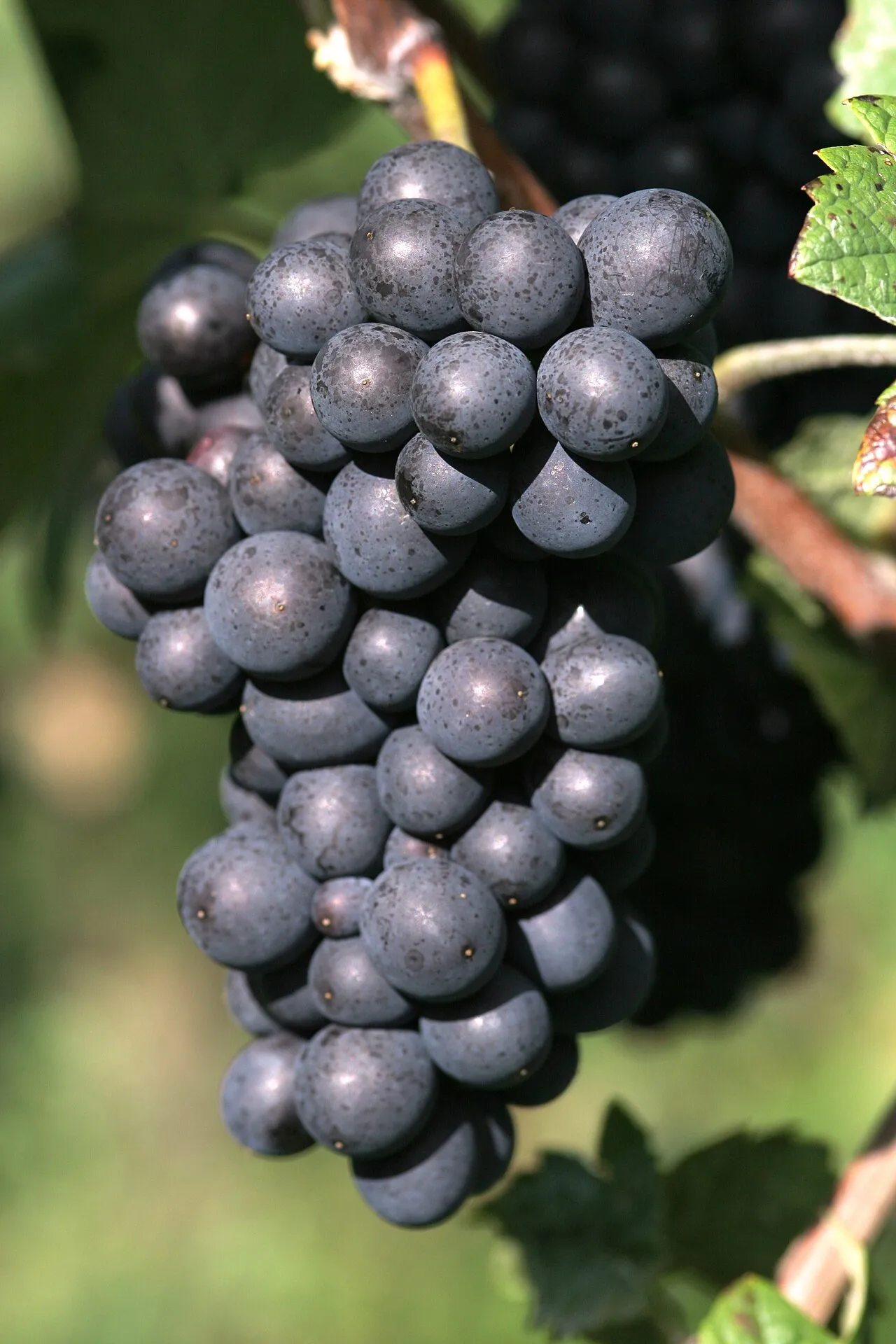
Profile: Pinot meunier
| Berry colour | Black grape (N) |
|---|---|
| Species / status | Vitis vinifera |
| Origin | France, north-east (pinot mutation) |
| Parentage | Chimeric mutation of pinot (outer cell layer) |
| Synonyms | Meunier, Schwarzriesling (Germany), Müllerrebe (Germany), Pinot meunier |
| French regions | Champagne, Loire Valley |
| Grown in | France, Germany, Australia, United States, New Zealand, United Kingdom |
| Typical aromas | red fruit, apple, dried fruit and nuts, fresh bread, sweet spices, floral notes |
| Wine style | Base for fruity, round sparkling wines that evolve faster than pinot noir, and a few light reds and rosés. |
| Food pairings | aperitif, gougères (cheese puffs), roast poultry, fine charcuterie |
| Identifiers | VIVC no. 9278, Wikidata Q947208 |
Origin: a mutation of pinot
Meunier is a mutation of pinot noir. It therefore belongs to the large pinot family, which also includes pinot gris and pinot blanc. It has been grown in northern France for several centuries.
Its name comes from the white down that covers the underside of its leaves and, in spring, the young shoots. This floury appearance recalls a miller (meunier) covered in flour. The same image is found in its German names: Müllerrebe, “miller’s vine”.
The angle to know: a plant chimera
Meunier is a famous example of a periclinal chimera in viticulture. A vine plant is made up of several layers of cells derived from the meristem, notably:
- an outer layer (L1), which forms the epidermis;
- an inner layer (L2), which forms, among other things, the reproductive cells.
In meunier, only the outer layer carries the mutation. The inner layers remain close to pinot. This is why meunier looks different from pinot noir (downy leaves, slightly different growth habit) while having practically identical DNA.
| Trait | Pinot noir | Meunier |
|---|---|---|
| Leaves | Slightly downy | Floury white down |
| Budburst | Early | Later |
| Ripening | Early | A little earlier |
| Susceptibility to spring frost | Higher | Lower |
| Profile of base wines | Structure, ageing | Fruit, roundness, faster evolution |
When these layers are separated experimentally by tissue culture, the resulting plants have a very different growth habit, with shortened internodes. This phenomenon is detailed in the guide colour mutations, which deals more broadly with pinot mutations.
In Germany, a selection of meunier developed in Württemberg, Samtrot, further illustrates the variability of this family. See also clones and mass selection.
In the vineyard
Meunier buds later than pinot noir and chardonnay, which makes it less susceptible to spring frosts. On the other hand, it ripens a little earlier and is less prone to poor fruit set (coulure). It is considered hardy and adapts to clay soils.
These qualities explain its place in frost-prone areas and on valley floors, notably in the Marne valley.
The wines
In Champagne, meunier brings fruit, roundness and suppleness to blends. Its base wines evolve faster than those of pinot noir, which traditionally made it a grape for cuvées to be drunk fairly young.
This image has changed: several producers make 100% meunier champagnes, as blanc de noirs, which show its ability to express terroir. Meunier is also used for rosés and in Coteaux Champenois still wines.
It is also permitted in a few Loire Valley wines, and made as a red in Germany under the name Schwarzriesling.
Where it is grown
- Champagne: with pinot noir and chardonnay, it is one of the three main grapes and accounts for about a third of the vineyard area, with a strong presence in the Marne valley and the Aisne.
- Germany: under the name Schwarzriesling, mainly in Württemberg.
- Other countries: Australia, California, New Zealand and England, often for sparkling wines.
Further reading
Frequently asked questions
Is meunier a pinot?
Yes. Meunier is a mutation of pinot, and its DNA is practically identical to that of pinot noir. The mutation affects only the outer layer of the plant's cells, which makes it a chimera: it looks different from pinot noir, notably because of the white down on its leaves.
Why is it called meunier?
The underside of its leaves, and partly the upper side in spring, is covered in a white down that recalls flour. The name meunier ("miller"), like the German Müller, refers to the miller dusted with flour.
Why is meunier planted in the Marne valley?
It buds later than pinot noir and chardonnay, which makes it less exposed to spring frosts, frequent on valley floors. It also ripens a little earlier. These qualities make it a grape suited to the more clay-rich soils and frost-prone areas of the Marne valley.
Are there 100% meunier champagnes?
Yes. Meunier was long regarded as a blending grape, bringing fruit and roundness to young wines. Producers now make cuvées of meunier alone, as blanc de noirs, which have helped raise the grape's standing.
Related grapes
- Pinot noir (black, France, Burgundy)
- Chardonnay (white, France, Burgundy)
- Pinot gris (grey, France, Burgundy (pinot mutation))
- Pinot blanc (white, France, Burgundy (pinot mutation))
- Gamay (black, France, Burgundy)