Tempranillo: the early-ripening grape of Rioja and Ribera del Duero
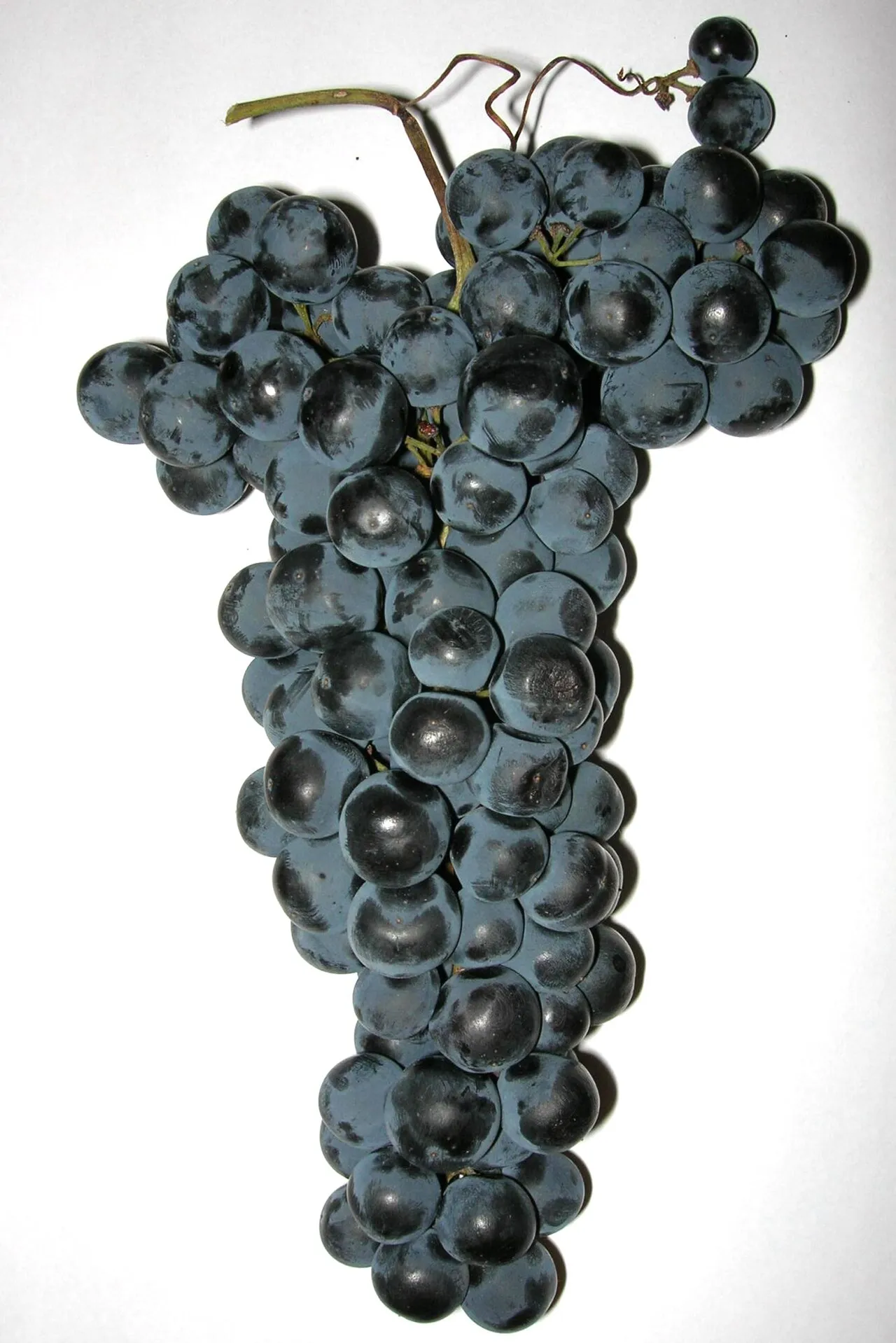
Profile: Tempranillo
| Berry colour | Black grape (N) |
|---|---|
| Species / status | Vitis vinifera |
| Origin | Spain, north of the peninsula (Rioja, Ebro valley) |
| Parentage | Albillo mayor × Benedicto (natural cross, 2012 DNA analysis) |
| Synonyms | Tinto fino, Tinta del País, Tinta de Toro, Cencibel, Ull de llebre, Tinta Roriz, Aragonez |
| Grown in | Spain, Portugal, Argentina, United States, Australia, Mexico |
| Typical aromas | strawberry, cherry, plum, tobacco, leather, vanilla and coconut (American oak ageing) |
| Wine style | Reds with medium to long ageing potential, from fruity young wines (joven) to wines given long barrel ageing (reserva, gran reserva). |
| Food pairings | roast lamb (lechazo), chorizo and jamón, grilled meats, manchego cheese |
| Identifiers | VIVC no. 12350, Wikidata Q519874 |
Origin: Spain’s noble grape
Tempranillo is often presented as Spain’s noble grape. A native of the north of the peninsula, it is inseparable from Rioja and Ribera del Duero. It is one of the most widely planted grapes in the world, with the great majority of its area in Spain.
Its name comes from temprano, “early”: it ripens several weeks before most other Spanish reds, such as grenache (garnacha) or carignan (mazuelo).
Parentage: a child of albillo mayor
A study published in 2012 identified its parents: tempranillo is a natural cross between albillo mayor, a white grape from Ribera del Duero, and benedicto, an almost forgotten Aragonese variety. The cross is thought to have taken place in the Ebro valley, between Rioja and Aragon.
An old legend made tempranillo a descendant of pinot noir brought by Burgundian monks along the Way of St James. DNA analysis does not confirm this hypothesis. See DNA parentage of grape varieties.
The thousand names of tempranillo
Few grapes have so many names. Each region adopted it under a local name, often linked to the idea of a form specific to its terroir.
| Name | Region | Country |
|---|---|---|
| Tempranillo | Rioja, Navarra | Spain |
| Tinto fino, tinta del País | Ribera del Duero | Spain |
| Tinta de Toro | Toro | Spain |
| Cencibel | La Mancha, Valdepeñas | Spain |
| Ull de llebre (“hare’s eye”) | Catalonia | Spain |
| Tinta Roriz | Douro, Dão | Portugal |
| Aragonez | Alentejo | Portugal |
In the Douro, it goes into port blends and dry reds, alongside touriga nacional. To make sense of these names, see our guide on synonyms and homonyms.
In the vineyard
Tempranillo likes limestone soils and continental climates, with hot days and cool nights, as on the high plateau of Ribera del Duero. It is susceptible to many diseases and to climatic extremes. Its natural acidity is moderate, hence the value of high-altitude vineyards or of blending with more acidic grapes.
The wines: the central role of ageing
Tempranillo has a fairly neutral aromatic profile when young: strawberry, cherry, plum. It is often barrel ageing that gives it its character, with notes of vanilla, coconut (American oak, traditional in Rioja), tobacco and leather.
Rioja’s ageing terms
The most useful way to understand a Spanish tempranillo label is the ageing term. In the DOCa Rioja, for red wines:
| Term | Minimum total ageing | Of which in barrel |
|---|---|---|
| Joven / genérico | No requirement | None |
| Crianza | 2 years | 1 year |
| Reserva | 3 years | 1 year |
| Gran reserva | 5 years | 2 years |
These terms indicate the length of ageing, not directly the quality. Other Spanish appellations apply their own rules.
In Rioja, tempranillo is traditionally blended with grenache, mazuelo (carignan) and graciano. In Ribera del Duero and Toro, it is most often made on its own or nearly so, for more powerful and more deeply coloured reds.
The overlooked angle: tempranillo blanco
In the late 1980s, a Rioja grower spotted in an old vineyard a tempranillo vine producing white grapes. It was a natural colour mutation. Propagated and studied, this tempranillo blanco was later permitted in the DOCa Rioja, where it makes aromatic whites, on its own or blended with macabeo (viura). On this phenomenon, see our guide on colour mutations.
Elsewhere in the world
Outside the Iberian peninsula, tempranillo is planted in Argentina (Mendoza), the United States (California, Oregon, Washington, Texas), Australia and Mexico, generally on small areas.
Tasting notes
A young tempranillo (joven) is drunk for its fruit: strawberry, cherry, plum, with supple tannins. A Rioja crianza or reserva adds the notes of oak ageing: vanilla, coconut, sweet spices. A gran reserva evolves towards leather, tobacco and dried fruit, with a brick-tinged colour. In Ribera del Duero and Toro, the wines are generally more deeply coloured and more powerful.
Further reading
Frequently asked questions
What does the word tempranillo mean?
The name comes from the Spanish temprano, "early". It refers to the grape's early ripening: it ripens several weeks before most other Spanish red grapes, such as grenache or carignan.
Tinto fino, tinta de Toro, cencibel: are they tempranillo?
Yes. They are regional names for tempranillo: tinto fino or tinta del País in Ribera del Duero, tinta de Toro in Toro, cencibel in La Mancha, ull de llebre in Catalonia. In Portugal, it is called tinta roriz in the Douro and aragonez in the Alentejo. Centuries of local selection may have created clonal differences, but the variety is the same.
What do crianza, reserva and gran reserva mean?
They are ageing terms. In Rioja, for reds, a crianza has at least two years including one in barrel, a reserva at least three years including one in barrel, and a gran reserva at least five years including two in barrel. Other Spanish appellations have their own rules.
What are the parents of tempranillo?
A genetic study published in 2012 showed that tempranillo comes from a natural cross between albillo mayor, a white grape from Ribera del Duero, and benedicto, an almost extinct Aragonese variety. The old hypothesis of a link with pinot noir has not been confirmed.
Related grapes
- Grenache noir (black, Spain, Aragon (origin disputed with Sardinia))
- Carignan (black, Spain, Aragon (Cariñena region))
- Touriga nacional (black, Portugal, probably Dão)
- Mencía (black, Iberian Peninsula, north-west (Spain or Portugal))
- Bobal (black, Spain, Valencia (Utiel-Requena))
- Macabeu (white, Spain, north-east (exact origin debated))