Macabeu: from Roussillon to cava and white Rioja
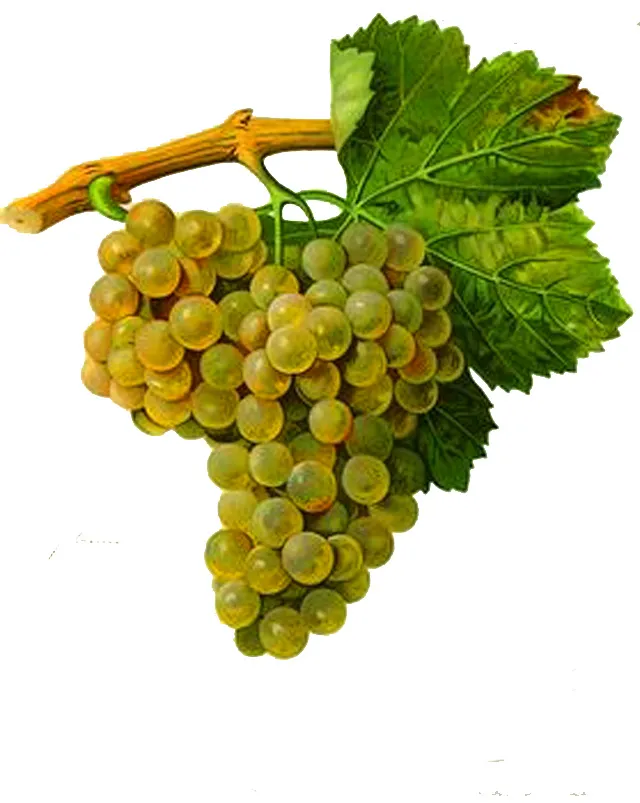
Profile: Macabeu
| Berry colour | White grape (B) |
|---|---|
| Species / status | Vitis vinifera |
| Origin | Spain, north-east (exact origin debated) |
| Parentage | Passerille blanche × Brustiano faux |
| Synonyms | Macabeo, Viura, Macabeu blanc |
| French regions | Languedoc-Roussillon |
| Grown in | Spain, France |
| Typical aromas | white flowers, apple, almond, citrus, hay, hazelnut and wax (aged wines) |
| Wine style | Rather neutral white, fresh when young, able to age for a long time in an oxidative style; base for sparkling wines and vins doux naturels. |
| Food pairings | tapas and Iberian charcuterie, grilled fish, seafood rice, mature sheep's cheeses (aged white Rioja) |
| Identifiers | VIVC no. 13127, Wikidata Q1756570 |
One grape, three names
Macabeu is a white grape grown on both sides of the Pyrenees, under three names that designate the same variety:
| Name | Where | Main wines |
|---|---|---|
| Macabeu | Roussillon (France), Catalonia in Catalan | White Côtes du Roussillon, Rivesaltes |
| Macabeo | Catalonia, Aragon, much of Spain | Cava, Penedès whites |
| Viura | Rioja, Navarra | White Rioja, from the freshest to the most oxidative |
This case of synonymy within a single grape is presented in the guide on synonyms and homonyms.
Origin: probably Spanish
Macabeo is considered to originate from north-eastern Spain, though its precise cradle is not established. No parentage has been clearly demonstrated. It spread to Roussillon, long attached to the Crown of Aragon and then to Spain until the Treaty of the Pyrenees in 1659, which explains the kinship of Catalan plantings.
Macabeo in cava
Together with xarel·lo and parellada, macabeo forms the historic trio of cava, the Spanish sparkling wine made by the traditional method. Each plays a role:
- macabeo brings fruit and freshness;
- xarel·lo gives body and structure;
- parellada adds finesse and floral notes.
Chardonnay and pinot noir are also allowed in cava, but the Catalan trio remains the majority in production.
Viura and white Rioja
In Rioja, viura is the main white grape. It long gave a unique style there: whites aged several years in barrel, deliberately oxidative, with notes of walnut, wax and honey, able to age for decades. This traditional style coexists with modern whites, fresh and fruity, made in tank at low temperature.
Rioja is best known for its tempranillo reds, but its viura whites are its other face.
Macabeu in Roussillon
In France, macabeu is grown in Roussillon. It goes into:
- the dry whites of Côtes du Roussillon, often blended with grenache blanc, roussanne or vermentino;
- white and amber vins doux naturels, such as Rivesaltes, alongside grenache and muscat of Alexandria.
See the grapes of Languedoc-Roussillon.
In the vineyard: late budbreak, sensitivities
Macabeo buds late, which limits the risk of spring frost. It is however sensitive to grey rot and to certain trunk diseases. Productive, it gives neutral wines if yields are not controlled.
In the cellar, it is sensitive to oxidation, a trait that the traditional Rioja style has made use of.
The wines: neutrality and longevity
When young, macabeu gives fresh, rather neutral whites, with notes of white flowers, apple and almond. Its richness comes with ageing: on lees, in barrel or in an oxidative style, it develops aromas of hazelnut, hay and wax.
This relative neutrality makes it an excellent base grape for sparkling wines and blends, like ugni blanc in other regions.
Frequently asked questions
Are macabeu, macabeo and viura the same grape?
Yes. Macabeu is the Catalan name, used in Roussillon; macabeo is the Castilian form used in Spanish Catalonia and much of Spain; viura is the name used in Rioja. It is one and the same variety.
What are the cava grapes?
The three traditional cava grapes are macabeo, xarel·lo and parellada. Chardonnay and pinot noir are also allowed, along with other varieties. Macabeo brings freshness and fruit to the blend.
Is macabeu grown in France?
Yes, in Roussillon, where it is called macabeu. It goes into the dry whites of Côtes du Roussillon and into vins doux naturels such as Rivesaltes, often with grenache blanc and muscat.
Why are some old white Riojas oxidative?
Viura is sensitive to oxidation. In the traditional Rioja style, viura-based whites are aged for a long time in barrel and take on notes of walnut, wax and honey. Modern wines, made protected from air, are on the contrary fresh and fruity.
Related grapes
- Xarel·lo (white, Spain, Catalonia)
- Parellada (white, Spain, Catalonia)
- Grenache noir (black, Spain, Aragon (origin disputed with Sardinia))
- Muscat d'Alexandrie (white, Mediterranean basin (precise origin undetermined))
- Tempranillo (black, Spain, north of the peninsula (Rioja, Ebro valley))
- Chardonnay (white, France, Burgundy)
- Pedro Ximénez (white, Spain, Andalusia)