Pedro Ximénez: from Montilla-Moriles to the sweetest sherry
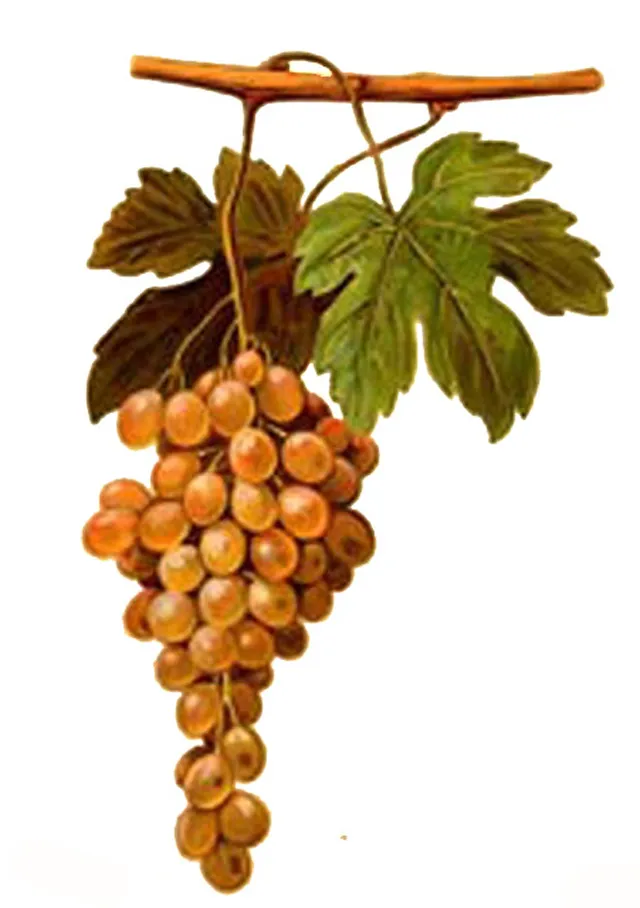
Profile: Pedro Ximénez
| Berry colour | White grape (B) |
|---|---|
| Species / status | Vitis vinifera |
| Origin | Spain, Andalusia |
| Parentage | Descendant of gibi (table grape), half-sibling of alarije (DNA analysis, 2007) |
| Synonyms | PX, Pedro Jiménez, Ximénez, Perrum (Alentejo) |
| Grown in | Spain, Portugal, Australia, Chile |
| Typical aromas | raisins, dried fig, date, molasses, coffee and cocoa, liquorice |
| Wine style | Best known as a sweet, liqueur-style wine made from grapes dried in the sun; also dry fino and amontillado styles in Montilla-Moriles. |
| Food pairings | vanilla ice cream (drizzled with PX), chocolate desserts, blue cheeses, figs and dried fruit |
| Identifiers | VIVC no. 9080, Wikidata Q1930535 |
Pedro ximénez, grape of the Andalusian sun
Pedro ximénez is a white grape from Andalusia, grown mainly in the Montilla-Moriles appellation, south of Córdoba. It is famous for the wine that carries its abbreviated name: PX, one of the sweetest wines in the world, almost black and syrupy in texture.
It is a grape with two faces: in Montilla-Moriles it also makes dry wines aged under a veil of flor, comparable to the finos of Jerez.
Origin: a Rhine legend disproved
A persistent legend attributes the grape’s name to a certain Peter Siemens, a soldier who is said to have brought it back from the banks of the Rhine. Other early authors had it come from the Canary Islands or Madeira, or linked it to elbling and to riesling.
Genetic analyses have ruled out these hypotheses. A DNA study from 2007 showed that pedro ximénez descends from gibi, a table grape, and that it is the half-sibling of alarije. Ampelographers consider it to have been born in Andalusia, where it was grown in the early 17th century. See the guide DNA parentage of grape varieties, and, on the links between table and wine grapes, table grape or wine grape.
Sun-drying: the PX method
What is specific to pedro ximénez is its most famous method of production, sun-drying (asoleo):
- grapes harvested very ripe are spread on mats in full sun;
- they dehydrate over several days and turn almost into raisins;
- the highly concentrated juice is pressed, partly fermented, then fortified with spirit;
- the wine is aged, often in a solera.
| Wine | Production | Profile |
|---|---|---|
| Sweet PX (Montilla-Moriles, Jerez) | Sun-dried grapes, fortification, solera | Very sweet, black, raisins, fig, coffee |
| Fino from Montilla-Moriles | Ageing under flor | Dry, pale, almond, yeast |
| Amontillado, oloroso from Montilla | Ageing under flor then oxidative, or oxidative | Dry, hazelnut, walnut |
| Young dry whites | Conventional winemaking | Neutral, low in acidity |
In Montilla-Moriles, the warm climate often allows pedro ximénez to reach high alcohol levels naturally, which sets its finos apart from those of Jerez, which are always fortified.
Jerez buys its PX from Montilla
PX is also associated with the wines of Jerez. Yet pedro ximénez is little planted there, the region being dominated by palomino. Jerez houses therefore often buy PX wine from Montilla-Moriles, for their PX wines and to sweeten blends such as cream sherries. Muscat of Alexandria plays a comparable role in some sweet wines.
In the vineyard: vigorous and fragile
Pedro ximénez is very vigorous and productive, with berries of uneven size. It ripens in mid to late season. It is susceptible to grey rot, downy mildew and trunk diseases, but shows some resistance to powdery mildew.
Pedro ximénez and pedro giménez: beware of the homonym
In South America, pedro giménez is widely planted, notably in Argentina and Chile. Its link with Spanish pedro ximénez is uncertain, because of ampelographic differences. In Chile, a large share of the vines sold as pedro ximénez for pisco production is thought to be pedro giménez in reality. These pitfalls are detailed in the guide synonyms and homonyms.
Elsewhere in the world
Pedro ximénez is also grown in Portugal, mainly in the Alentejo under the name perrum, and in Australia, where it has been used for fortified wines and dry whites.
Frequently asked questions
What is a PX?
PX is the common abbreviation of pedro ximénez, which refers both to the grape and to the sweet wine made from it. The wine is made from sun-dried grapes, then fortified and aged, often in a solera. It is almost black and very sweet, with aromas of raisins, fig and molasses.
Does pedro ximénez come from Germany?
A legend says that a soldier named Peter Siemens brought the grape back from the banks of the Rhine. DNA analyses have ruled out any link with riesling or elbling, and the grape is now considered Andalusian.
Where is pedro ximénez grown?
The great majority of Spanish plantings are in the Montilla-Moriles appellation, in the province of Córdoba. Producers in Jerez often buy PX wine from Montilla-Moriles for their sweet wines. It is also grown in Portugal (Alentejo) and in Australia.
Is Argentina's Pedro Giménez the same grape?
Probably not. Pedro giménez, widely planted in South America, shows ampelographic differences from Spanish pedro ximénez, and its link with it is uncertain. In Chile, a large share of the vines sold as pedro ximénez for pisco is thought to be pedro giménez in reality.
Related grapes
- Palomino (white, Spain, Andalusia)
- Muscat d'Alexandrie (white, Mediterranean basin (precise origin undetermined))
- Riesling (white, Germany, Rhine Valley)
- País (Listán prieto) (black, Spain, Castile)
- Muscat à petits grains (white, Mediterranean basin (precise origin unknown))
- Macabeu (white, Spain, north-east (exact origin debated))
- Xarel·lo (white, Spain, Catalonia)
- Parellada (white, Spain, Catalonia)