Xarel·lo: the Catalan grape that gives cava its backbone
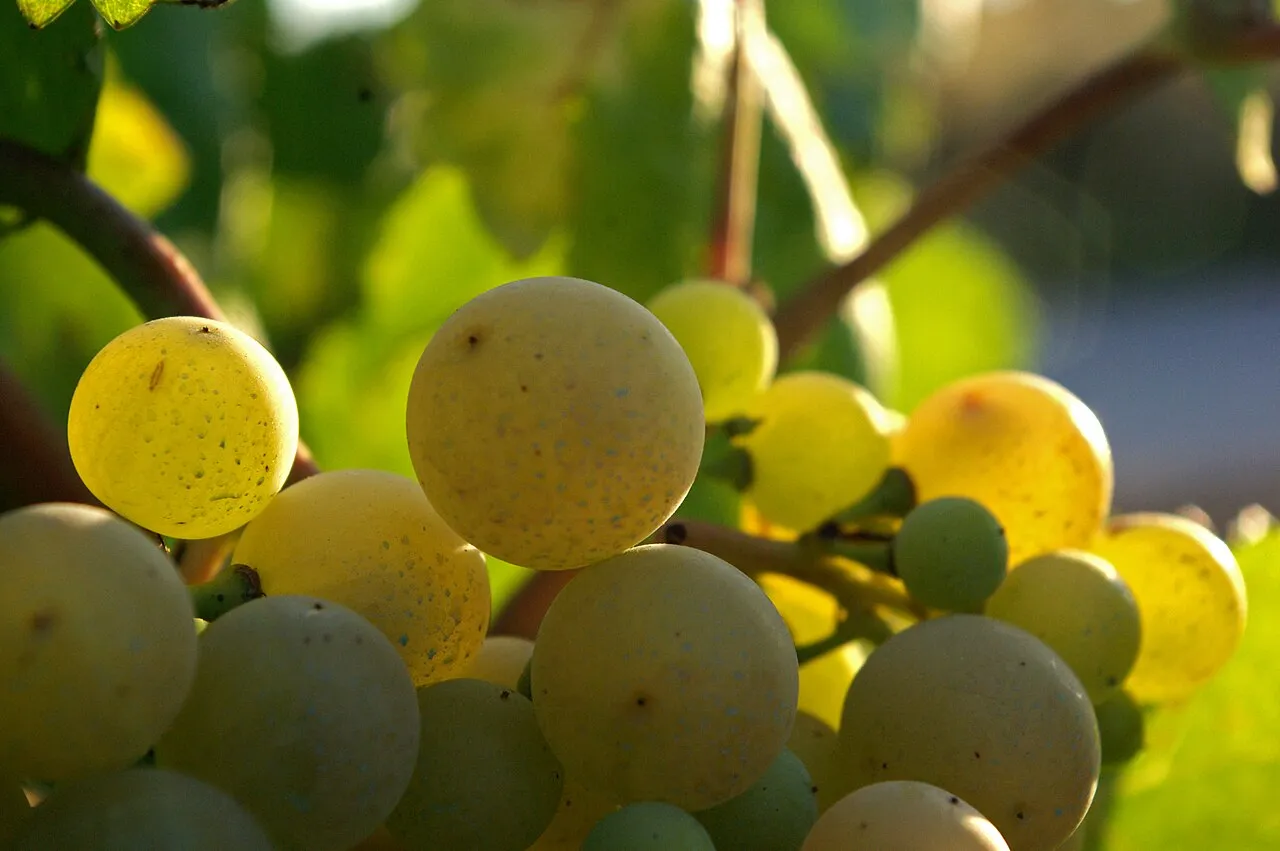
Profile: Xarel·lo
| Berry colour | White grape (B) |
|---|---|
| Species / status | Vitis vinifera |
| Origin | Spain, Catalonia |
| Parentage | Passerille blanche × Brustiano faux |
| Synonyms | Xarello, Pansa blanca |
| Grown in | Spain |
| Typical aromas | citrus, apple, fennel and herbs, white flowers, almond, earthy and stony notes |
| Wine style | Structured white with marked acidity and body, the basis of long-aged cavas and of characterful still whites. |
| Food pairings | pa amb tomàquet and Catalan charcuterie, black rice with squid ink, baked fish, poultry with mushrooms |
| Identifiers | VIVC no. 13270, Wikidata Q127174 |
Xarel·lo, the Catalan grape par excellence
Xarel·lo is a white grape from Catalonia, grown above all in the Penedès, south-west of Barcelona. It is one of the three historical cava grapes and is often regarded as the one that gives it its backbone.
Its name, with its middle dot (the Catalan ela geminada), is already a signature: few grapes carry such a regional mark in their spelling.
One name, several spellings and synonyms
| Name | Use |
|---|---|
| Xarel·lo | Official Catalan name, Penedès |
| Xarello | Simplified spelling, common on export labels |
| Pansa blanca | Name used in the Alella DO, north of Barcelona |
There is also a pink-berried form, xarel·lo vermell, a colour mutation of xarel·lo. These variations of name and colour are explained in the guides synonyms and homonyms and colour mutations.
The structural pillar of cava
Cava is a Spanish sparkling wine made by the traditional method, like champagne. Its classic blend relies on three Catalan grapes:
- macabeo: fruit and freshness;
- xarel·lo: body, structure, acidity;
- parellada: finesse and floral notes.
Xarel·lo is generally the most decisive grape for long-aged cavas: its structure allows it to withstand long periods on the lees, which develop notes of pastry, dried fruit and toast. Chardonnay and pinot noir are permitted in cava, but many producers attached to the Penedès favour the native grapes.
Penedès: towards terroir sparkling wines
Since the 2010s, some Penedès producers have sought to set their sparkling wines apart from mass-market cava. Some have left the Cava appellation for other frameworks, such as the Clàssic Penedès designation within the Penedès DO or the Corpinnat collective. These approaches highlight the native grapes, xarel·lo first among them, organic farming and long ageing.
Still xarel·lo wines
Xarel·lo is also made as a still white. These wines are full, with marked acidity and aromas of citrus, fennel, Mediterranean herbs and sometimes an earthy note. From old vines, aged on the lees, in barrel or in amphora, some show real ageing potential, in the manner of an age-worthy chenin.
In the vineyard
Xarel·lo is grown mainly in the low and middle areas of the Penedès, while parellada occupies the higher altitudes. It is considered vigorous and fairly productive. Old bush-trained vineyards are now sought after for still cuvées and long-aged sparkling wines.
The wines: structure and tension
Whether still or sparkling, xarel·lo can be recognised by its structure and tension. Its aromas remain discreet when young: citrus, apple, white flowers, herbs. With time they develop towards almond, honey and dried fruit. It goes well with Catalan cooking, from tapas to seafood rice dishes.
Frequently asked questions
How is xarel·lo pronounced?
In Catalan, the initial x is pronounced "tch" or "sh" depending on the area, and the l·l (ela geminada) is a stressed double l. It is pronounced roughly "cha-REL-lo" or "sha-REL-lo". The middle dot is part of Catalan spelling.
What is the role of xarel·lo in cava?
In the traditional cava blend, xarel·lo brings body, structure and acidity, which allow long ageing on the lees. Macabeo brings fruit and freshness, parellada finesse.
Can xarel·lo make still wines?
Yes. More and more Penedès producers make xarel·lo as a still white, sometimes from old vines and aged on the lees or in barrel. These wines are full, with good tension and notes of herbs and citrus.
Is xarel·lo grown in France?
No, or only anecdotally. It is grown almost exclusively in Catalonia, mainly in the Penedès, Alella and Tarragona.
Related grapes
- Macabeu (white, Spain, north-east (exact origin debated))
- Parellada (white, Spain, Catalonia)
- Chardonnay (white, France, Burgundy)
- Pinot noir (black, France, Burgundy)
- Chenin blanc (white, France, Loire Valley (Anjou-Touraine))
- Pedro Ximénez (white, Spain, Andalusia)