Mencía: the Atlantic red of Bierzo, identical to jaen from the Dão
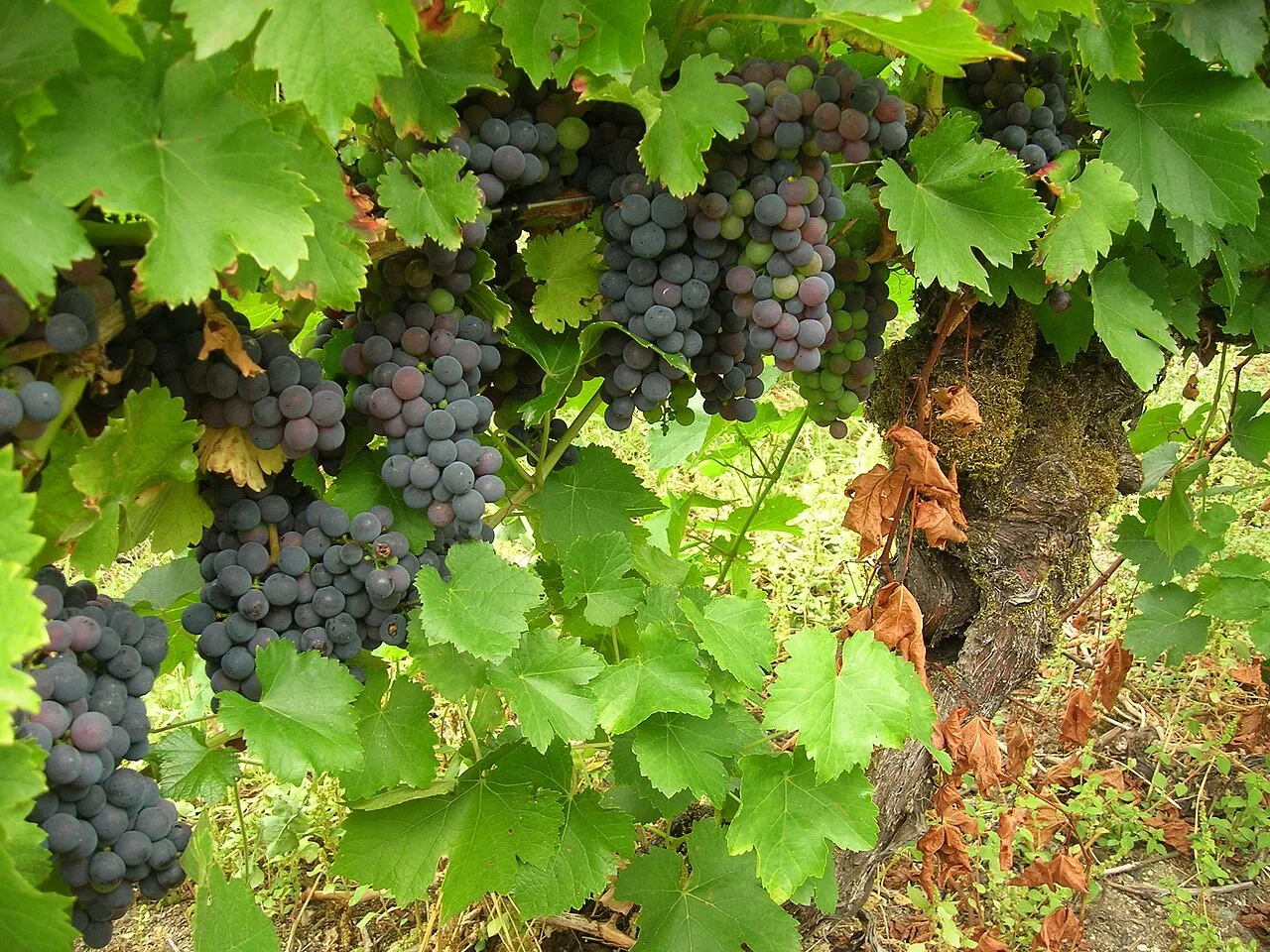
Profile: Mencía
| Berry colour | Black grape (N) |
|---|---|
| Species / status | Vitis vinifera |
| Origin | Iberian Peninsula, north-west (Spain or Portugal) |
| Parentage | Alfrocheiro × Patorra (hypothesis from DNA analyses) |
| Synonyms | Jaen (Portugal), Jaen do Dão, Jaén colorado (León), Tinto mencía |
| Grown in | Spain, Portugal, United States |
| Typical aromas | red fruit, cherry, raspberry, violet, herbaceous notes, graphite (schist) |
| Wine style | Fragrant reds of medium colour and fresh acidity, from light wines to drink young to more structured old-vine cuvées. |
| Food pairings | pulpo a la gallega, botillo from Bierzo, roast poultry, charcuterie, grilled tuna |
| Identifiers | VIVC no. 7623, Wikidata Q1293271 |
Origin: a grape of the Iberian west
Mencía is a black grape of the west of the Iberian Peninsula, grown on both sides of the border between Spain and Portugal. On the Spanish side, it dominates the vineyards of Bierzo (province of León) and inland Galicia: Ribeira Sacra, Valdeorras, Monterrei. On the Portuguese side, it is grown in the Dão under the name jaen.
The little-known angle: the pilgrims’ cabernet franc, a legend
A persistent story made mencía an old cabernet franc, brought from France by pilgrims on the Way of St James (Camino de Santiago de Compostela), which happens to cross Bierzo. The idea rested on an aromatic resemblance: notes of red fruit, violet and a herbaceous touch.
DNA analysis ended this legend: mencía and cabernet franc have no parentage link. It did, however, reveal another match: mencía is identical to jaen from the Portuguese Dão.
Genetic marker analyses also suggest that it comes from a cross between alfrocheiro and patorra, two Iberian grapes, which would argue for a Portuguese origin. This hypothesis remains to be confirmed. See our guide on DNA parentage of grape varieties.
| Name | Region | Country |
|---|---|---|
| Mencía | Bierzo, Ribeira Sacra, Valdeorras, Monterrei | Spain |
| Jaén colorado | León | Spain |
| Jaen | Dão | Portugal |
Note: jaén blanco and jaén rosado are different varieties, with no link to mencía. See synonyms and homonyms.
In the vineyard: from plains to schist slopes
The recent history of mencía is that of a change of terroir. After phylloxera, it was often replanted on fertile plain soils, with high yields: the wines were light, pale, sometimes diluted.
Since the 1990s, a new generation of winemakers has taken an interest in old vines on slopes, often on schist or slate, at low yields. This work has transformed the grape’s image.
The wines
| Style | Origin | Profile |
|---|---|---|
| Traditional, young | Plains of Bierzo and Galicia | Pale, fruity, light, to drink young |
| Old vines on slopes | Bierzo, Ribeira Sacra | More concentrated, floral, mineral, suited to ageing |
| Portuguese blend | Dão | Jaen combined with touriga nacional and alfrocheiro |
Mencía makes fragrant reds of medium colour, with fresh acidity and fine tannins. It is often compared with pinot noir or Loire cabernet franc for its drinkability and freshness. In Portugal, jaen is most often blended with touriga nacional.
Ribeira Sacra and heroic viticulture
Ribeira Sacra is one of the most spectacular wine landscapes in Europe: vines in terraces clinging to the steep slopes of the Sil and Miño gorges. The work there is almost entirely manual, what Galicians call heroic viticulture. Mencía is the main red grape there.
These Atlantic vineyards of north-west Spain are also the home of albariño for whites, in the Rías Baixas, closer to the ocean.
A curiosity outside Europe
Mencía is starting to appear in very small quantities outside the Iberian Peninsula, notably in California. These plantings remain anecdotal.
The mencía appellations
| Appellation | Region | Country |
|---|---|---|
| Bierzo | León (Castile and León) | Spain |
| Ribeira Sacra | Lugo and Ourense (Galicia) | Spain |
| Valdeorras | Ourense (Galicia) | Spain |
| Monterrei | Ourense (Galicia) | Spain |
| Dão | North-central | Portugal |
Bierzo is the historical reference for the grape, with its schist and slate slopes around Ponferrada and Villafranca del Bierzo. Ribeira Sacra often gives a fresher, airier version.
Tasting notes
A mencía is recognised by its medium ruby colour, its nose of red fruit, violet and sometimes herbs, and a fresh palate with fine tannins. Old-vine wines from slopes add a mineral feel and more depth. It is happily served slightly cool, around 15 °C.
Frequently asked questions
Is mencía related to cabernet franc?
No. A tradition held that mencía was an old clone of cabernet franc brought by pilgrims on the Way of St James, because the two grapes share certain aromatic notes. DNA analysis disproved this hypothesis: they are two varieties with no genetic link.
What is the difference between mencía and jaen?
None as far as the variety is concerned: Spanish mencía and Portuguese jaen from the Dão have an identical DNA profile. Only the name and the region change. This black jaen should not be confused with jaén blanco, a distinct white grape.
Where can the best mencía wines be found?
In Spain, mainly in Bierzo (León), Ribeira Sacra and Valdeorras (Galicia), where old vines on schist slopes give the most renowned cuvées. In Portugal, it is grown in the Dão under the name jaen, often in blends.
Related grapes
- Albariño (white, Spain (Galicia) and northern Portugal)
- Cabernet franc (black, France, South-West (Libournais probable))
- Tempranillo (black, Spain, north of the peninsula (Rioja, Ebro valley))
- Touriga nacional (black, Portugal, probably Dão)
- Pinot noir (black, France, Burgundy)