Albariño: the grape of Rías Baixas and vinho verde
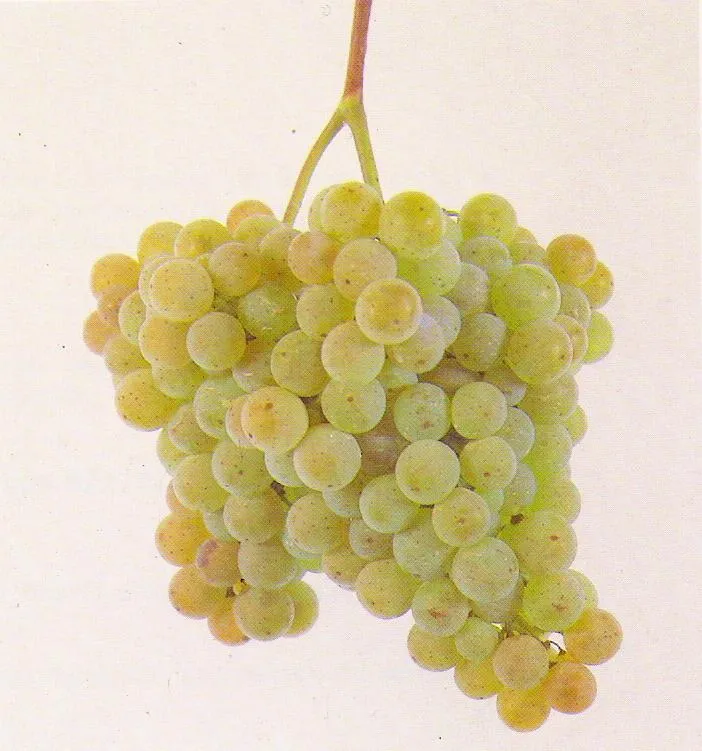
Profile: Albariño
| Berry colour | White grape (B) |
|---|---|
| Species / status | Vitis vinifera |
| Origin | Spain (Galicia) and northern Portugal |
| Synonyms | Alvarinho, Albelleiro, Cainho branco |
| French regions | Bordeaux |
| Grown in | Spain, Portugal, United States, Uruguay, New Zealand |
| Typical aromas | white peach, apricot, lemon and grapefruit, white flowers, saline and iodine notes, fresh herbs |
| Wine style | Aromatic, lively and saline dry white, most often drunk young, sometimes aged on lees for more texture. |
| Food pairings | seafood and shellfish, pulpo a la gallega (octopus), grilled fish, ceviche, light Asian cuisine |
| Identifiers | VIVC no. 15689, Wikidata Q448487 |
Albariño, a grape of Atlantic Spain
Albariño is a white grape of Galicia, in north-west Spain, and of the Minho, in northern Portugal, where it is called alvarinho. Both names derive from the Latin albus, “white”. It has become one of the best-known Spanish whites for export.
Contrary to the image of a hot Spain, albariño is a grape of oceanic climate: abundant rainfall, moderate temperatures and a direct Atlantic influence.
Origin: the end of a legend
A persistent tradition credited its introduction to the monks of Cluny Abbey, who came in the 12th century along the pilgrim roads to Santiago de Compostela, and sometimes linked it to riesling. Recent studies instead regard albariño as native to Galicia and northern Portugal. No relationship with riesling has been established.
Rías Baixas: the Galician heartland
The Rías Baixas appellation covers the south-west coast of Galicia, cut by rias (estuaries). It is dominated by albariño, often made as a single-variety wine. It is divided into five sub-zones:
| Sub-zone | Characteristic |
|---|---|
| Val do Salnés | Coolest and most Atlantic zone, historic cradle |
| Condado do Tea | Warmer, along the Miño; blends with treixadura and loureira are common |
| O Rosal | Mouth of the Miño, facing Portugal |
| Soutomaior | Small inland zone |
| Ribeira do Ulla | Northernmost zone |
Monção e Melgaço: Portuguese alvarinho
In Portugal, alvarinho is grown in the Vinho Verde area. Its historic heartland is the Monção e Melgaço sub-region, on the south bank of the Minho, facing Galicia. There it makes richer and more alcoholic wines than the average vinho verde. Elsewhere in the appellation, it is often blended with other local grapes such as loureiro.
For another great Portuguese white, see fernão pires.
In the vineyard: pergolas and thick skins
In this damp climate, vine training is adapted. Traditionally, vines were trained high, on pergolas (parras) or along trees, to keep the bunches away from ground moisture and promote airflow. Pergolas remain common, although wire training is gaining ground.
The grape has small berries with thick skins, which help it resist rot, and it keeps high acidity.
The affair of the false Australian albariño
This is albariño’s most telling niche story. For more than a decade, Australian nurseries and growers planted vines and sold wines under the name albariño. In 2008, a French ampelographer raised doubts after observing the vines. DNA tests confirmed it: the grape was savagnin, the grape of Jura’s vin jaune.
Almost all Australian wines labelled albariño were therefore savagnin, and had to change their labels. The episode shows the value of ampelography and genetic testing, and the risks described in the guide on synonyms and homonyms.
The wines: peach, citrus and salt
Albariño makes aromatic dry whites, with notes of white peach, apricot, citrus and white flowers, and an often saline finish. Its aromatic profile has been compared to that of viognier or petit manseng, with markedly livelier acidity.
Most are drunk young. Some producers use extended ageing on lees, which adds texture and better ageing potential. The classic pairing is Galician: seafood, shellfish and octopus.
Further reading
Frequently asked questions
What is the difference between albariño and alvarinho?
None as far as the grape is concerned: albariño is the Spanish name and alvarinho the Portuguese one. Both come from the Latin albus, "white". The difference lies in regional styles, as vinhos verdes based on alvarinho can be lighter than Rías Baixas wines.
Is albariño a riesling?
No. An old legend held that albariño was brought to Galicia by Cluny monks in the 12th century, and sometimes linked it to riesling. Recent studies regard it as native to Galicia and northern Portugal, with no established link to riesling.
Why were some Australian albariños actually savagnin?
Cuttings imported into Australia as albariño turned out to be savagnin, after doubts raised by a French ampelographer in 2008 and DNA tests. Almost all Australian wines labelled albariño had to be renamed.
Where can albariño be found?
Mainly in Galicia, in the Rías Baixas appellation, and in Portugal, in Vinho Verde, particularly in the Monção e Melgaço sub-region. It is also planted in California, Oregon, Uruguay and New Zealand.
Related grapes
- Savagnin (white, Europe, precise origin debated (Jura and Central Europe))
- Petit manseng (white, France, Pyrenean foothills (Béarn, Basque Country))
- Viognier (white, France, northern Rhône Valley)
- Riesling (white, Germany, Rhine Valley)
- Fernão Pires (white, Portugal)