Fernão Pires: the Portuguese white grape with two names
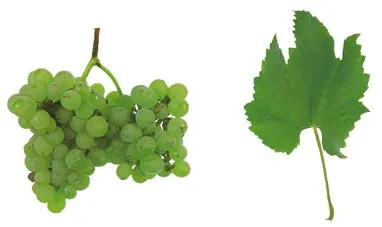
Profile: Fernão Pires
| Berry colour | White grape (B) |
|---|---|
| Species / status | Vitis vinifera |
| Origin | Portugal |
| Synonyms | Maria Gomes |
| Grown in | Portugal, South Africa |
| Typical aromas | orange blossom, lemon and lime, peach, lychee, spicy notes, rose |
| Wine style | Aromatic, floral white, supple, to drink young; also the base of sparkling wines in Bairrada and of sweet wines. |
| Food pairings | salt cod (bacalhau), grilled sardines, spicy cooking, seafood, Bairrada suckling pig (with the sparkling wine) |
| Identifiers | VIVC no. 4100, Wikidata Q489573 |
Fernão pires, a great Portuguese white
Fernão pires is a Portuguese white grape, one of the most planted in the country, often cited as Portugal’s most planted white grape by area. It is grown mainly in central Portugal: the Tejo, the Lisbon region and Bairrada.
Its name, which looks like that of a person, has an equally unusual second name: in Bairrada, it is called maria gomes.
Two personal names for one grape
The niche angle on fernão pires is this double identity, rare among grapes:
| Name | Region | Use |
|---|---|---|
| Fernão Pires | Tejo, Lisboa, central and southern Portugal | Most common official name |
| Maria Gomes | Bairrada | Traditional local name, common for sparkling wines |
A consumer can therefore come across the same grape under two different personal names, with no apparent link. Cases of regional synonymy like this are described in the guide to synonyms and homonyms.
In the vineyard: early and vulnerable to frost
Fernão pires is an early grape: it buds early, which exposes it to spring frosts, and ripens early. It is reputed to be sensitive to botrytis in humid climates. Productive, it adapts to varied soils, which explains its wide spread.
Its early ripening makes it useful in areas where the harvest must be completed before the autumn rains.
The wines: a perfumed white
Fernão pires makes aromatic whites, often described as slightly muscat-like or spicy, with notes of orange blossom, citrus, peach and sometimes lychee or rose. This profile brings it close, in a lighter register, to grapes such as muscat blanc à petits grains or gewurztraminer.
Its wines are generally supple and best drunk young. It is often blended with more acidic grapes to gain freshness.
| Style | Where | Profile |
|---|---|---|
| Dry white | Tejo, Lisboa | Floral, citrus, supple |
| Sparkling | Bairrada (under the name maria gomes) | Fresh, aromatic |
| Late harvest and sweet wines | Various regions | Candied fruit, orange blossom |
| Skin-contact whites | A few producers | More structured, spicy notes |
Bairrada: maria gomes and bubbles
In Bairrada, an Atlantic region north of Coimbra, maria gomes is a key grape for sparkling wines, made by the traditional method. Bairrada is also known for its emblematic dish, roast suckling pig (leitão), traditionally served with these sparkling wines.
Fernão pires among Portuguese grapes
Portugal has an exceptional heritage of grape varieties, with many native grapes. Fernão pires is one of its most widespread whites, alongside alvarinho from the north, presented in the albariño profile. Among reds, the country is mainly represented on this site by touriga nacional.
Outside Portugal, fernão pires is also grown in South Africa. It is not grown in France to any significant extent. To understand the place of native grapes and their preservation, see also grape variety conservatories.
Frequently asked questions
Are fernão pires and maria gomes the same grape?
Yes. Maria gomes is the name used in Bairrada, north of Coimbra, for fernão pires. Both names refer to the same variety, which can be confusing on Portuguese labels.
Is fernão pires an aromatic grape?
Yes. It is often described as slightly muscat-like or spicy, with notes of orange blossom, citrus and white fruit. This aromatic profile sets it apart from many other, more neutral Portuguese whites.
Where can you find fernão pires?
Mainly in Portugal, in the Tejo, the Lisbon region and Bairrada, where it goes into still whites and sparkling wines. It is also grown in South Africa.
Related grapes
- Albariño (white, Spain (Galicia) and northern Portugal)
- Touriga nacional (black, Portugal, probably Dão)
- Muscat à petits grains (white, Mediterranean basin (precise origin unknown))
- Gewurztraminer (pink, Central Europe, South Tyrol (traminer lineage))
- Viognier (white, France, northern Rhône Valley)