Touriga nacional: Portugal's great grape, from the Douro to Bordeaux
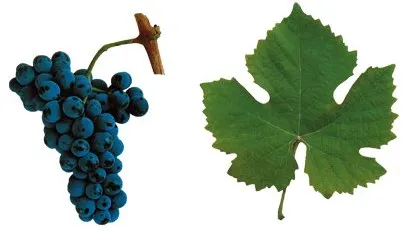
Profile: Touriga nacional
| Berry colour | Black grape (N) |
|---|---|
| Species / status | Vitis vinifera |
| Origin | Portugal, probably Dão |
| Synonyms | Touriga, Touriga fina, Tourigo antigo, Tourigo do Dão, Mortágua |
| French regions | Bordeaux |
| Grown in | Portugal, Australia, South Africa, United States, Brazil, France |
| Typical aromas | violet, black fruit, blackberry, bergamot, liquorice, cocoa notes (with age) |
| Wine style | Deep, structured and very aromatic reds, from vintage port to age-worthy dry reds from the Douro and Dão. |
| Food pairings | roast kid, braised beef, mature cheeses, dark chocolate (with a port) |
| Identifiers | VIVC no. 12594, Wikidata Q1503069 |
Origin: the Dão and the Douro
Touriga nacional is a Portuguese black grape, often considered the country’s finest. Its exact origin has not been established with certainty; it is traditionally linked to the Dão, as synonyms such as tourigo do Dão attest, and it is now mainly associated with the Douro.
The synonym mortágua refers to the name of a town in the Dão. The name touriga itself is often linked to the village of Tourigo, in the same region, although this etymology has not been demonstrated.
In the vineyard: a miserly grape
Touriga nacional is very vigorous but not very productive. It gives few, small bunches, with blue-black, thick-skinned berries. Its yields are among the lowest of commercial grapes, which explains why it was long neglected in favour of more generous varieties.
| Trait | Touriga nacional |
|---|---|
| Vigour | Very high, requires severe pruning |
| Yield | Low (coulure, small bunches) |
| Berries | Small, thick skins, high skin-to-pulp ratio |
| Ripening | Fairly late |
| Preferred soils | Douro schists, Dão granites |
In Portugal, extensive clonal selection work was carried out from the late 20th century to improve consistency of production without losing quality. See our guide on clones and mass selection.
The wines: colour, tannins and violet
The high ratio of skin to pulp gives highly extracted wines: deep colour, abundant tannins, body and structure. Touriga nacional stands out for a floral perfume often described as violet, sometimes bergamot, over a background of black fruit.
In port
Touriga nacional is one of the recommended grapes for port, with touriga franca, tinta roriz (tempranillo), tinta barroca and tinto cão. It brings colour, structure and ageing potential, notably for vintage ports.
As a dry wine
Since the last decades of the 20th century, it has also been made as a dry red, alone or in blends, in the Douro, Dão, Alentejo and other Portuguese regions. It has become an ambassador for Portuguese reds on export markets.
Touriga nacional and touriga franca: not to be confused
| Marker | Touriga nacional | Touriga franca |
|---|---|---|
| Productivity | Low | Higher |
| Place in the Douro | Less planted, much sought after | One of the most planted |
| Profile | Concentrated, tannic, floral | Softer, fragrant |
| Analogy often cited | Cabernet sauvignon | Cabernet franc |
This analogy, put forward by Jancis Robinson, refers to the Bordeaux pair presented in our comparison cabernet franc or cabernet sauvignon.
The overlooked angle: a Portuguese grape in Bordeaux
In 2021, INAO approved the introduction of six varieties of interest for adaptation purposes into the specifications of the Bordeaux and Bordeaux Supérieur AOCs. For reds: arinarnoa, castets, marselan and touriga nacional. For whites: alvarinho (albariño) and liliorila.
The rules are strict:
- these varieties are limited to a small share of the holding’s area;
- they may not exceed a limited share of the final blend;
- their name may not appear on the label.
Touriga nacional was chosen for its late ripening, which limits exposure to spring frosts and to heatwaves at ripening time. On this approach, see grapes and climate change.
Elsewhere in the world
Touriga nacional is also planted in Australia, South Africa, the United States (notably California) and Brazil, often for port-style wines or dry reds from warm climates.
Tasting notes
A dry touriga nacional can be recognised by its very dark colour, its floral perfume (violet, sometimes bergamot) and its black fruit. The palate is dense, with firm tannins that often call for a few years of ageing or decanting. In a port, it contributes to depth of colour and the wine’s longevity.
Further reading
Frequently asked questions
Is touriga nacional used in port?
Yes. It is one of the most sought-after grapes for the finest ports, alongside notably touriga franca, tinta roriz (tempranillo), tinta barroca and tinto cão. It brings colour, tannic structure and a characteristic floral perfume. Because its yields are low, it accounts for only a limited share of the Douro's plantings.
What is the difference between touriga nacional and touriga franca?
They are two distinct Douro grapes. Touriga franca is more productive and more widely planted; touriga nacional is less productive, more concentrated and more tannic. Jancis Robinson has compared their relationship to that of cabernet sauvignon and cabernet franc.
Is touriga nacional grown in France?
Since 2021, it has been one of the varieties of interest for adaptation purposes permitted in the Bordeaux and Bordeaux Supérieur AOCs. Their share of plantings and of the blend is limited, and their name may not appear on the label. Its presence therefore remains experimental and very minor.
What does a touriga nacional wine taste like?
It makes very coloured, concentrated reds with firm tannins, a marked floral perfume (violet, sometimes bergamot) and black fruit. In port, it adds depth; as a dry wine, it benefits from blending or ageing to soften its structure.
Related grapes
- Tempranillo (black, Spain, north of the peninsula (Rioja, Ebro valley))
- Marselan (black, France, Hérault (Languedoc))
- Mencía (black, Iberian Peninsula, north-west (Spain or Portugal))
- Cabernet sauvignon (black, France, Bordeaux area)
- Syrah (black, France, northern Rhône Valley)