Carignan: from mass vine-pull to the revival of old vines
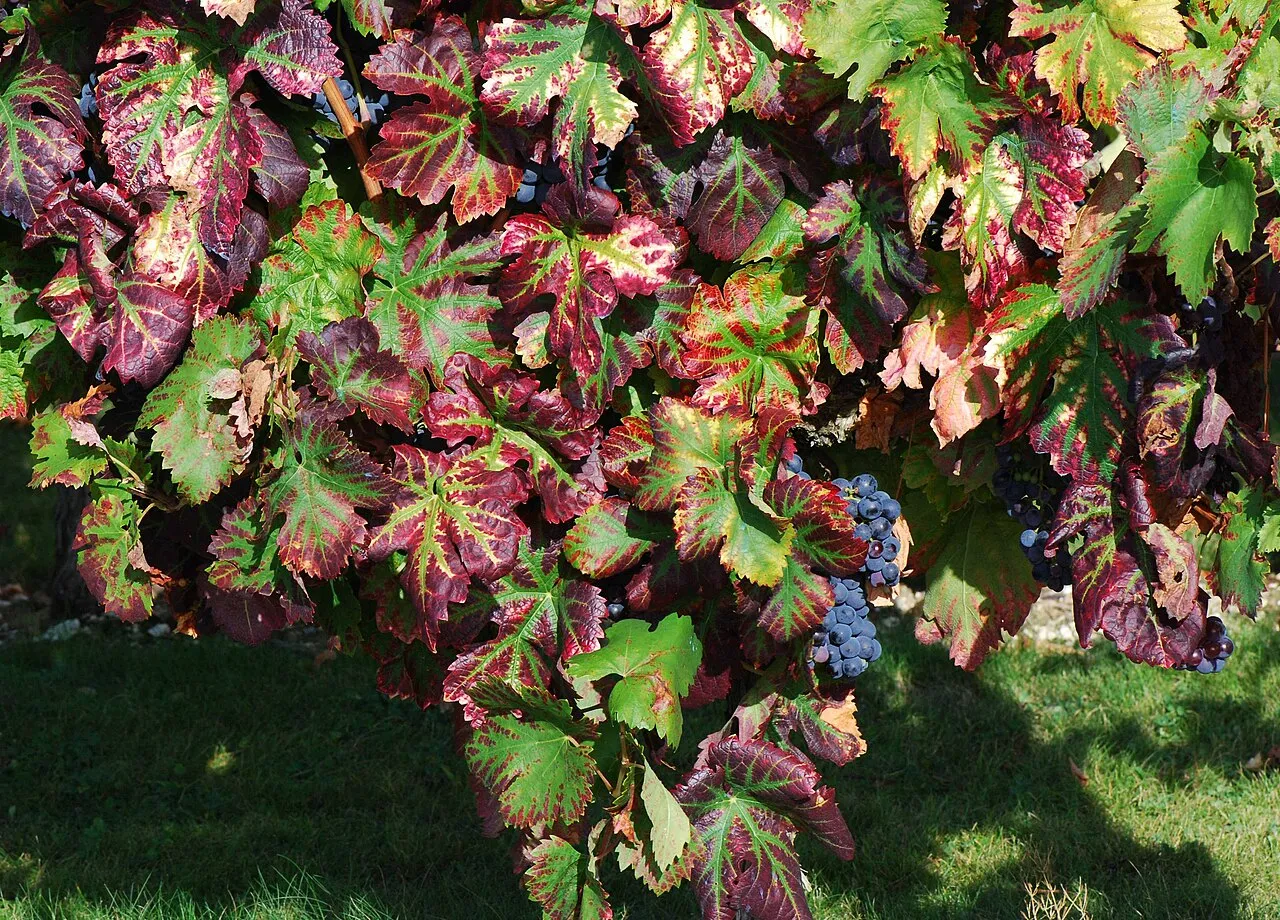
Profile: Carignan
| Berry colour | Black grape (N) |
|---|---|
| Species / status | Vitis vinifera |
| Origin | Spain, Aragon (Cariñena region) |
| Parentage | Castellana Blanca |
| Synonyms | Mazuelo (Rioja), Cariñena (Spain), Samsó (Catalonia), Carignano (Sardinia), Carignane (United States) |
| French regions | Corsica, Languedoc-Roussillon, Provence, Rhône Valley |
| Grown in | France, Spain, Italy, Algeria, Morocco, Tunisia, Chile, United States |
| Typical aromas | black cherry, blackberry, liquorice, garrigue, spices, cocoa |
| Wine style | Coloured reds with marked acidity and firm tannins, finer and more complex from old vines with low yields. |
| Food pairings | cassoulet, wood-fired grills, mountain charcuterie, ewe's milk cheeses |
| Identifiers | VIVC no. 2098, Wikidata Q251054 |
Origin: an Aragonese grape
Carignan comes from Aragon, in north-east Spain, probably from the Cariñena region, which gave it one of its names. It spread to Catalonia, Sardinia, the south of France and then North Africa.
In Spain, it bears several names: mazuelo in Rioja, cariñena, and samsó in Catalonia. The latter name is confusing, as it also designates cinsault in some areas. See synonyms and homonyms.
The angle to know: from hegemony to rehabilitation
Carignan has had one of the most spectacular trajectories in the French vineyard.
| Period | Carignan’s situation in France |
|---|---|
| After phylloxera | Planted massively in the Midi for its productivity |
| Late 1980s | Most planted grape in France |
| 1980s-1990s | Vine-pull subsidised by the European Union |
| Around 2000 | Overtaken by merlot |
| Since the 2000s | Promotion of old vines, single-varietal cuvées |
Carignan was planted en masse in Languedoc and Algeria, where it served to produce large volumes of table wine. This image of a high-yield grape justified its removal when consumption of everyday wine declined.
The vines that survived are often old, bush-trained, on poor slopes. Their low yields give wines very different from those of plain-grown carignans. Several growers in Languedoc-Roussillon have made them prestige cuvées, and the grape is now claimed as local heritage.
In the vineyard
Carignan buds and ripens late and needs a warm climate. Its vigour and productivity are high if not controlled.
It is very susceptible to powdery mildew, as well as to downy mildew, rot and grape moths. On the other hand, it withstands drought and wind well, which explains its place in the garrigue and on schist.
The wines
Carignan gives coloured wines with sustained acidity and firm tannins, sometimes rustic when they come from high yields. From old vines, it offers aromas of black cherry, liquorice, garrigue and spices.
Two routes bring out the best in it:
- carbonic maceration, which ferments whole bunches under carbon dioxide and softens the tannins;
- blending with grenache noir, syrah or cinsault, which bring roundness and fruit.
A family of colours
Carignan has given colour mutations: white carignan, found mainly in Roussillon, and grey carignan, now very rare. See colour mutations.
Where it is grown
- Languedoc-Roussillon: its main region in France (Corbières, Minervois, Faugères, Saint-Chinian, Côtes du Roussillon). See the grapes of Languedoc-Roussillon.
- Provence, the south of the Rhône Valley and Corsica: in blends.
Outside France: Spain (Priorat, Cariñena, Rioja), Sardinia (Carignano del Sulcis), North Africa, and Chile, where the old unirrigated vines of Maule are being showcased.
Further reading
Frequently asked questions
Was carignan the most planted grape in France?
Yes. In the late 1980s, carignan was the most planted grape in the country, essentially in Languedoc-Roussillon. It was then largely pulled up and was overtaken by merlot around 2000. It nonetheless remains an important grape of the south of France.
Why was carignan pulled up?
In the 1980s and 1990s, the European Union paid vine-pull premiums to reduce overproduction of table wine. Carignan, very productive and associated with mass-market wines, was one of the grapes most affected. Many plots were replaced by syrah, grenache or international grapes.
What is an old-vine carignan?
It is a wine from aged vines, often trained as bush vines, which naturally produce little. These low yields give more concentrated grapes and more complex wines than those of productive carignans. Several growers in Languedoc-Roussillon have made it a speciality.
Is there a white carignan?
Yes. White carignan is a colour mutation of black carignan, grown mainly in Roussillon. There is also a very rare grey carignan. These forms are detailed in our guide on colour mutations.
Related grapes
- Grenache noir (black, Spain, Aragon (origin disputed with Sardinia))
- Syrah (black, France, northern Rhône Valley)
- Cinsault (black, France, Languedoc (probable))
- Mourvèdre (black, Spain, Valencia region)
- Aramon noir (black, France, Languedoc)
- Alicante Bouschet (black, France, Hérault (Languedoc))