Alicante Bouschet: a teinturier grape born in the Hérault
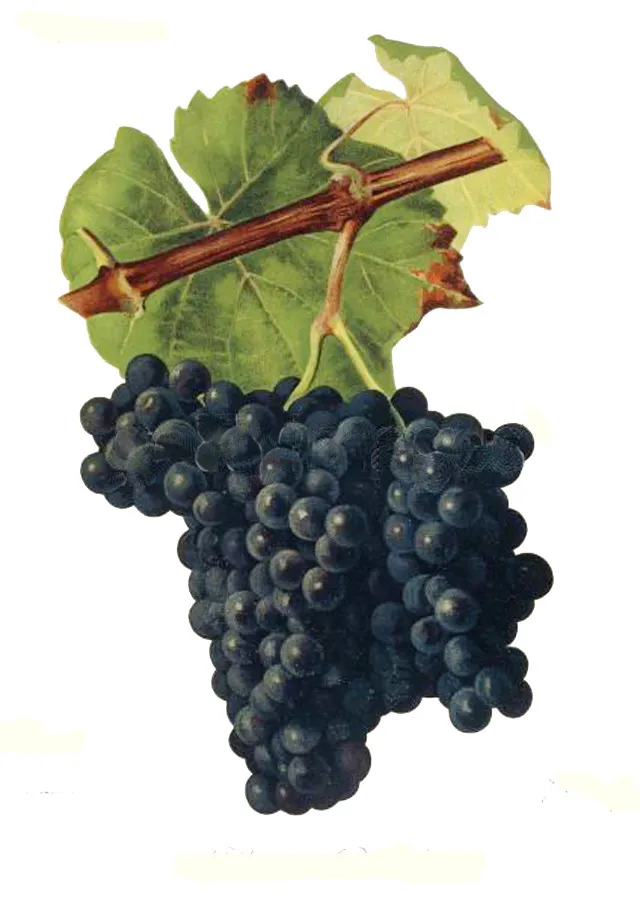
Profile: Alicante Bouschet
| Berry colour | Black grape (N) |
|---|---|
| Species / status | Vitis vinifera |
| Origin | France, Hérault (Languedoc) |
| Parentage | Petit Bouschet × Grenache (bred by Henri Bouschet in 1866) |
| Synonyms | Alicante Henri Bouschet, Garnacha tintorera, Tintorera, Negral, Alicante |
| French regions | Languedoc-Roussillon, Provence |
| Grown in | Portugal, Spain, France, Chile, United States, Italy |
| Typical aromas | black fruits, blackberry, black cherry, spices, earthy notes |
| Wine style | Deeply coloured reds, often powerful and warm, long used in blends for colour, now also made as single-variety wines in the Alentejo. |
| Food pairings | grilled red meats, game, slow-cooked dishes, mature cheeses |
| Identifiers | VIVC no. 304, Wikidata Q2308139 |
Origin: a creation of the Bouschet family
Alicante Bouschet is a man-made grape, not an old variety that appeared spontaneously. It was created in 1866 in the Hérault by Henri Bouschet, by crossing petit Bouschet with grenache noir.
This cross was the culmination of work begun by his father, Louis Bouschet. He had first bred petit Bouschet by crossing aramon, a very productive grape of the Midi, with teinturier du Cher, an old red-fleshed variety. Henri then added grenache to petit Bouschet, to gain in alcohol level and vigour.
The Bouschets’ aim was very practical: in the 19th century the Languedoc vineyard produced huge volumes of poorly coloured aramon wine. A grape capable of tinting these wines without resorting to colourings was needed.
A true teinturier: the flesh is red
Most black grapes have colourless flesh. The colour of red wine comes from the anthocyanins in the skin, extracted during maceration. Alicante Bouschet is one of the rare Vitis vinifera varieties whose flesh itself is coloured: this is the definition of a teinturier grape.
This trait comes from teinturier du Cher, passed on by petit Bouschet. To learn more about this group of grapes, see our guide to teinturier grapes.
| Grape | Flesh | Traditional role |
|---|---|---|
| Teinturier du Cher | Red | Teinturier ancestor, very rare today |
| Petit Bouschet | Red | First Bouschet cross (aramon × teinturier du Cher) |
| Alicante Bouschet | Red | Cross of petit Bouschet × grenache, the most widespread teinturier |
| Saperavi | Red | Traditional teinturier of Georgia, made as a single variety |
| Grenache noir | Colourless | Parent of alicante, colour limited to the skin |
In the vineyard
Alicante Bouschet is a vigorous and productive grape, capable of high yields. It ripens in mid-season and gives wines rich in alcohol when yields are controlled. It is susceptible to downy mildew and anthracnose. Its leaves turn purple in autumn, a trait shared by many teinturiers.
The wines: from colouring agent to single-variety wine
For almost a century, alicante Bouschet was mainly used as a supporting grape: a few per cent were enough to give colour to a blend. Its young wines are often described as lightly aromatic, but deeply coloured, structured and warm.
Views changed with the wines of the Alentejo, in Portugal. Several producers there make alicante Bouschet as a single variety from old vines, producing dense reds with aromas of black fruits and spices, suited to ageing. Leading critics have judged that it found its ideal home there.
The little-known angle: a grape of American Prohibition
Alicante Bouschet played an unexpected role in the United States during Prohibition (1920-1933). The law allowed households to produce wine for their own consumption. Californian growers therefore shipped fresh grapes by train to the big cities of the East Coast.
Alicante Bouschet had every advantage for this trade:
- its thick skin withstood long transport without rotting;
- its coloured juice made it possible to stretch the wine (with water and sugar) without it looking pale;
- its juicy flesh gave fermentable juice even after several pressings.
Californian plantings then rose sharply. A few old vines remain in California today, sometimes used in so-called “field blends”.
Where it is grown
- Portugal: mainly in the Alentejo, in blends or as a single variety.
- Spain: under the name garnacha tintorera, it is one of the country’s important red grapes, notably in the centre and south-east, for example in the DO Almansa.
- France: historically widely planted in the Languedoc and in Provence, it has declined sharply since the 1950s with the end of blending wines.
- Elsewhere: Chile (blended with cabernet sauvignon), California, central and southern Italy.
Alicante Bouschet and grenache: not to be confused
The Spanish name garnacha tintorera is confusing. It is not a form of grenache, but a descendant of grenache. The difference is visible to the naked eye: when a grenache berry is crushed, the juice is colourless; with alicante Bouschet, it is red. To untangle this kind of false friend, see our guide to synonyms and homonyms.
Genealogy of Alicante Bouschet
Identified parents (Wikidata): Grenache noir and Petit Bouschet.
Further reading
Frequently asked questions
Why is alicante Bouschet called a teinturier grape?
Because its flesh is red, not just its skin. Most black grapes have colourless juice and the colour of the wine comes from maceration of the skins. Alicante Bouschet, by contrast, gives juice that is already coloured, which makes it possible to strengthen the colour of a blend with a small proportion.
What is the difference between alicante Bouschet and garnacha tintorera?
None as far as the variety is concerned: garnacha tintorera is the Spanish name for alicante Bouschet. The name recalls one of its parents, grenache (garnacha in Spanish), and its teinturier character (tintorera). It should not be confused with grenache noir itself, whose juice is colourless.
Who created alicante Bouschet?
Henri Bouschet, a grower and breeder from the Hérault, bred it in 1866 by crossing petit Bouschet with grenache. Petit Bouschet had itself been created by his father, Louis Bouschet, from aramon and teinturier du Cher. Both men were trying to colour the abundant but pale wines of the Languedoc.
Where can a good alicante Bouschet wine be found?
The Alentejo, in Portugal, is often presented as its ideal home: the grape is made as a single variety or in blends there, for dense reds suited to ageing. It is also found in Spain, Chile and California. In France, it survives mainly in the Languedoc and Provence, most often in blends or as IGP.
Related grapes
- Aramon noir (black, France, Languedoc)
- Grenache noir (black, Spain, Aragon (origin disputed with Sardinia))
- Saperavi (black, Georgia, Kakheti)
- Carignan (black, Spain, Aragon (Cariñena region))
- Cinsault (black, France, Languedoc (probable))
- Marselan (black, France, Hérault (Languedoc))