Saperavi: Georgia's great red teinturier grape
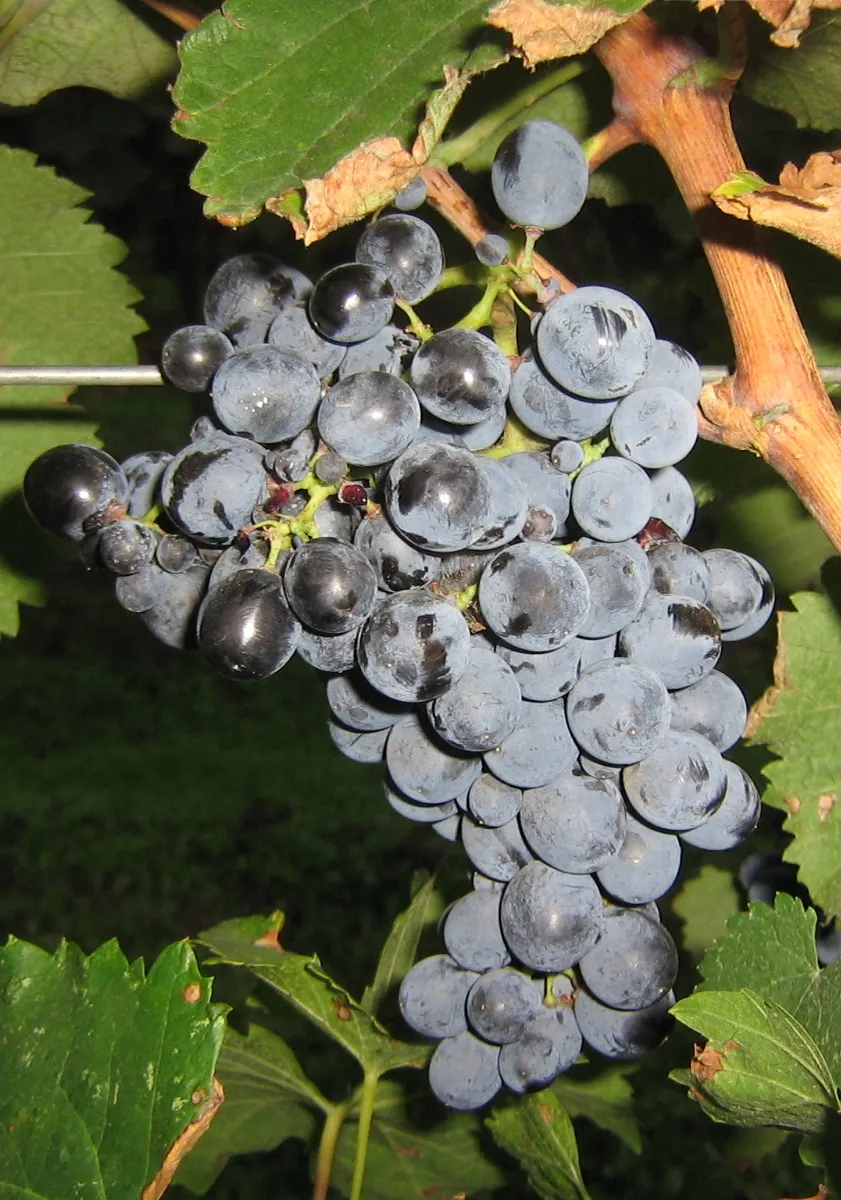
Profile: Saperavi
| Berry colour | Black grape (N) |
|---|---|
| Species / status | Vitis vinifera |
| Origin | Georgia, Kakheti |
| Grown in | Georgia, Moldova, Ukraine, Russia, United States, Australia |
| Typical aromas | blackberry, blackcurrant, plum, black cherry, liquorice, spices, smoky notes |
| Wine style | Almost black reds with lively acidity and firm tannins, either dry and age-worthy or naturally semi-sweet. |
| Food pairings | mtsvadi (Georgian skewers), chakapuli (lamb stew with tarragon), khinkali, aged cheeses, grilled meats |
| Identifiers | VIVC no. 10708, Wikidata Q1446649 |
Origin: Kakheti
Saperavi is Georgia’s great red grape. It comes from Kakheti, the country’s main wine region, in the east, in the Alazani valley at the foot of the Caucasus. It is one of the oldest grapes grown in the region, and the most planted red grape in the country.
Its name, საფერავი, literally means “giving colour”, “dye”. It says everything about its particularity.
A true teinturier
Saperavi is a teinturier grape: its flesh is red, like its skin. Most black grapes have colourless flesh and owe their colour to maceration of the skins.
What makes saperavi singular is that it is made on its own into quality wines. Other teinturier grapes, such as alicante Bouschet, have mainly been used to boost the colour of blends.
| Grape | Flesh | Main use |
|---|---|---|
| Saperavi | Red | Age-worthy varietal wine, dry or semi-sweet |
| Alicante Bouschet | Red | Blending for colour, varietal wine in the Alentejo |
| Cabernet sauvignon | Colourless | Varietal wine and blending |
See our guide on teinturier grapes.
In the vineyard: a cold-climate grape
Saperavi is a hardy grape that withstands very cold winters. This hardiness explains why it is grown at altitude and in continental regions, and its appeal for vineyards with harsh winters, in Eastern Europe as in North America.
It keeps high acidity, which gives wines capable of long ageing. When fully ripe, it can reach high alcohol levels.
The wines: ink and acidity
Saperavi makes almost black wines with lively acidity and firm tannins. The aromas evoke blackberry, blackcurrant, plum, liquorice and spices, with smoky or earthy notes after ageing. When young, they can seem austere; they gain complexity over the years.
The appellations of Kakheti
| Appellation | Type | Character |
|---|---|---|
| Mukuzani | Dry red | Structured, aged several years before release |
| Napareuli | Dry red | Telavi area, wine for ageing |
| Kindzmarauli | Naturally semi-sweet red | Kvareli area, fermentation stopped |
| Akhasheni | Naturally semi-sweet red | Gurjaani area |
Naturally semi-sweet wines are a Georgian speciality: fermentation is stopped, notably by chilling, to keep part of the grape sugars. They are very popular in Georgia and neighbouring countries.
The little-known angle: saperavi in qvevri
Georgia claims one of the oldest winemaking traditions in the world. Its most emblematic method is winemaking in qvevri: large clay jars, lined inside with beeswax and buried up to their necks. The grapes ferment in them, often with their skins and sometimes their stems, then the wine is kept in them for several months.
In 2013, the traditional Georgian qvevri winemaking method was inscribed on UNESCO’s list of intangible cultural heritage.
Although this method is best known for skin-contact white wines (called “orange” or “amber” wines), made notably with rkatsiteli, saperavi is also made in qvevri. It yields deep reds with dense tannins and earthy notes.
Where it is grown
- Georgia: mainly in Kakheti, where it is the dominant red grape.
- Former Soviet Union: Moldova, Ukraine, Russia.
- United States: the Finger Lakes region, in New York State, where its cold hardiness is valuable.
- Australia: notably in the King Valley (Victoria).
Like xinomavro in Greece or plavac mali in Croatia, saperavi is one of the native grapes that now carry the image of a national wine industry abroad.
Tasting notes
A saperavi is recognised first by its inky colour, which stains the glass. The nose evokes blackberry, blackcurrant and plum, with spicy or smoky notes. On the palate, lively acidity balances firm tannins. The dry versions benefit from a few years’ wait; the naturally semi-sweet ones are drunk younger, lightly chilled.
Further reading
Frequently asked questions
Is saperavi a teinturier grape?
Yes. Its flesh is coloured, not just its skin. Its Georgian name in fact means "giving colour" or "dye". Unlike most teinturier grapes, used in small proportions to colour blends, saperavi is commonly made on its own into quality wines.
What is a qvevri wine?
A qvevri is a large clay jar, buried up to its neck, used in Georgia to ferment and store wine. The traditional Georgian qvevri winemaking method is inscribed on UNESCO's intangible cultural heritage list. Saperavi can be fermented in it with its skins and sometimes its stems.
What is the difference between Mukuzani and Kindzmarauli?
Both are Kakheti appellations made from saperavi. Mukuzani is a dry red wine, renowned for its structure and ageing. Kindzmarauli, produced in the Kvareli area, is a naturally semi-sweet red, whose fermentation is stopped to keep part of the grape sugars.
Where is saperavi grown outside Georgia?
In several countries of the former Soviet Union such as Moldova, Ukraine and Russia, but also in the United States, notably in the Finger Lakes region (New York State), and in Australia. Its cold hardiness makes it an interesting candidate for vineyards with harsh winters.
Related grapes
- Rkatsiteli (white, Georgia, Kakheti)
- Alicante Bouschet (black, France, Hérault (Languedoc))
- Xinomavro (black, Greece, Macedonia)
- Plavac mali (black, Croatia, Dalmatia)
- Cabernet sauvignon (black, France, Bordeaux area)