Rkatsiteli: the grape of Kakheti's orange wines
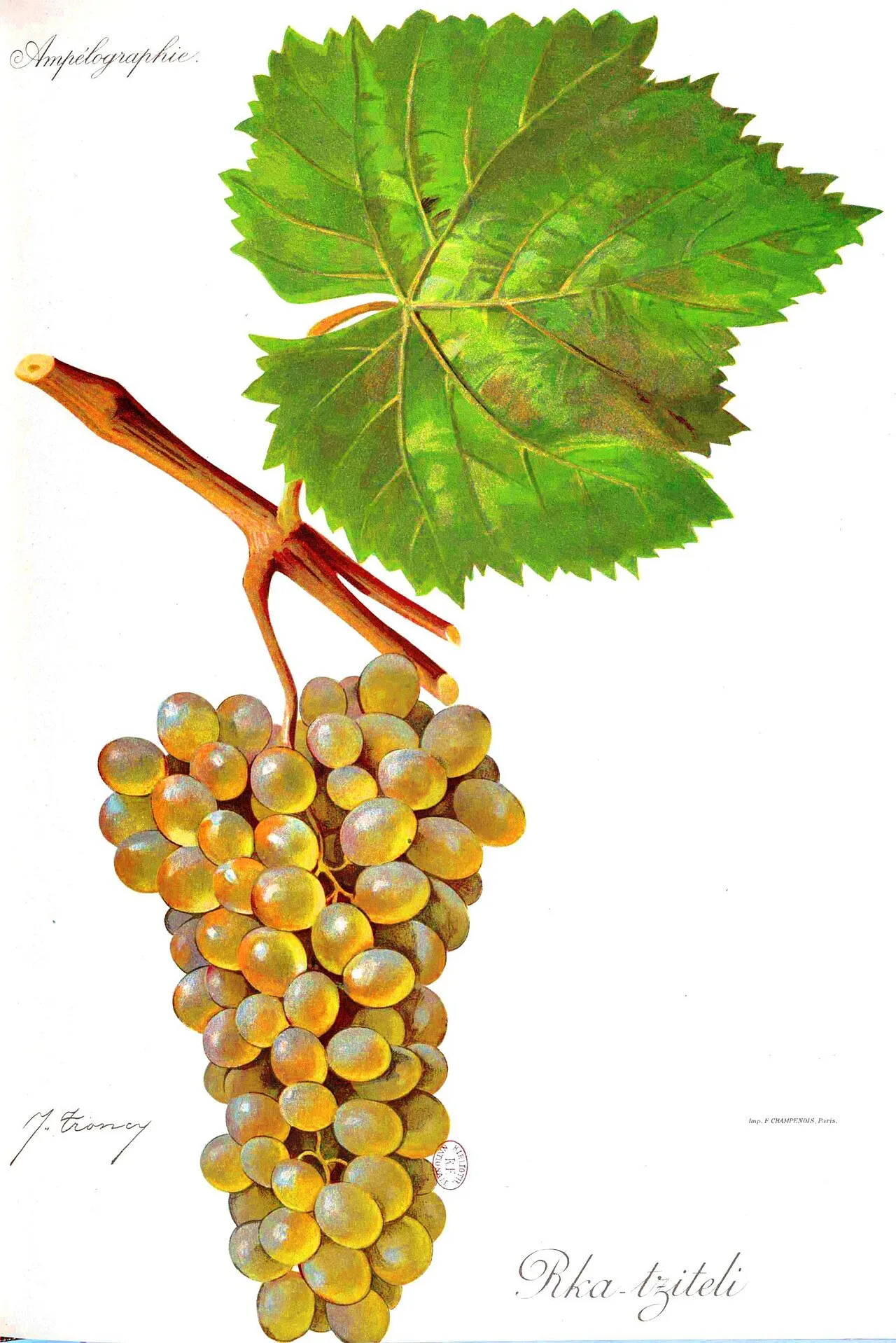
Profile: Rkatsiteli
| Berry colour | White grape (B) |
|---|---|
| Species / status | Vitis vinifera |
| Origin | Georgia, Kakheti |
| Synonyms | Baiyu (China) |
| Grown in | Georgia, Russia, Ukraine, Moldova, Bulgaria, Romania, Armenia, Azerbaijan, United States, China |
| Typical aromas | apple and quince, orange peel, dried apricot, walnut, spices, black tea and tannic notes (qvevri) |
| Wine style | From lively, floral dry whites made conventionally to tannic, spicy amber wines fermented on their skins in qvevri. |
| Food pairings | Georgian cuisine (khachapuri, walnut dishes), spiced poultry, ewe's milk cheeses, mushrooms and autumn dishes |
| Identifiers | VIVC no. 10116, Wikidata Q576472 |
Rkatsiteli, the white grape of Georgia
Rkatsiteli is a white grape from Georgia, regarded as one of the oldest cultivated grapes of a country that is itself counted among the cradles of viticulture. It is planted mainly in Kakheti, the great wine region of eastern Georgia, in the Alazani valley.
Its name is generally translated as “red stalk” or “red horn”, after the reddish tint of its stalk.
Qvevri: the angle that makes it unique
Rkatsiteli is inseparable from the qvevri, the large buried clay jar used in Georgia to ferment and store wine. This method, handed down for centuries, was inscribed in 2013 on UNESCO’s list of intangible cultural heritage.
In the Kakhetian tradition, the white grapes are fermented with their skins, seeds and often their stems, then left to macerate for several months in the sealed qvevri. The result is an amber wine, now called “orange wine” on export markets, tannic, spicy and oxidative.
| Method | Winemaking | Profile |
|---|---|---|
| Qvevri, Kakhetian tradition | Fermentation and long maceration with skins, seeds and stems | Amber, tannic, dried fruit, tea, spices |
| “European” winemaking | Direct pressing, fermentation in tank | Pale, lively, floral white, apple and citrus |
| Blends (e.g. Tsinandali) | With mtsvane, often barrel-aged | More aromatic, rounder white |
Rkatsiteli shares the Kakheti vineyard with saperavi, Georgia’s great black grape. On how the colour of wines depends on maceration more than on the grape, see the guide grape colour codes.
The Soviet legacy: one of the most planted grapes in the world
Rkatsiteli spread massively in the Soviet era. It was the most planted grape in the USSR and was probably, before the vine-pulling campaign launched under Gorbachev against alcoholism, one of the most planted white grapes in the world.
It is still grown in many countries of the former Eastern bloc: Russia, Ukraine, Moldova, Armenia, Azerbaijan, Bulgaria, Romania. In China, it is known as baiyu.
In the vineyard: hardy and acidic
Rkatsiteli is valued for its hardiness: it withstands cold continental winters well, which explains its wide spread in Eastern Europe and its adoption in the eastern United States, notably in the Finger Lakes. It keeps high acidity, which growers often balance by harvesting late, generally in October.
The wines: two faces
Made as a conventional white, rkatsiteli gives lively, floral, slightly spicy wines, with notes of apple, quince and citrus. Fermented in qvevri, it changes character: amber colour, perceptible tannins, aromas of orange peel, dried apricot, walnut and black tea.
These skin-contact wines have inspired a worldwide movement of white wines made like reds, including in France, with grapes such as savagnin or chenin. On the importance of preserving this kind of varietal heritage, see also grape conservatories.
Frequently asked questions
What is a qvevri wine?
A qvevri is a large clay jar, lined inside with beeswax and buried up to its neck. In Kakheti, the grapes ferment in it with their skins, seeds and sometimes stems, then the wine macerates in it for several months. The traditional Georgian qvevri winemaking method was inscribed on UNESCO's intangible cultural heritage list in 2013.
Why does rkatsiteli make orange wines?
When it ferments for a long time with its skins, like a red wine, rkatsiteli extracts pigments and tannins that give the wine an amber colour and a tannic structure. Made without maceration, by contrast, it gives a pale, lively white.
What does rkatsiteli mean?
The Georgian name is generally translated as "red stalk" or "red horn", in reference to the reddish colour the stalk takes on when ripe.
Is rkatsiteli grown in the United States?
Yes, on a small scale, mainly in the Finger Lakes region of New York State, as well as in Virginia and a few other eastern states. Its cold hardiness partly explains its adoption in these continental climates.
Related grapes
- Saperavi (black, Georgia, Kakheti)
- Savagnin (white, Europe, precise origin debated (Jura and Central Europe))
- Chenin blanc (white, France, Loire Valley (Anjou-Touraine))
- Furmint (white, Hungary, Tokaj (probable origin))
- Muscat à petits grains (white, Mediterranean basin (precise origin unknown))