Furmint: the soul of Hungarian Tokaji
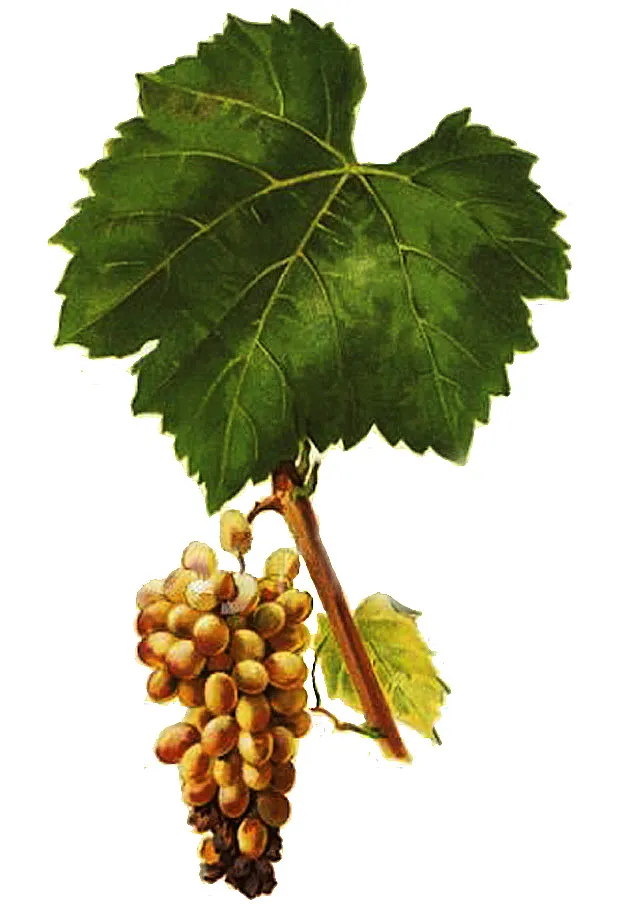
Profile: Furmint
| Berry colour | White grape (B) |
|---|---|
| Species / status | Vitis vinifera |
| Origin | Hungary, Tokaj (probable origin) |
| Parentage | Parent-offspring link with gouais blanc (DNA analysis); furmint is thought to be the offspring |
| Synonyms | Šipon (Slovenia), Mosler (Styria), Zapfner (Burgenland), Moslavac (Croatia) |
| Grown in | Hungary, Slovakia, Austria, Slovenia, Croatia, South Africa |
| Typical aromas | quince, apple, pear, lemon, dried apricot and honey (aszú), smoky and mineral notes |
| Wine style | From very long-lived botrytised sweet wines (aszú, eszencia) to tense, mineral dry whites, by way of szamorodni. |
| Food pairings | foie gras (aszú), blue cheeses, yellow fruit tarts, freshwater fish and chicken paprikash (dry) |
| Identifiers | VIVC no. 4292, Wikidata Q940015 |
Furmint, the grape of Tokaj
Furmint is a Hungarian white grape, the main grape of the Tokaj region, in the north-east of the country, on the Slovak border. It is inseparable from tokaji aszú, a botrytised sweet wine among the oldest and most renowned in the world.
Its presence in Tokaj is attested by a document of 1571. By the end of the 18th century, it was already described as the grape of true aszú.
Parentage: a descendant of gouais
DNA has established a parent-offspring link between furmint and gouais blanc; ampelographers consider furmint to be the offspring. Gouais is also a parent of chardonnay and of many grapes of western and central Europe.
Furmint itself has a parent-offspring link with hárslevelű, its blending partner in Tokaj: it is thought to be its parent. See the guide to DNA parentage of grapes.
Tokaj: a pioneering region
Tokaj is one of the first wine regions in Europe to have been officially delimited, in the 18th century, and its vineyards were the subject of early classifications. The region, a UNESCO World Heritage cultural landscape, extends slightly into Slovakia, which has its own Tokaj area.
The climate favours botrytis: autumn mists from the Bodrog and Tisza rivers, followed by sunny days, encourage noble rot.
The styles of tokaji
| Wine | Production | Profile |
|---|---|---|
| Aszú | Botrytised berries picked one by one, macerated in a must or a base wine | Sweet, lively acidity, dried apricot, honey, very long ageing |
| Eszencia | Juice flowing naturally from aszú berries, very slow fermentation | Extremely sweet, low alcohol, rare |
| Szamorodni | Whole bunches, botrytised or not | Dry or sweet depending on the year |
| Dry furmint | Classic winemaking | Tense, mineral, quince, apple, sometimes smoky |
| Late harvest (késői szüretelésű) | Late harvest | Mellow, lighter than aszú |
Furmint is the ideal grape for these wines: thick skins and loose bunches favour botrytis, while its high acidity balances the very concentrated sugars. For another great botrytised sweet wine, see sémillon from Sauternes.
In the vineyard
Furmint buds early, which exposes it to spring frosts, but ripens late. It is sensitive to powdery mildew and resists drought well. In Tokaj, its clonal diversity is considerable, with several local forms, including a pink-berried furmint (piros furmint).
Outside Tokaj: šipon, mosler, zapfner
Furmint is grown in other regions of Hungary, such as Somló, and in neighbouring countries under various names: šipon in Slovenia, mosler in Austrian Styria, zapfner in Burgenland. Small areas are also found in South Africa and California.
Tokay, tocai, tokaji: homonyms to untangle
The name Tokaj has been borrowed by other wines with no link to furmint. In Alsace, pinot gris was called “tokay d’Alsace”; the name was dropped in the mid-2000s following an agreement between the European Union and Hungary. In Italy, “tocai friulano” had to become friulano. These cases are detailed in the guide to synonyms and homonyms and in the comparison pinot gris or pinot grigio.
Frequently asked questions
Which grape is used for tokaji?
Furmint is the main grape of tokaji. It is often blended with hárslevelű, and to a lesser extent with sárgamuskotály (muscat blanc à petits grains) and a few other permitted grapes. Furmint brings the acidity and the ability to be botrytised that make the reputation of aszú.
What is a tokaji aszú?
It is a sweet wine made from berries affected by noble rot (botrytis), called aszú, picked one by one. These berries are macerated in a must or a base wine before fermentation. The sugar level was traditionally expressed in puttonyos, named after the hods used to harvest them.
Is Alsace tokay furmint?
No. In Alsace, the name "tokay" referred to pinot gris, which has no link with furmint. This name was dropped in the mid-2000s, following an agreement between the European Union and Hungary protecting the name Tokaj.
Does furmint also make dry wines?
Yes. Since the 2000s, many Tokaj producers have been making dry furmints, tense and mineral, sometimes from named vineyards. They are also found in Slovenia, under the name šipon, and in Somló in Hungary.
Related grapes
- Pinot gris (grey, France, Burgundy (pinot mutation))
- Sémillon (white, France, Bordeaux region)
- Petit manseng (white, France, Pyrenean foothills (Béarn, Basque Country))
- Chenin blanc (white, France, Loire Valley (Anjou-Touraine))
- Riesling (white, Germany, Rhine Valley)
- Altesse (white, France, Savoie (origin disputed))