Plavac mali: the great red of the Dalmatian coast, son of zinfandel
Profile: Plavac mali
| Berry colour | Black grape (N) |
|---|---|
| Species / status | Vitis vinifera |
| Origin | Croatia, Dalmatia |
| Parentage | Crljenak kaštelanski (zinfandel) × Dobričić (DNA analysis) |
| Grown in | Croatia |
| Typical aromas | black cherry, dried fig, carob, black pepper, sage, clove |
| Wine style | Powerful, warm, tannic reds, with aromas of ripe black fruit, fig and spices, mostly dry. |
| Food pairings | pašticada (Dalmatian braised beef), lamb cooked under the peka, game, Pag cheese, grilled meats |
| Identifiers | VIVC no. 9549, Wikidata Q1887336 |
Origin: the grape of the Dalmatian coast
Plavac mali is the main red grape of Dalmatia, the Adriatic coast of Croatia, and of its islands. Its name literally means “small blue” (plavo, blue; mali, small), in reference to its small blue-black berries.
It grows on karst limestone soils, poor and stony, often on very steep slopes facing the sea, in a hot, sunny Mediterranean climate.
The little-known angle: the son of zinfandel
Plavac mali played a central role in one of the great investigations of grapevine genetics: the search for the origins of zinfandel.
In the 1980s, plavac mali was thought to be a parent or the original grape of Californian zinfandel, because of their resemblance. In the late 1990s, the team of Carole Meredith (University of California, Davis), encouraged by the Croatian-American winemaker Mike Grgich and in collaboration with researchers from the University of Zagreb, analysed the DNA of Dalmatian grapes.
The result overturned the hypothesis: zinfandel is one of the parents of plavac mali, not the other way round. The other parent was identified as dobričić, an old grape from the island of Šolta, near Split.
This discovery led researchers to the old Dalmatian vineyards, where zinfandel itself was found in 2001 under the name crljenak kaštelanski.
| Grape | Link with plavac mali |
|---|---|
| Crljenak kaštelanski (= zinfandel = primitivo) | Parent |
| Dobričić | Parent (grape from the island of Šolta) |
| Plavac mali | Descendant, natural cross of the two |
See our guide on DNA parentage of grape varieties.
In the vineyard: difficult ripening
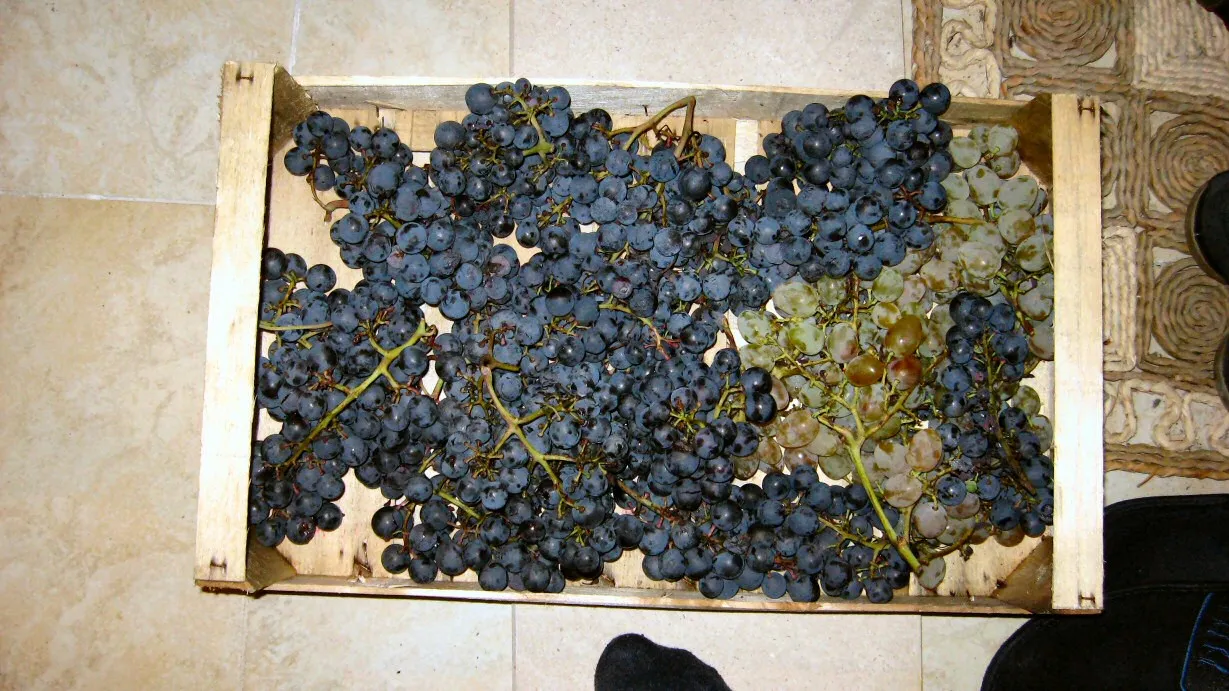
Plavac mali inherited one of zinfandel’s flaws: uneven ripening. The same bunch can carry berries that are still green and others that are already shrivelled (passerillées, dried on the vine). Letting the grapes ripen fully raises sugar and tannins but makes acidity fall: the balance is hard to find.
The wines: power and warmth
Plavac mali wines are rich, tannic and often very high in alcohol. Typical aromas recall black cherry, dried fig, carob, pepper, sage and spices. In very hot climates, notes of liquorice and clove are added.
Most of the wines are dry, but there are also off-dry and sweet versions, as well as a traditional rosé, opol.
The great terroirs
| Terroir | Location | Character |
|---|---|---|
| Dingač | Pelješac peninsula | Steep slopes facing the sea, very concentrated reds |
| Postup | Pelješac peninsula | Neighbour of Dingač, powerful wines |
| Hvar | Island of Hvar | Vines on sunny hillsides |
| Brač, Vis | Dalmatian islands | Wines with an island character |
| Komarna, Konavle | Southern Dalmatia | Coastal vineyards |
On the slopes of Dingač and Postup, direct sunshine, reflection from the sea and stony soils give very concentrated wines, whose alcohol level can be particularly high. These conditions recall the terraced vineyards of the Mediterranean, such as those of Banyuls in Languedoc-Roussillon for grenache noir.
An almost exclusively Croatian grape
Plavac mali remains almost entirely grown in Croatia. It embodies the revival of Croatian wine and often serves as a gateway to the country’s other native grapes, which are numerous and still little known. Like xinomavro in Greece or saperavi in Georgia, it illustrates the richness of the native grapes of South-Eastern Europe.
Plavac mali and zinfandel: the parent and the child
| Point | Zinfandel (crljenak kaštelanski) | Plavac mali |
|---|---|---|
| Link | Parent | Descendant (zinfandel × dobričić) |
| Origin | Dalmatia | Dalmatia |
| Spread | California, Puglia, Croatia | Almost only Croatia |
| Ripening | Uneven | Uneven |
| Wine style | Jammy black fruit, high alcohol | Fig, carob, spices, firmer tannins |
Both grapes share a liking for heat and uneven ripening within the bunch. Plavac mali is generally more tannic, with drier, spicier notes.
Frequently asked questions
Is plavac mali the same grape as zinfandel?
No. Plavac mali is a descendant of zinfandel, not the same grape. DNA analysis showed that it comes from a cross between crljenak kaštelanski, identical to zinfandel, and dobričić, an old grape from the island of Šolta. It was long believed to be the other way round, with plavac mali as the parent of zinfandel.
What does plavac mali mean?
In Croatian, plavo means "blue" and mali means "small". The name refers to the grape's small blue-black berries.
What are Dingač and Postup?
They are two renowned wine areas on the Pelješac peninsula, in southern Dalmatia. Their plavac mali vines are planted on very steep slopes facing the sea, on poor limestone soils, and make particularly concentrated, high-alcohol reds.
Is plavac mali grown outside Croatia?
Very little. Plavac mali remains an almost exclusively Croatian grape, concentrated on the Dalmatian coast and its islands. It is therefore found mainly in exported Croatian wines.
Related grapes
- Zinfandel (Primitivo) (black, Croatia, Dalmatia)
- Grenache noir (black, Spain, Aragon (origin disputed with Sardinia))
- Mourvèdre (black, Spain, Valencia region)
- Syrah (black, France, northern Rhône Valley)
- Xinomavro (black, Greece, Macedonia)