Mourvèdre: a Spanish grape that found its terroir in Bandol
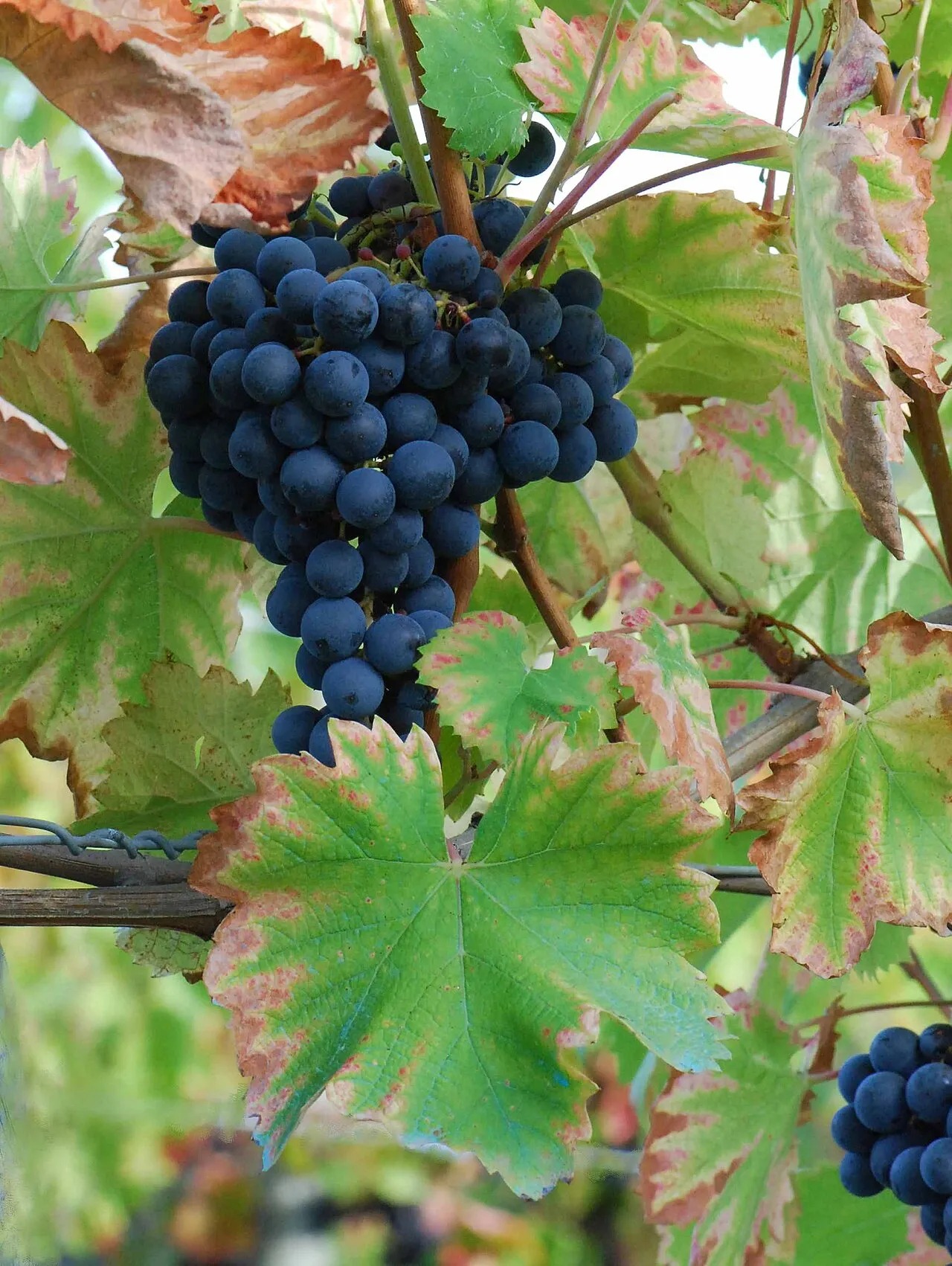
Profile: Mourvèdre
| Berry colour | Black grape (N) |
|---|---|
| Species / status | Vitis vinifera |
| Origin | Spain, Valencia region |
| Synonyms | Monastrell (Spain), Mataro (Australia, United States) |
| French regions | Corsica, Languedoc-Roussillon, Provence, Rhône Valley |
| Grown in | Spain, France, Australia, United States |
| Typical aromas | blackberry, blackcurrant, liquorice, garrigue, leather and game (evolved wines), pepper |
| Wine style | Deep, tannic reds that are slow to open, with animal notes with age, and structured rosés in Bandol. |
| Food pairings | beef daube, game, seven-hour lamb, civet |
| Identifiers | VIVC no. 7915, Wikidata Q161864 |
Origin: a grape of the Valencia region
Mourvèdre originates in Spain, probably in the Valencia region. Its French name is said to come from Murviedro, the old name of the town of Sagunto, near Valencia. The synonym mataro refers to the town of Mataró, in Catalonia.
In Spain, the grape is called monastrell, a name whose origin remains unexplained. It is grown there mainly in the south-east (Jumilla, Yecla, Alicante, Bullas).
No major genetic parentage has been established for this grape. DNA analyses have, however, ruled out a supposed link with balzac blanc, long presented as its white form.
The angle to know: Bandol, the appellation built around one grape
Bandol is one of the few French appellations whose planting rule makes a late and difficult grape the compulsory basis of the wines.
| Type of wine | Mourvèdre requirement (Bandol AOC) | Main complement |
|---|---|---|
| Red | At least 50% | Grenache, cinsault |
| Rosé | At least 20% | Grenache, cinsault |
The reds are also aged for at least eighteen months in barrel. This requirement explains the ageing profile of Bandol. To read this kind of rule, see the guide reading an AOC specification.
The site suits the grape: south-facing terraced slopes (restanques), and proximity to the sea, which tempers the heat and brings humidity. The often-cited saying is that mourvèdre likes to have “its head in the sun and its feet in the water”.
Decline and revival
Before phylloxera, mourvèdre was widespread in Provence and Languedoc. The crisis at the end of the 19th century imposed grafting onto American rootstocks, to which it adapted poorly. Winemakers then largely replaced it with easier grapes. See rootstocks and phylloxera.
Its replanting dates mainly from the second half of the 20th century, with the search for improving grapes in the south.
In the vineyard
Mourvèdre buds and ripens very late. It needs a very hot climate to ripen fully. Its harvest window is short: once ripe, it quickly loses its acidity and can take on notes of prune.
Its thick-skinned berries resist late rains well. Its shoots grow upright, which suits training as a free-standing bush vine (gobelet).
The wines
Mourvèdre makes dark, tannic wines with an assertive character, with aromas of blackberry, blackcurrant and garrigue. With age, notes of leather, game and undergrowth appear. Its tendency towards reduction calls for careful winemaking.
In blends, it brings structure and ageing ability to grenache noir, which is softer and more prone to oxidation. It is thus found in the southern trio of grenache, syrah, mourvèdre.
Where it is grown
- Provence: Bandol above all, and as a complement in several appellations. See the grapes of Provence.
- Rhône Valley: a blending grape in the southern appellations, including Châteauneuf-du-Pape. See Rhône Valley.
- Languedoc-Roussillon: in blends with grenache, syrah and carignan.
Outside France: Spain (by far the leading country), Australia, California.
Further reading
Frequently asked questions
Are mourvèdre and monastrell the same grape?
Yes. Monastrell is the Spanish name of the grape, grown mainly in south-east Spain (Jumilla, Yecla, Alicante). Mourvèdre is the French name, said to come from Murviedro, the old name of the town of Sagunto, near Valencia. In Australia and the United States it is also called mataro.
What share of mourvèdre is there in a Bandol?
The specification of the Bandol AOC requires at least 50% mourvèdre in red wines and at least 20% in rosés. The remainder comes mainly from grenache and cinsault. The reds must also be aged in barrel for at least eighteen months.
Why did mourvèdre almost disappear in France?
After the phylloxera crisis, at the end of the 19th century, vines had to be grafted onto American rootstocks. Mourvèdre adapted poorly to the first rootstocks used, and many winemakers replaced it with other grapes. It was gradually replanted from the middle of the 20th century.
Is mourvèdre a wine for keeping?
Yes. Rich in tannins and colour, it makes wines that are often closed when young, and that benefit from several years of ageing. Red Bandols are renowned for their ability to age for a long time.