Bobal: the red grape of Valencia, from bulk wine to old vines
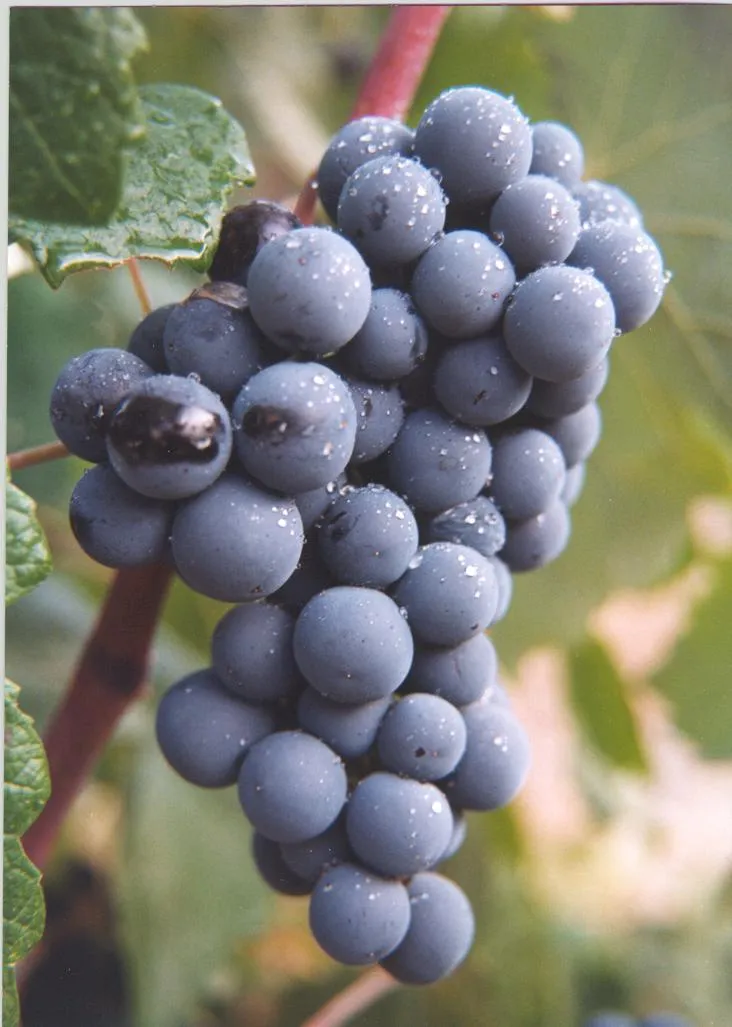
Profile: Bobal
| Berry colour | Black grape (N) |
|---|---|
| Species / status | Vitis vinifera |
| Origin | Spain, Valencia (Utiel-Requena) |
| Synonyms | Requena, Tinto de Requena, Valenciana tinta, Provechón, Rajeno |
| Grown in | Spain |
| Typical aromas | black cherry, blackberry, blueberry, pomegranate, floral notes, sweet spices |
| Wine style | Deeply coloured, fruity reds with lively acidity and often moderate alcohol, as well as fresh rosés; deeper wines from old vines. |
| Food pairings | Valencian paella with rabbit, embutidos (charcuterie), grilled lamb, arroz al horno |
| Identifiers | VIVC no. 1493, Wikidata Q888380 |
Origin: an old Valencian grape
Bobal is a black grape of eastern Spain, native to the Utiel-Requena region, on the plateau west of Valencia. It is documented as early as the 15th century in L’Espill (or Llibre de les dones), a work by the Valencian writer Jaume Roig.
Its name is said to come from the Latin bovale, the bunch evoking the shape of a bull’s head. This etymology is traditional and unproven.
A little-known giant
Bobal is one of the most planted red grapes in Spain, alongside tempranillo and grenache. It nonetheless remains little known outside Spain, because it was mainly used to produce bulk wine and blending wines.
| Zone | Bobal’s place |
|---|---|
| Utiel-Requena DOP (Valencia) | Overwhelmingly dominant red grape |
| La Manchuela (Cuenca, Albacete) | Important red grape |
| Valencia, Alicante, Murcia | Secondary presence |
| Aragon (Campo de Borja, Calatayud, Cariñena) | Occasional plantings |
In the vineyard
Bobal is a very vigorous and productive grape, with long drooping shoots, traditionally trained as a low bush vine. Its shoots shade the soil and limit evaporation, an asset on this dry plateau. It is well adapted to the local climate and to the region’s diseases.
Its bunches are medium to large, compact, in an irregular cone. Its skin is intensely coloured, but its flesh is colourless.
Not a teinturier, but a colouring grape
This is the angle that often misleads: bobal gives very coloured musts, and it was long used to strengthen the colour of other wines. Yet it is not a teinturier grape, because its flesh is white. All its colour is in the skin.
| Grape | Flesh | Source of colour |
|---|---|---|
| Bobal | Colourless | Skin very rich in anthocyanins |
| Alicante Bouschet (garnacha tintorera) | Red | Skin and flesh |
| Grenache noir | Colourless | Skin, moderate colour |
To understand the difference, see our guide on teinturier grapes.
The wines
Bobal makes fruity wines, with lively acidity and often moderate alcohol, with noticeable tannins. Its musts, rich in colour and tannins, allow it to be used both for blending and for ageing.
- Rosés: a traditional style of Utiel-Requena, lively and fruity, with red fruit notes.
- Young reds: deep colour, black cherry, blueberry, freshness.
- Old-vine reds: in recent decades, producers have worked old bush vines, sometimes above 800 metres in altitude, for deeper and more complex wines.
Its good acidity is an asset in a context of warming, as our guide on grapes and climate change points out.
The little-known angle: a white homonym
There is a white bobal, grown marginally, which has no genetic link with black bobal. It is a typical case of homonymy: two different varieties bear the same name. To avoid these pitfalls, see synonyms and homonyms.
Conversely, bobal has many local synonyms, such as requena, tinto de Requena or valenciana tinta, which all recall its Valencian cradle.
Bobal and neighbouring grapes
In eastern Spain, bobal shares the vineyard with mourvèdre (monastrell), very present further south, notably in Alicante, Jumilla and Yecla, and with garnacha tintorera. Bobal stands out for its freshness and liveliness.
Practical guide
| Style | Colour | Drink | Pairings |
|---|---|---|---|
| Rosé | Deep pink | Within the year | Rice, tapas, Mediterranean cooking |
| Young red | Deep purplish red | Within 2 to 3 years | Charcuterie, grilled meats |
| Aged old-vine red | Very dark red | Medium ageing | Lamb, slow-cooked dishes |
A young bobal benefits from being served slightly chilled, at around 14 to 16 °C, to bring out its fruit and acidity. Old-vine cuvées, more structured, tolerate a slightly higher serving temperature and decanting.
Bobal and tempranillo: two faces of red Spain
Tempranillo is the grape of the north and of the great aged wines (Rioja, Ribera del Duero). Bobal is that of the Valencian plateau, long confined to bulk wine. The former ripens early and has fairly low acidity; the latter keeps lively acidity and moderate alcohol. This freshness explains growers’ growing interest in bobal.
Frequently asked questions
Is bobal a teinturier grape?
No. Its skin is very rich in colour, but its flesh is colourless, like that of most black grapes. It is this intensely coloured skin that explains bobal's historical use to give colour to blends.
Where can bobal wine be found?
Mainly in the Utiel-Requena DOP, west of Valencia, where it accounts for the vast majority of red vines. It is also found in the neighbouring La Manchuela region, in the provinces of Cuenca and Albacete, and in other vineyards of eastern Spain.
Where does the name bobal come from?
The most widespread explanation links it to the Latin bovale, in reference to the shape of the bunch, likened to a bull's head. The grape is mentioned as early as the 15th century in a Valencian text by Jaume Roig, the Espill.
Related grapes
- Tempranillo (black, Spain, north of the peninsula (Rioja, Ebro valley))
- Grenache noir (black, Spain, Aragon (origin disputed with Sardinia))
- Mourvèdre (black, Spain, Valencia region)
- Alicante Bouschet (black, France, Hérault (Languedoc))
- Mencía (black, Iberian Peninsula, north-west (Spain or Portugal))