Xinomavro: the great red grape of Greek Macedonia
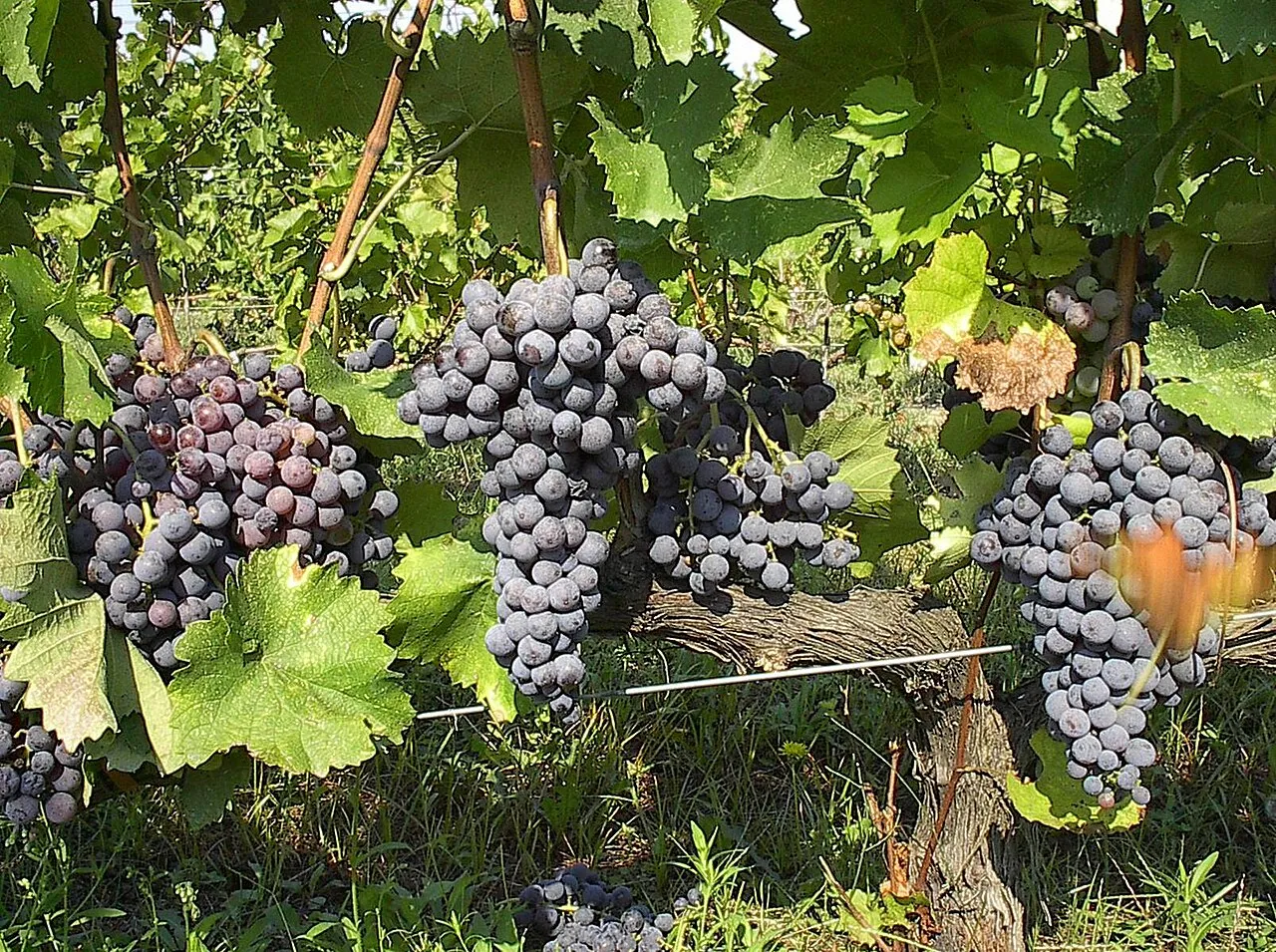
Profile: Xinomavro
| Berry colour | Black grape (N) |
|---|---|
| Species / status | Vitis vinifera |
| Origin | Greece, Macedonia |
| Synonyms | Xynomavro, Mavro Naoussis, Popolka |
| French regions | Provence |
| Grown in | Greece, China |
| Typical aromas | sour cherry, raspberry, sun-dried tomato, black olive, spices, leather and forest floor (with age) |
| Wine style | Age-worthy reds with high acidity and tannins, often lightly coloured, as well as rosés and sparkling wines in cooler areas. |
| Food pairings | roast lamb with herbs, moussaka, tomato-based dishes, game, mature cheeses |
| Identifiers | VIVC no. 13284, Wikidata Q1974545 |
Origin: the red grape of Greek Macedonia
Xinomavro is the main red grape of northern Greece, particularly of Macedonia. Its name means “acid black” (xino, acid; mavro, black), a definition that announces its character.
It is mostly planted on the foothills of Mount Vermion, around Naoussa, as well as in the Amyntaio, Goumenissa, Siatista and Velventos areas. Further south, in Thessaly, it is found in Rapsani, on the slopes of Mount Olympus.
The appellations
| Appellation | Region | Role of xinomavro |
|---|---|---|
| Naoussa | Central Macedonia | 100% xinomavro, appellation created in 1971 |
| Amyntaio | Western Macedonia | Reds, rosés and sparkling wines, in a cooler climate |
| Goumenissa | Central Macedonia | Blended with negoska, fruitier and softer |
| Rapsani | Thessaly (Mount Olympus) | Blended with krassato and stavroto |
In Naoussa, xinomavro makes the most structured and age-worthy reds. In Amyntaio, at altitude and near lakes, the cooler climate favours rosés and sparkling wines, which make use of its high acidity. In Goumenissa, blending with negoska adds fruit, roundness and colour.
To understand what a grape rule contributes, see our guide on reading an AOC specification, and on the choice between a single grape and a blend, single-varietal or blend.
In the vineyard
Xinomavro is a demanding grape. It ripens late and its wines vary greatly from one vintage to the next. Poorly managed, it can make hard wines with green tannins and pale colour. The best sites, well exposed and with limited yields, are essential to obtain ripe tannins.
The wines: acidity, tannins and pale colour
Xinomavro makes reds with medium to high acidity and high tannins. Their colour is often pale and quickly turns brick-red. Young, they recall sour cherry and red fruit; notes of sun-dried tomato and black olive, very characteristic, are often found. With age come leather, forest floor and spice.
Traditional wines were aged for a long time in large casks. A more recent approach seeks riper tannins and clearer fruit, sometimes with ageing in barriques.
The overlooked angle: the “Greek nebbiolo”
Xinomavro is often presented as the nebbiolo of Greece, and Naoussa wines as “Greek Barolos”. The comparison rests on shared stylistic features:
| Marker | Xinomavro | Nebbiolo |
|---|---|---|
| Colour | Often pale, quickly brick-red | Pale, quickly orange |
| Acidity | High | High |
| Tannins | High | Very high |
| Ripening | Late | Very late |
| Typical aromas | Sour cherry, sun-dried tomato, olive | Rose, tar, cherry |
| Ageing | Long | Long |
| Benchmark wine | Naoussa | Barolo, Barbaresco |
This resemblance is stylistic: no genetic relationship has been established between the two grapes. Xinomavro also has its own markers, notably the tomato and olive notes that set it apart.
Sangiovese shares with them a medium colour and marked acidity, which makes it a useful third point of comparison.
An almost exclusively Greek grape
Almost all xinomavro is planted in Greece. A few plantings have been reported in China, in Gansu province. Like assyrtiko from Santorini among whites, it is one of the grapes that carry the image of Greek wine abroad. It also belongs to the family of great native grapes of South-East Europe, alongside Croatian plavac mali.
Tasting notes
A young Naoussa shows a fairly pale ruby colour, a nose of sour cherry, sun-dried tomato and spice, and a taut palate with tight tannins. It benefits from decanting or from waiting several years. The lighter rosés and sparkling wines of Amyntaio are drunk young and chilled.
Frequently asked questions
What does xinomavro mean?
In Greek, xino means "acid" and mavro "black". The name therefore translates as "acid black". It sums up the grape's character well: a black grape that makes wines with marked acidity.
Why is xinomavro compared with nebbiolo?
Because the two grapes make wines with a similar profile: an often pale colour that quickly turns brick-red, high acidity and tannins, great ageing potential and aromas that grow more complex over time. Naoussa wines are therefore often likened to Barolo. This is a resemblance of style: no genetic relationship has been established between the two grapes.
Which appellations use xinomavro?
Naoussa, which requires 100% xinomavro; Amyntaio, known for its reds, rosés and sparkling wines; Goumenissa, where it is blended with negoska; and Rapsani, on the slopes of Mount Olympus, where it is combined with krassato and stavroto.
Is xinomavro grown outside Greece?
Very little. Almost all plantings are in Greece, mainly in Macedonia. A few experimental plantings have been reported in China, in Gansu province.
Related grapes
- Nebbiolo (black, Italy, Piedmont)
- Assyrtiko (white, Greece, Santorini (Cyclades))
- Sangiovese (black, Italy, Tuscany)
- Plavac mali (black, Croatia, Dalmatia)
- Saperavi (black, Georgia, Kakheti)