Assyrtiko: the grape of Santorini and its basket-trained vines
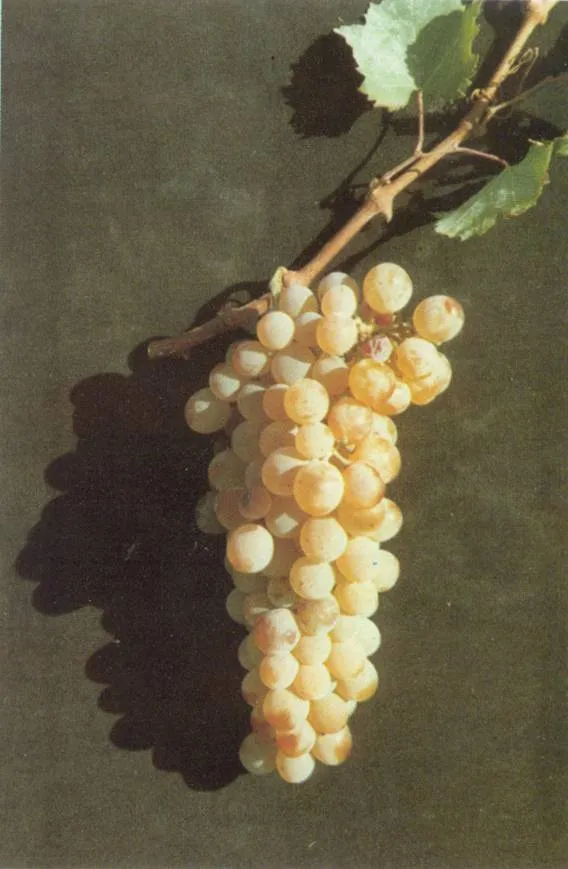
Profile: Assyrtiko
| Berry colour | White grape (B) |
|---|---|
| Species / status | Vitis vinifera |
| Origin | Greece, Santorini (Cyclades) |
| Synonyms | Asyrtiko, Assyrtico |
| Grown in | Greece, Australia |
| Typical aromas | lemon, gunflint, saline notes, white flowers, dried fruits and honey (vinsanto), smoky notes |
| Wine style | Very taut, mineral and saline dry white, suited to ageing; also sweet wines from dried grapes (vinsanto). |
| Food pairings | grilled fish, octopus and cuttlefish, Santorini fava, goat's cheeses, dried fruits and desserts (vinsanto) |
| Identifiers | VIVC no. 726, Wikidata Q457444 |
Assyrtiko, a white of fire and sea
Assyrtiko is a Greek white grape, native to the island of Santorini, in the Cyclades. It has become the best-known Greek white grape internationally, a symbol of an extreme island vineyard.
Its most astonishing quality is that it keeps very high acidity in a hot, dry climate, where most white grapes lose their freshness.
Santorini: a vineyard on a volcano
The Santorini vineyard developed on the ash, pumice and lava of the Minoan eruption that shaped the island. The soils are very poor, sandy and almost devoid of clay. Rain is scarce; the vine lives partly on the night-time moisture brought by the sea.
Own-rooted and basket-trained: Santorini’s unique angle
Two particularities make Santorini a case apart in the wine world.
Ungrafted vines. Phylloxera, the aphid that destroyed European vineyards in the 19th century, does not thrive in these sandy volcanic soils. Santorini’s vines are therefore grown own-rooted, without American rootstock. When a vine wears out, it is cut back and starts again from its old root system, which explains the very great age of some roots. To understand the issue, see the guide on rootstocks and phylloxera.
The kouloura, or basket. The canes are coiled close to the ground in a basket shape. The bunches develop inside, protected from violent winds, windblown sand and sun.
The wines of Santorini
| Wine | Production | Profile |
|---|---|---|
| Santorini (dry white) | Assyrtiko in the majority | Taut, lemony, saline, mineral, suited to ageing |
| Nykteri | Traditional winemaking, often with barrel ageing | Richer, more alcoholic, oaky and oxidative notes |
| Vinsanto | Sun-dried grapes (assyrtiko, often with aidani), long ageing | Sweet, dried fruit, honey, coffee, lively acidity |
The name nykteri evokes night in Greek, referring to an old practice of harvesting or pressing at night, to avoid the heat.
In the vineyard
Outside Santorini, assyrtiko proves adaptable: it is planted in many Greek regions, in Macedonia, Attica, Crete and on other islands. There it generally gives wines that are softer and fruitier than on Santorini, which shows the importance of the volcanic terroir in its expression.
Its ability to keep its acidity in the heat makes it a grape under study in the face of warming: see the guide grapes and climate change.
The wines: lemon, stone and salt
Santorini assyrtiko is a very taut dry white, with aromas of lemon, warm stone and smoke, and a marked saline sensation. It can seem austere when young and gains complexity after a few years in bottle, in the manner of an age-worthy riesling or chenin.
Greek cousins and comparisons
Among the Greek grapes on the site, xinomavro represents northern Greece and age-worthy reds. For another white capable of great acidity and long ageing, both dry and sweet, see Hungarian furmint.
Frequently asked questions
Why do Santorini vines grow in baskets?
Kouloura training consists of coiling the canes into a basket shape set on the ground. It protects the grapes from violent winds and sun, and allows the vine to capture night-time moisture on this very dry island. The bunches develop inside the basket.
Why is Santorini assyrtiko not grafted?
The volcanic soils of Santorini, very sandy and poor in clay, do not allow phylloxera to develop. The vines are therefore grown own-rooted, without American rootstock, and some vines have very old root systems.
What is Santorini vinsanto?
It is a sweet wine made from assyrtiko grapes, often supplemented with aidani, dried in the sun after harvest. It is aged for a long time and develops notes of dried fruit, honey, coffee and spices, with acidity that balances the sugar.
Is assyrtiko grown outside Greece?
Yes, but on a small scale. A few plantings can be found outside Greece, notably in Australia. It is also planted in other Greek regions, in Macedonia, Attica or Crete.
Related grapes
- Xinomavro (black, Greece, Macedonia)
- Riesling (white, Germany, Rhine Valley)
- Furmint (white, Hungary, Tokaj (probable origin))
- Chenin blanc (white, France, Loire Valley (Anjou-Touraine))
- Savagnin (white, Europe, precise origin debated (Jura and Central Europe))