Merlot: the soft Right Bank grape and its forgotten mother
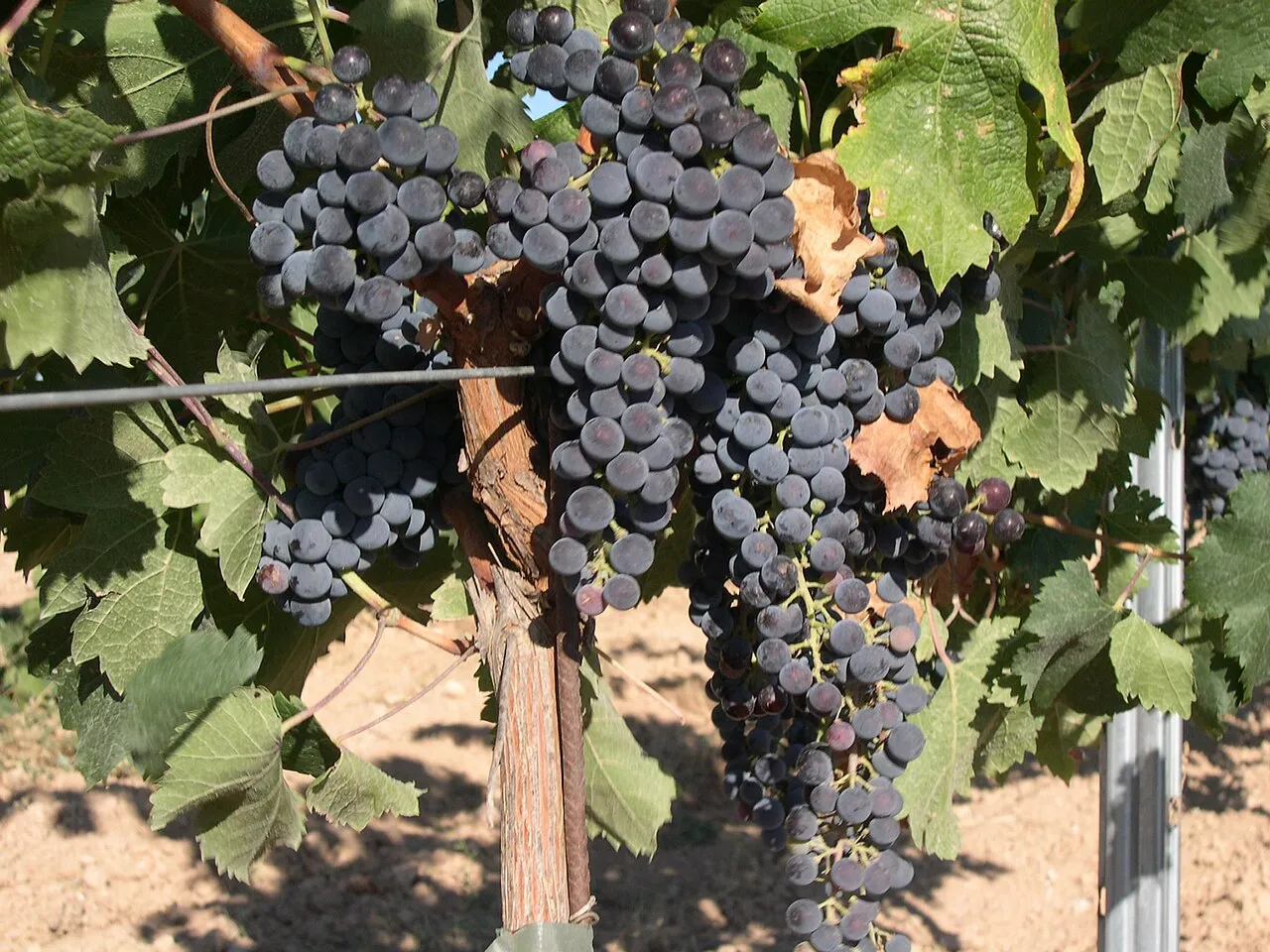
Profile: Merlot
| Berry colour | Black grape (N) |
|---|---|
| Species / status | Vitis vinifera |
| Origin | France, Bordeaux (Libournais) |
| Parentage | Cabernet franc × Magdeleine noire des Charentes (DNA analysis, late 2000s) |
| Synonyms | Merlot noir, Merlau (old spelling) |
| French regions | Bordeaux, Languedoc-Roussillon, Provence, South-West France |
| Grown in | France, Italy, United States, Chile, Switzerland, Romania, Bulgaria, Australia, South Africa |
| Typical aromas | plum, black cherry, blackberry, chocolate, truffle (aged wines), sweet spices (oak ageing) |
| Wine style | Round, fleshy reds with supple tannins, from fruity wines to drink young to the great age-worthy wines of Pomerol. |
| Food pairings | roast duck, beef fillet, mushrooms and ceps, pasta with tomato and meat sauce |
| Identifiers | VIVC no. 7657, Wikidata Q213338 |
Origin: a Libournais grape recorded in 1784
Merlot is first recorded in 1784, under the spelling “merlau”, by a local official who listed it among the best grapes of the Libournais. It then spread throughout Bordeaux in the 19th century.
The name is usually linked to the blackbird (merle). It is explained either by the black colour of the berries or by the birds’ taste for this early-ripening grape, an explanation already reported in the 19th century.
The key fact: a mother found in a Breton garden
Merlot’s genetic history is one of the most unusual in ampelography. One of its parents was known to be cabernet franc, but the second could not be found.
In 1996, ampelographers took a sample from an abandoned vine in Saint-Suliac, in Ille-et-Vilaine, far from any present-day wine region. Other vines of the same variety were later found growing as ornamental plants in several villages of the Charentes. The grape was named Magdeleine noire des Charentes.
In the late 2000s, DNA analysis established that it is merlot’s mother. The same Magdeleine noire is also the mother of malbec, with prunelart as the other parent. Merlot and malbec are therefore half-siblings.
This discovery shows the value of grape conservatories and of surveys in old vineyards: a parent of one of the most widely planted grapes in the world had survived in gardens.
| Grape | Relationship to merlot | Shared parent |
|---|---|---|
| Cabernet sauvignon | Half-sibling | Cabernet franc |
| Carménère | Half-sibling | Cabernet franc |
| Malbec | Half-sibling | Magdeleine noire des Charentes |
| Cabernet franc | Parent | - |
In the vineyard: early ripening and weaknesses
Merlot buds and ripens early, earlier than the cabernets. This explains its success on the cool clay soils of the Right Bank, where cabernet sauvignon struggles to ripen.
It has weaknesses: susceptibility to coulure and millerandage at flowering, to grey rot and to downy mildew. It is also sensitive to frost. After the severe frost of 1956, followed by difficult vintages, the Bordeaux authorities banned new merlot plantings from 1970 to 1975.
With global warming, its early ripening becomes a drawback: high alcohol, low acidity. This is one of the issues described in the guide grapes and climate change.
The wines
Merlot makes round, fleshy wines with fine tannins, marked by plum, black cherry and blackberry. With age, the great merlots develop notes of truffle, leather and forest floor.
Its styles range from fruity varietal wines, often sold as IGP, to the great age-worthy wines of Pomerol, where it is often the majority grape or almost the only one. In Saint-Émilion, it is usually blended with cabernet franc. For the comparison with the great Left Bank grape, see merlot or cabernet sauvignon.
Where it is grown
In France, merlot is mainly found:
- in Bordeaux, where it is the most planted grape. See the grapes of Bordeaux;
- in South-West France (Bergerac, Buzet, Fronton, and Cahors as a blending partner);
- in Languedoc, especially for varietal wines under the IGP Pays d’Oc.
Outside France, it is widespread in Italy, California, Chile (where it was long confused with carménère), Italian-speaking Switzerland (Ticino), Eastern Europe and the Southern Hemisphere.
Further reading
- Merlot or cabernet sauvignon: 10 differences to know
- Grape DNA parentage: how genetics rewrote history
- Grape varieties and climate change: adapting the plantings
- Ampelography: identifying a grape variety by its leaves and bunches
- Grape name on the label: the 85% rule
- Single-varietal or blend: two philosophies of wine
Frequently asked questions
Who are the parents of merlot?
Merlot comes from a natural cross between cabernet franc and Magdeleine noire des Charentes. This second parent was unknown until the late 2000s: a sample taken in 1996 from an abandoned vine in Saint-Suliac, in Brittany, made it possible to identify it. Malbec is merlot's half-sibling through the same mother.
Where does the name merlot come from?
The name is usually linked to the blackbird (merle in French). The explanations put forward refer either to the dark colour of the berries or to blackbirds' fondness for the ripe grapes. The grape is mentioned in 1784 under the spelling "merlau" in the Libournais.
What is the difference between merlot and cabernet sauvignon?
Merlot ripens earlier and makes rounder, softer wines that are approachable sooner. Cabernet sauvignon ripens later and is more tannic and more austere when young. In Bordeaux, merlot dominates the Right Bank and cabernet sauvignon the Left Bank.
Is merlot suffering from global warming?
Its early ripening, long an asset in the oceanic climate of Bordeaux, becomes a drawback when summers are hot: the grapes quickly reach high alcohol levels and lose acidity. This is one of the reasons why Bordeaux is studying later-ripening grapes.
Related grapes
- Cabernet franc (black, France, South-West (Libournais probable))
- Cabernet sauvignon (black, France, Bordeaux area)
- Malbec (Côt) (black, France, Quercy (Lot))
- Carménère (black, France, Bordeaux area)
- Petit verdot (black, France, South-West (Bordeaux))
- Prunelart (black, France, Tarn (Gaillac))