The white wines of Corbières: which grapes, which rules?
A red-wine appellation opening up to white
Corbières was recognised as a VDQS in 1951, then as an AOC by decree of 24 December 1985. It is the largest Languedoc appellation by volume. Its image is that of a red garrigue wine, based on carignan, grenache, syrah and mourvèdre.
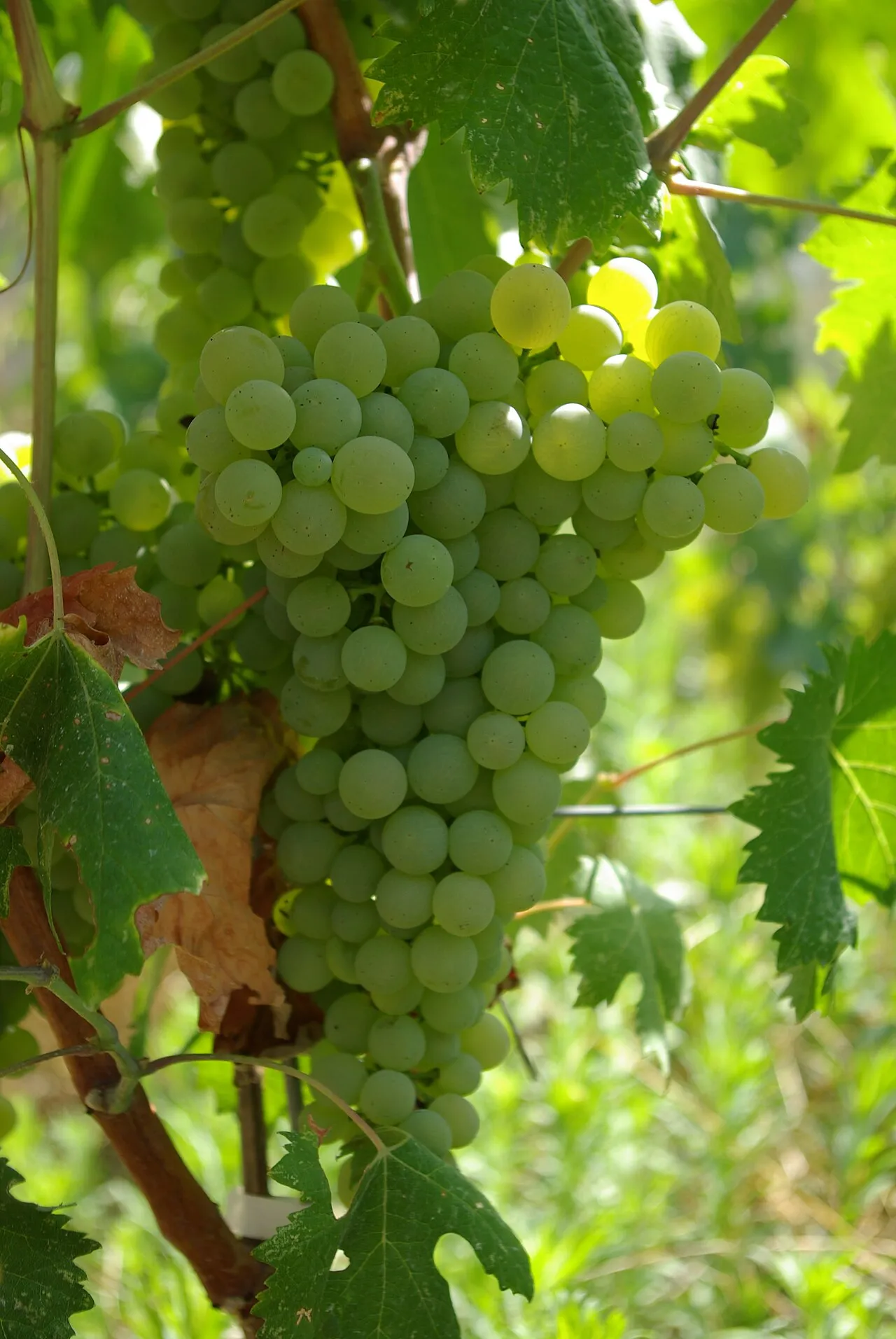
White holds a narrow place: about 5% of production, against 81% for red and 14% for rosé. It is precisely this rarity that draws attention. The limestone and schist soils, the altitude of some areas and the diversity of Mediterranean grapes make it possible to produce dry whites that stand up to the heat.
| Colour | Share of production (approx.) | Main grapes |
|---|---|---|
| Red | 81% | Carignan, grenache, lledoner pelut, mourvèdre, syrah |
| Rosé | 14% | Black grapes of the appellation |
| White | 5% | Bourboulenc, grenache blanc, macabeu, marsanne, roussanne, vermentino |
The grapes of white Corbières
The specification distinguishes two groups.
Main grapes: bourboulenc, grenache blanc, macabeu (macabeo), marsanne, roussanne and vermentino. They must make up at least 90% of the planted vines, with at least two of them.
Accessory grapes: clairette, muscat à petits grains, piquepoul (picpoul), terret blanc and viognier.
Carignan blanc is admitted as a variety of interest for adaptation (VIFA), up to 5%. This status, introduced in several appellations, makes it possible to observe how a grape behaves in the face of climate change before deciding to integrate it fully.
What each grape brings
- Grenache blanc gives volume and roundness.
- Bourboulenc keeps decent acidity and brings floral notes.
- Macabeu gives rather neutral, fresh wines, useful in blends.
- Roussanne and marsanne bring richness and suitability for oak ageing; their differences are set out in the comparison marsanne or roussanne.
- Vermentino brings citrus aromas and a slightly bitter finish.
Blending is therefore an exercise in balance between grapes that give volume and grapes that give freshness. The guide single variety or blend explains why the appellations of southern France almost always require several grapes.
The red as a backdrop
To understand the place of white, the rules for red need to be recalled. Cinsault is limited to 20% there, grenache gris to 10%, and marselan has been admitted on an experimental basis (5% at most) since 2019. The Boutenac cru, created in 2005 under the name Corbières-Boutenac and renamed in 2022, covers reds only.
Reading the specification
The thresholds cited here are those of the version in force at the time of writing. They change with successive revisions. The guide reading an AOC specification explains how to find the latest approved version on the INAO website, and the Languedoc-Roussillon page presents the other appellations of the region.
Grapes mentioned in this feature
- Vermentino (white, Western Mediterranean (exact origin unknown))
- Roussanne (white, France, northern Rhône Valley)
- Marsanne (white, France, northern Rhône valley)
- Macabeu (white, Spain, north-east (exact origin debated))
- Clairette (white, France, Midi)
- Piquepoul blanc (white, France, Languedoc)
- Viognier (white, France, northern Rhône Valley)
- Muscat à petits grains (white, Mediterranean basin (precise origin unknown))
Frequently asked questions
What share of white wine does Corbières produce?
About 5% of production. Red represents around 81% and rosé around 14%. White therefore remains a minority, which explains why it is little known to the general public.
How many grape varieties go into a white Corbières?
At least two main grapes, chosen from bourboulenc, grenache blanc, macabeu, marsanne, roussanne and vermentino. Together, these main grapes must make up at least 90% of the estate's planted vines.
Is chardonnay allowed in Corbières?
No. It is not on the appellation's list of grape varieties. A chardonnay wine produced in the area is sold as IGP or vin de France.
What is the Boutenac cru?
It is a communal appellation created in 2005 under the name Corbières-Boutenac, covering ten communes, and renamed "boutenac" in 2022. It covers red wines only.