Cinsault and carignan blanc, two historic grapes of Languedoc
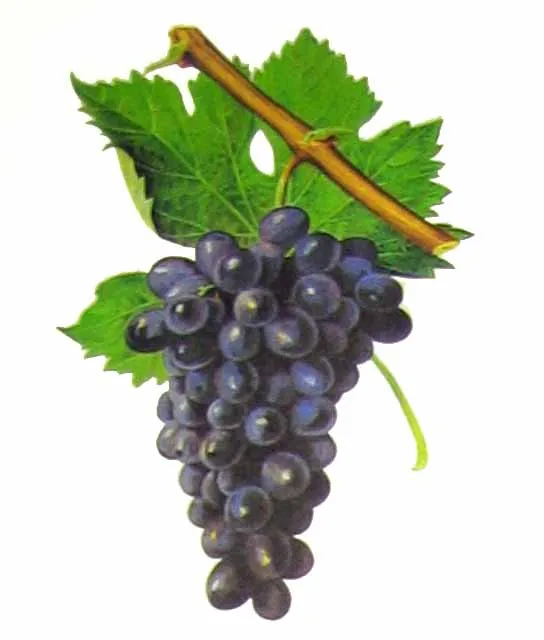
Two grapes from the old winegrowing South
Languedoc was long associated with bulk red wine made from high-yielding grapes. Since the restructuring of the vineyard, syrah, grenache and mourvèdre have taken over in the appellations. Yet two older grapes are coming back into growers’ conversations: cinsault, a black grape, and carignan blanc, the white form of carignan.
What they share: they are adapted to heat and drought, and they give less concentrated wines than the grapes that replaced them.
| Cinsault | Carignan blanc | |
|---|---|---|
| Colour | Black (N) | White (B) |
| Origin | Probably Languedoc | Mutation of carignan gris, itself derived from black carignan |
| Plantings | Widespread across southern France and the Maghreb | Rare: a few hundred hectares |
| Main areas | Languedoc, Provence, southern Rhône | Roussillon, Languedoc |
| Wine style | Light reds, fruity rosés, low in tannin | Fresh dry whites with marked acidity |
| Main use | Blending | Blending or varietal wine outside the appellations |
Cinsault, the grape of lightness
Cinsault is a large-berried black grape, long grown in the south of France. It withstands drought well and gives pale wines with fresh fruit and little tannin. It is one of the pillars of Provence rosés, and it brings finesse to the reds of Languedoc and the southern Rhône.
In the appellations of Languedoc-Roussillon, it is most often a supporting grape. The Corbières specification, for example, limits it to 20% of the planted vines for red, alongside carignan, grenache noir, syrah and mourvèdre.
Cinsault also has an international career: it is widespread in the Maghreb and Lebanon, and it is one of the two parents of pinotage, crossed with pinot noir in South Africa, where it went by the name hermitage.
Carignan blanc, a rare mutation
Black carignan, originally from Aragon, was the most planted grape in France before the great vine-pull campaigns. Like other old grapes, it produced colour mutations: a grey form and a white form. The phenomenon is detailed in the guide on colour mutations.
Carignan blanc has remained marginal. Planted-area figures vary by source, but all speak of a few hundred hectares, mainly in the Pyrénées-Orientales and the Aude. It gives crisp dry whites with clear acidity, which stay fresh even on warm soils.
Its place in the appellations remains modest. In Corbières, it is admitted only as a variety of interest for adaptation (VIFA), up to 5%: a status designed to test grapes that could be useful in the face of climate change.
What these grapes offer today
Warming pushes alcohol levels up and lowers the acidity of grapes. The two grapes respond to this constraint in different ways:
- cinsault, through light, low-extract wines that are drunk young and fresh;
- carignan blanc, through acidity that holds up in a hot climate.
These are also old-vine grapes. Many plots planted as bush vines several decades ago escaped being pulled up. They give low yields and more regular grapes, which interests growers working with single-variety wines.
To go further on adapting the vineyard, the guide grape varieties and climate change presents the other avenues being studied, from Mediterranean grapes to resistant varieties.
Reading the label
A wine made from only one of these grapes often falls outside the framework of the appellations, which require blends. It is then found as an IGP (Pays d’Oc, Côtes Catalanes, for example) or as a vin de France, with the grape name on the label. The rules for this mention are set out in the guide on the grape variety on the label.
Grapes mentioned in this feature
- Cinsault (black, France, Languedoc (probable))
- Carignan (black, Spain, Aragon (Cariñena region))
- Grenache noir (black, Spain, Aragon (origin disputed with Sardinia))
- Syrah (black, France, northern Rhône Valley)
- Mourvèdre (black, Spain, Valencia region)
Frequently asked questions
Should it be written cinsault or cinsaut?
Both spellings exist. "Cinsaut" is the form used by the official French Catalogue and by many ampelographic works; "cinsault" is very common on labels and in appellation specifications. It is the same grape.
Is carignan blanc a different grape from carignan?
No, it is a colour mutation. Black carignan gave a grey form, carignan gris, from which the white form comes. The three share the same genetic heritage, apart from a few mutations affecting skin colour.
Can carignan blanc be found in a Corbières?
Yes, in small proportions. The Corbières specification allows it as a variety of interest for adaptation (VIFA), up to 5% of the planted vines. It is more present in the country wines and vins de France of Roussillon.
Why is cinsault of interest in a warming climate?
It withstands drought well and gives naturally light, fruity wines with little tannin. As alcohol levels rise, this more digestible profile is sought after, in red as well as rosé.