Sultanine: the seedless grape behind raisins
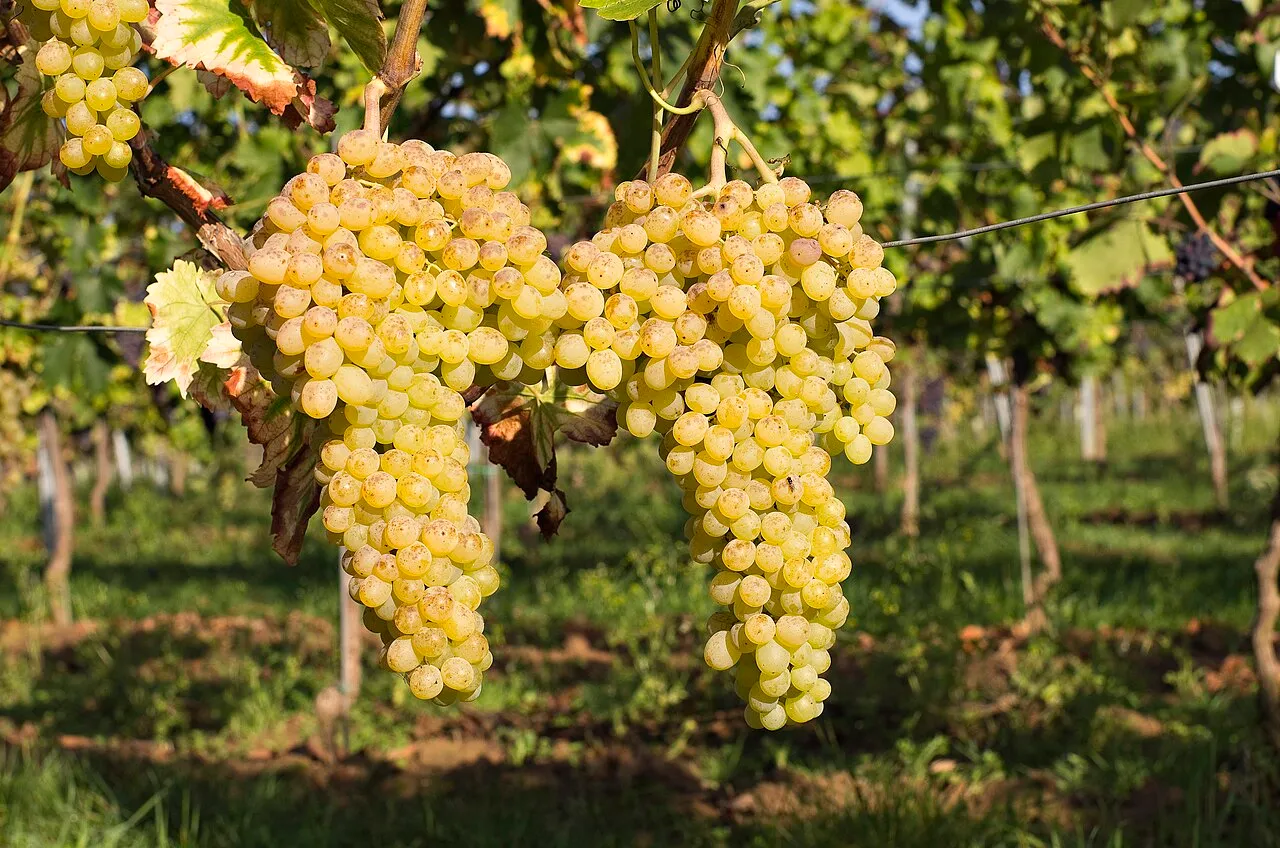
Profile: Sultanine
| Berry colour | White grape (B) |
|---|---|
| Species / status | Table grape |
| Origin | Asia Minor or Afghanistan (origin debated) |
| Synonyms | Thompson Seedless, Sultana, Sultanina, Kishmish, Sultaniye, Lady de Coverly |
| Grown in | Turkey, Iran, Greece, Afghanistan, United States, Chile, Australia, South Africa, China |
| Typical aromas | fresh grape, neutral, sweet flavour |
| Wine style | Seedless grape with a neutral, sweet flavour: raisins, table grapes and simple white wines. |
| Food pairings | pastries (raisins), mixed salads, breakfast cereals, Middle Eastern cooking (pilafs, tagines) |
| Identifiers | VIVC no. 12051, Wikidata Q1898118 |
Origin: an eastern grape
Sultanine is a white grape of eastern origin, but its exact birthplace is still debated. Some sources trace it to Afghanistan, where the word kishmish refers to a drying grape; others place it in Asia Minor, in present-day Turkey, where it has long been grown around İzmir and Manisa. The Ottomans spread it to Crete in the 19th century.
In the United States, it owes its name Thompson seedless to William Thompson, one of the first to grow it commercially in California, near Yuba City.
A seedless grape
Sultanine is seedless: its berries contain only tiny, atrophied seeds, or none at all. The seeds abort early in their development, a phenomenon called stenospermocarpy. This is what made its success both for drying and for eating fresh.
To obtain table grapes of sufficient size, growers often use gibberellic acid (a plant hormone) a few days after flowering, in addition to girdling and thinning. Without these techniques, the berries remain small.
A triple-purpose grape
Sultanine is often described as a “three-purpose” grape:
| Use | Place of sultanine |
|---|---|
| Raisins | Main use worldwide; about 97% of Californian raisins in 2000 |
| Table grape | Eaten fresh, valued for having no seeds but not very aromatic |
| Wine | Simple, neutral white wines; in Turkey, dry or off-dry sultaniye wines |
| Spirits | In Turkey, the grape most used for raki |
In the United States, it long served as the base for generic white wines sold under European names. In Australia, the discovery in 2003 of sultanine juice sold as chardonnay was one of the country’s biggest wine frauds. The criteria that distinguish table grapes from wine grapes are detailed in the guide table grape or wine grape.
In the vineyard
Sultanine is a very vigorous grape, which requires long pruning. It ripens about 10 days after chasselas. Its bunches are large, conical and loose, with small berries. It is susceptible to downy mildew, powdery mildew and anthracnose.
Where it is grown
Pierre Galet estimated the world area of sultanine at about 438,000 hectares, making it the most widely grown grape in the world, all uses combined (raisins, table and wine). The main producing countries cited are:
- Turkey, the leading producer (about 120,000 ha according to the same source);
- Iran (about 50,000 ha);
- Greece (about 25,000 ha);
- Afghanistan (about 20,000 ha);
- as well as Chile, Australia, South Africa, China, Syria and Iraq.
In the United States, it covers about a third of California’s vineyard area, where it is the most planted variety, and it replaced muscat of Alexandria as the benchmark drying grape.
These figures are orders of magnitude, as areas change quickly. Sultanine is far ahead of dattier de Beyrouth, the world’s second table grape according to Galet. See also the table grapes page and the guide on synonyms and homonyms.
Further reading
Frequently asked questions
Are sultanine and Thompson seedless the same grape?
Yes. Thompson seedless is the name used in the United States, after William Thompson, one of the first to grow it commercially in California, near Yuba City. US federal regulations treat the two names as synonyms. It is also called sultana, sultanina or kishmish depending on the country.
Why does sultanine have no seeds?
Its berries contain only tiny, atrophied seeds, or none at all. Fertilisation takes place, but the seeds abort early in their development. This feature, called stenospermocarpy, makes it an ideal grape for drying and for eating fresh.
Are all raisins made from sultanine?
No, but a very large share. In California, about 97% of raisins came from sultanine in 2000, including dark raisins. The golden raisins called "sultanas" often owe their pale colour to a sulphur dioxide treatment.
Can wine be made from sultanine?
Yes. In the United States, it long served as the base for generic white wines, valued for their neutrality. In Turkey, sultaniye wines are dry or off-dry and light, and the grape is the one most used for raki.
Related grapes
- Muscat d'Alexandrie (white, Mediterranean basin (precise origin undetermined))
- Dattier de Beyrouth (white, Near East (brought to France from the Beirut area))
- Cardinal (pink, United States, California)
- Muscat de Hambourg (black, United Kingdom, England (Wrest Park, Bedfordshire))
- Chasselas (white, Switzerland, west of the country (Lake Geneva region))