Cardinal: the red table grape of summer market stalls
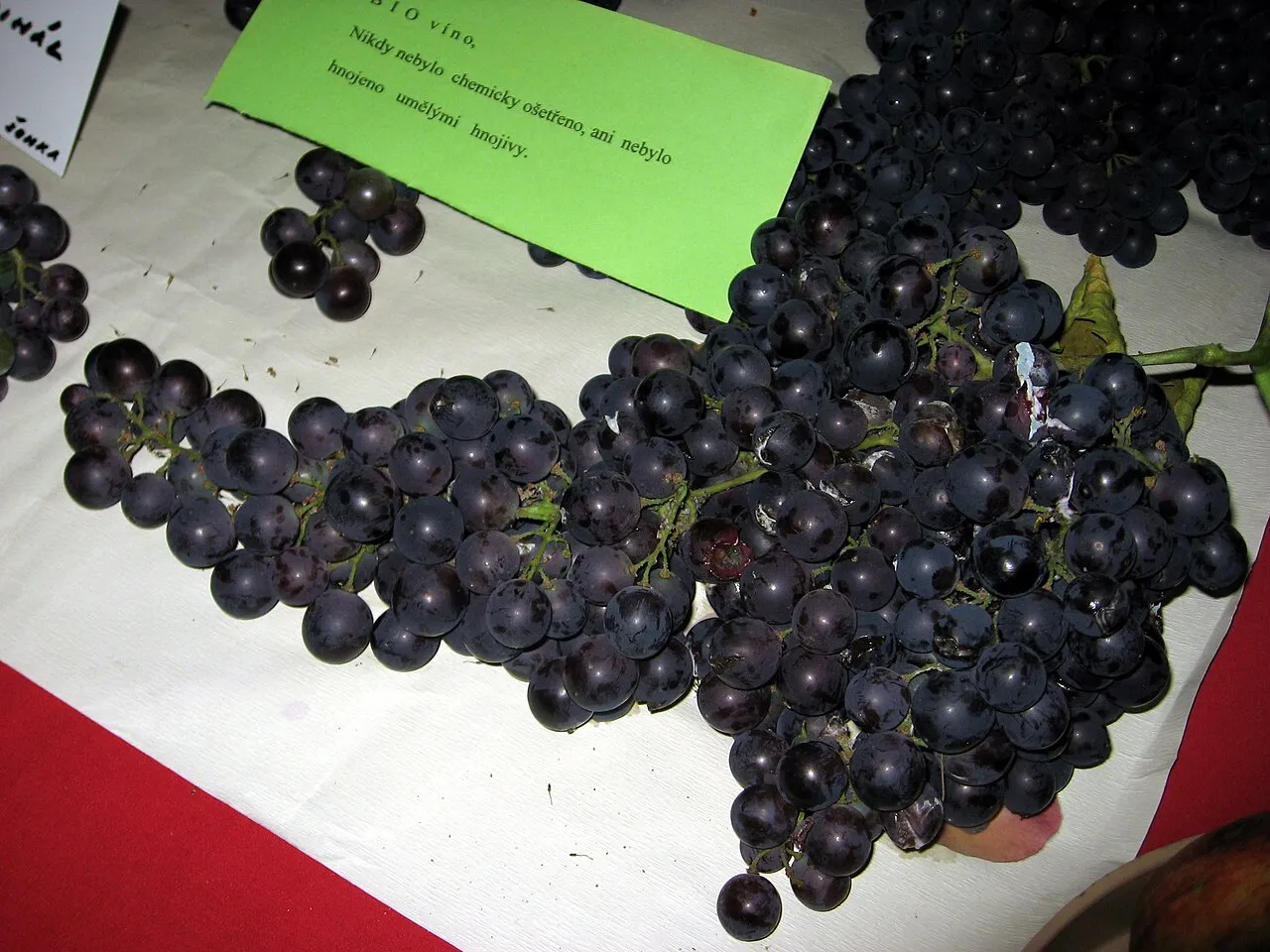
Profile: Cardinal
| Berry colour | Pink grape (Rs) |
|---|---|
| Species / status | Table grape |
| Origin | United States, California |
| Parentage | Alphonse lavallée × flame tokay according to tradition, königin der weingärten according to more recent data (bred by Elmer Snyder, 1939) |
| Synonyms | Red Cardinal, Kardinal, Apostoliatiko, Karaburnu Rannii |
| Grown in | France, Italy, Spain, Portugal, Bulgaria, North Macedonia, Croatia, Romania, United States, Thailand, Vietnam, Philippines |
| Typical aromas | fresh grape, slightly musky note |
| Wine style | Crisp table grape with large red berries; made into wine locally in South-East Asia. |
| Food pairings | cheese board, fruit salads, afternoon snack |
| Identifiers | VIVC no. 2091, Wikidata Q858435 |
Origin: a Californian breeding of 1939
Cardinal is a table grape bred in California by the breeder Elmer Snyder and released from 1939. It arrived in France in the 1940s, where it established itself as a red-berried table grape.
Its name evokes the colour of its berries, a purplish red that sets it apart from white or black table grapes.
A revised parentage
| Parent | Status | Nature |
|---|---|---|
| Alphonse lavallée (ribier) | Accepted parent | Large black table grape |
| Flame tokay | Parent long cited | Table grape |
| Königin der weingärten | Parent indicated by more recent data | Table grape |
As with many old varieties, the parentage declared at breeding has been re-examined. The international catalogue of grape varieties (VIVC) now records a cross of königin der weingärten × alphonse lavallée, whereas many French sources still cite flame tokay. The guide on DNA parentage of grapes explains how these corrections are established.
Cardinal has itself served as a parent: it is the main progenitor of blanc du bois, a hybrid wine grape designed for the subtropical climates of the southern United States.
In the vineyard
Cardinal buds late, nearly two weeks after chasselas. The vine is very vigorous, hence short pruning is recommended, and it can produce more than 3 kg per vine. It trains well on wires or as an espalier against a wall. It needs protection against downy and powdery mildew.
The grape
Cardinal’s bunches are large, conical and fairly loose. The berries, round and fairly large, have a medium-thick skin and firm flesh, with a slightly musky taste. It is sold in supermarkets as well as through direct sales at roadside stalls in the South of France.
To understand what distinguishes a table grape from a wine grape (berry size, firmness, seed content, sugar and acidity), see the guide table grape or wine grape.
Where it is grown
Cardinal is grown and eaten fresh in many countries: the United States, France, Italy, Spain, Portugal, Bulgaria, North Macedonia, Croatia and Romania. It was introduced to the Philippines in the 1970s, mainly in the Ilocos region.
In Thailand and Vietnam, it is widely used to make wine, an uncommon use for a table grape.
Cardinal and other table grapes
Cardinal completes the range of table grapes on French market stalls, alongside the black, musky muscat of Hamburg, the white, late dattier de Beyrouth and the seedless sultanine. The profiles of these varieties are gathered on the table grapes page.
Further reading
Frequently asked questions
Is cardinal a red or black grape?
Its berries are a purplish red at ripeness, lighter than those of black grapes such as muscat of Hamburg. It is classed here under the code Rs (pink-red). It is often presented as the main red table grape grown in France.
Who are the parents of cardinal?
One of the parents is alphonse lavallée (also called ribier), a large black table grape. The other was long presented as flame tokay; more recent work cited by the international catalogue VIVC points instead to königin der weingärten. Cardinal was bred in California in 1939.
Where can cardinal grapes be bought?
In France, it is sold fresh in supermarkets as well as through direct sales, notably at roadside stalls. It is recognised by its large, round, purplish-red berries and its firm flesh with a slightly musky taste.
Can wine be made from cardinal?
Yes, although this is not its purpose in Europe. In Thailand and Vietnam, it is widely used to produce wine. It is also the main parent of blanc du bois, a wine grape created for the subtropical climates of the United States.
Related grapes
- Muscat de Hambourg (black, United Kingdom, England (Wrest Park, Bedfordshire))
- Dattier de Beyrouth (white, Near East (brought to France from the Beirut area))
- Sultanine (white, Asia Minor or Afghanistan (origin debated))
- Chasselas (white, Switzerland, west of the country (Lake Geneva region))
- Muscat d'Alexandrie (white, Mediterranean basin (precise origin undetermined))