Concord: the labrusca grape that became an American emblem
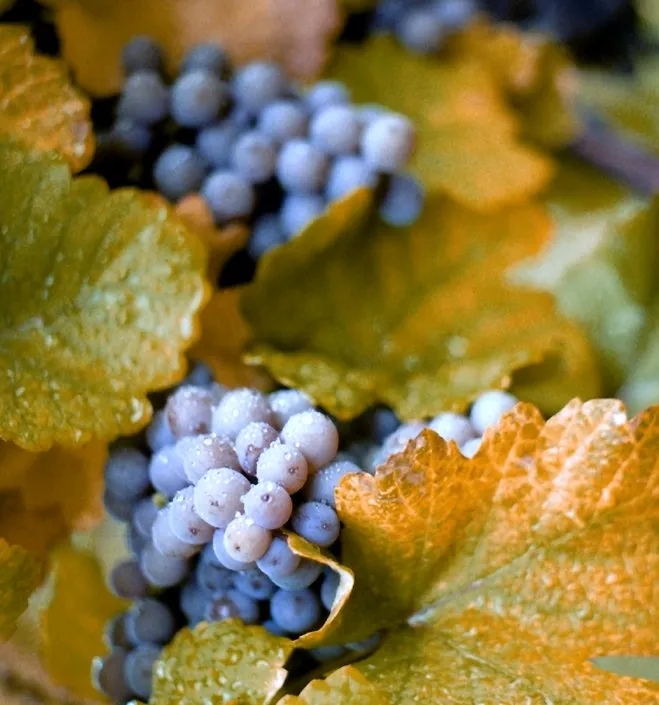
Profile: Concord
| Berry colour | Black grape (N) |
|---|---|
| Species / status | Direct producer hybrid |
| Origin | United States, Massachusetts (Concord) |
| Parentage | Seedling of the Vitis labrusca type; catawba is a confirmed parent (genetic analysis) |
| Grown in | United States |
| Typical aromas | foxy, confectionery "grape" flavour |
| Wine style | Mainly grape juice and jelly; as wine, traditionally sweet reds, notably for kosher and sacramental wine. |
| Food pairings | peanut butter and jelly sandwich (as jelly), desserts, fresh cheeses |
| Identifiers | VIVC no. 2801, Wikidata Q393047 |
Origin: a seedling selected at Concord
Concord is a black grape born in the town of Concord, in Massachusetts. The horticulturist Ephraim Wales Bull selected it in 1849, after evaluating more than 22,000 seedlings. The grape won first prize at the Boston Horticultural Society exhibition in 1853, before being marketed in 1854.
It is classed among grapes of the Vitis labrusca type, the wild vine of the American north-east nicknamed the fox grape. Genetic analyses have nevertheless shown that it contains about one third Vitis vinifera and that catawba, another American grape, is one of its parents.
The grape of grape juice
The fate of concord was settled in 1869, when the dentist Thomas Bramwell Welch produced at home the first pasteurised grape juice, and therefore unfermented. His company, Welch’s, first based in Westfield (New York State), then in Grandview (Washington State), became the leading processor of concord.
| Use | Place of concord |
|---|---|
| Grape juice | Main use; Welch’s is the leading producer |
| Jellies and jams (jelly) | Major use, notably for the peanut butter and jelly sandwich |
| Confectionery, sodas | Inspires the typically American “grape” flavour |
| Wine | Traditionally sweet wines, notably kosher and sacramental |
| Table grape | Occasional, mainly in New England |
In 1923, it was the most widely grown grape of the North American continent, and it accounted for at least three quarters of the vines of the eastern United States.
An embraced foxy taste
Concord is very aromatic. Its so-called “foxy” taste, typical of labrusca vines, is the one found in many “grape” sweets and drinks in the United States. It is a slip-skin grape: the skin, often covered in bloom, comes away easily from the pulp, which contains a large seed.
This same foxy character gave American hybrids their poor reputation in Europe, and weighed in the French ban of 1934-1935 on six American grapes. Concord is not one of them, but it belongs to the same taste family as isabelle or clinton. See the guide on the hybrids banned in 1934.
In the vineyard
Concord established itself in the vineyards of the American north-east (Massachusetts, New York State, Great Lakes), with a continental climate, well before vinifera were successfully grown there. It is reputed to be particularly susceptible to black spot. Its massive spread is due above all to its suitability for processing into juice and jelly, more than to its winemaking qualities.
Where it is grown
The main growing areas are:
- the Finger Lakes region and the shore of Lake Erie (New York State, Pennsylvania, Ohio);
- the surroundings of Lake Ontario;
- south-west Michigan;
- the Yakima Valley, in Washington State, where its cultivation began in 1904. This state is now the leading producer of concord.
In 2011, American production reached about 417,800 tonnes.
Concord and wine
As wine, concord gives traditionally sweet reds, long associated with kosher wine and communion wine in the United States. The foxy taste remains very present. In Europe, it is mainly a garden grape. See the pages on direct-producer hybrids and table grapes, as well as the guide on table grape or wine grape.
Frequently asked questions
Why does American grape juice have such a distinctive taste?
Because it is generally made from concord, a Vitis labrusca-type grape with a very marked "foxy" taste. This same taste inspired the "grape" flavour of American sweets and sodas, very different from the taste of a European table grape.
Is concord banned in France like noah or clinton?
It is not one of the six grapes expressly banned in 1934-1935 (noah, clinton, isabelle, jacquez, othello, herbemont). It is not one of the grapes of the French vineyard; it is mostly met as a garden grape.
Who created concord?
Ephraim Wales Bull, a horticulturist of Concord (Massachusetts), selected it in 1849 after evaluating more than 22,000 seedlings. The grape won a first prize at the Boston Horticultural Society exhibition in 1853 and was put on the market in 1854.
What is the link between concord and Welch's?
In 1869, the dentist Thomas Bramwell Welch produced the first unfermented concord juice at home, by pasteurising it. The Welch's company became the leading producer of concord juice, first in New York State and then in Washington State.