Tannat: the most tannic grape of South-West France and its Uruguayan double
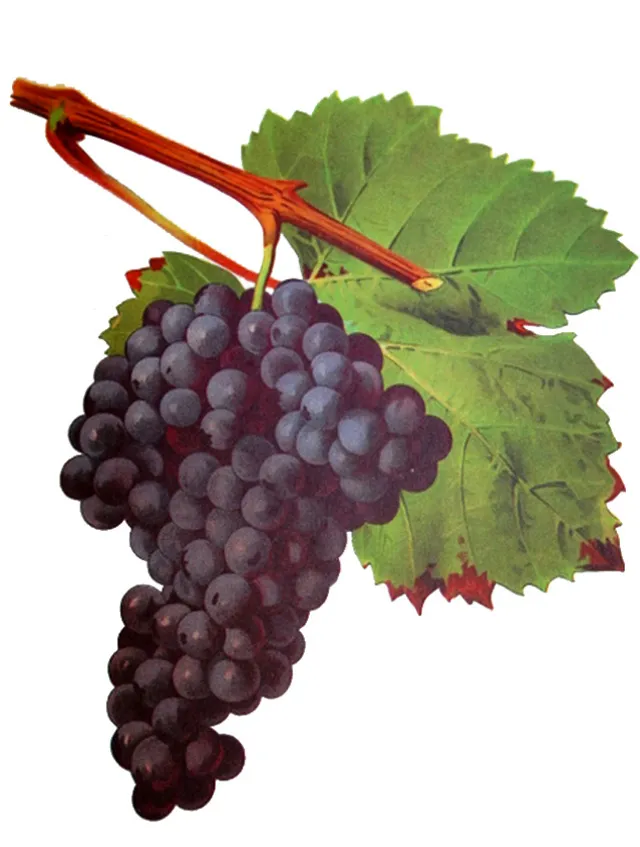
Profile: Tannat
| Berry colour | Black grape (N) |
|---|---|
| Species / status | Vitis vinifera |
| Origin | France, South-West (Pyrenean foothills) |
| Synonyms | Harriague (Uruguay), Moustrou |
| French regions | South-West France |
| Grown in | France, Uruguay, Argentina, Brazil, United States, Australia |
| Typical aromas | blackberry, blackcurrant, plum, liquorice, spices, cocoa and roasted notes (ageing) |
| Wine style | Very deeply coloured and very tannic reds, austere when young, which need ageing in cellar or bottle. |
| Food pairings | duck confit and magret, garbure, cassoulet, Pyrenean sheep's cheeses |
| Identifiers | VIVC no. 12257, Wikidata Q928151 |
Origin: a grape of the Pyrenean foothills
Tannat is a grape from South-West France, historically grown in the Pyrenean foothills, around Madiran, in Béarn and in the Basque Country. Its name is often linked to the word “tannin”, because of its tannic richness, though this etymology has not been demonstrated.
Its genetic parentage has not been established in a published, consensual way. Its origin is therefore given simply as regional.
In the vineyard
Tannat is a vigorous, late-ripening grape. Its thick-skinned berries and numerous pips concentrate phenolic compounds (tannins and pigments). It resists grey rot fairly well thanks to this thick skin.
It likes the clay-limestone soils and well-exposed slopes of the Madiran area, where the often dry, mild autumn allows a long ripening period.
The wines
Tannat makes very deeply coloured, very tannic wines with sustained acidity, with aromas of blackberry, blackcurrant, plum and liquorice. When young, they can seem hard. With ageing and time, they soften and develop notes of spice, cocoa and leather.
It is often blended with cabernet franc, cabernet sauvignon or fer servadou, which are fruitier and less tannic.
The angle to know: Madiran, birthplace of micro-oxygenation
The tannic richness of tannat led Madiran growers to look for ways to soften it. In 1990, Madiran grower Patrick Ducournau developed micro-oxygenation: the addition of very small, controlled quantities of oxygen to the wine in tank.
This technique encourages the polymerisation of tannins and the stabilisation of colour. Born for tannat, it later spread to many vineyards around the world. It has also sparked debate, with its critics accusing it of standardising wines.
Tannat in Uruguay
The other distinctive feature of tannat is its success in Uruguay. It was introduced there in the 19th century by Basque settlers, including Pascual Harriague, who left his name to the grape: it is still sometimes called harriague there.
| Marker | South-West (France) | Uruguay |
|---|---|---|
| Status | Regional grape, the basis of Madiran | Emblematic national grape |
| Climate | Pyrenean foothills, oceanic with mountain influence | Humid oceanic, Atlantic influence |
| Frequent profile | Very tannic, long ageing | Often softer and fruitier |
| Local synonym | Moustrou (old) | Harriague |
Where it is grown
In France, tannat is found mainly in South-West France:
- Madiran: main, majority grape;
- Saint-Mont and Tursan: in blends;
- Irouléguy (Basque Country): with the cabernets;
- Béarn: with manseng noir, fer servadou and courbu noir;
- Cahors: as a possible complement to malbec.
The whites of the same area (Pacherenc du Vic-Bilh, Jurançon) rely on other grapes such as petit manseng. For the area’s old varieties, see the forgotten grapes of South-West France.
Outside France: Uruguay, Argentina, Brazil, and a few plantings in the United States and Australia.
Further reading
Frequently asked questions
Why is tannat so tannic?
Its berries have thick skins and abundant pips, rich in phenolic compounds. Wines made from tannat are therefore very deeply coloured and very tannic, so much so that its name is often linked to the word tannin. Growers use blending, ageing or micro-oxygenation to soften these tannins.
What is micro-oxygenation?
It is a technique that involves injecting very small, controlled quantities of oxygen into the wine in tank. It was developed in 1990 by Patrick Ducournau, a grower in Madiran, to soften the tannins of tannat. It is now used in many countries.
Why is tannat grown in Uruguay?
It was introduced there in the 19th century by Basque immigrants, notably Pascual Harriague, whose name has remained a synonym of the grape. Tannat adapted well and has become the country's emblematic grape, where it makes wines that are often softer than in Madiran.
Is Madiran 100% tannat?
Not necessarily. Tannat is the main, majority grape of the Madiran AOC, but it may be blended with cabernet franc, cabernet sauvignon and fer servadou. Some cuvées are nevertheless made from tannat alone.
Related grapes
- Manseng noir (black, France, Pyrénées-Atlantiques (Jurançon, Béarn))
- Fer servadou (black, France, South-West)
- Malbec (Côt) (black, France, Quercy (Lot))
- Cabernet franc (black, France, South-West (Libournais probable))
- Petit manseng (white, France, Pyrenean foothills (Béarn, Basque Country))
- Négrette (black, France, South-West (between Toulouse and Albi))