Solaris: the resistant grape of northern vineyards
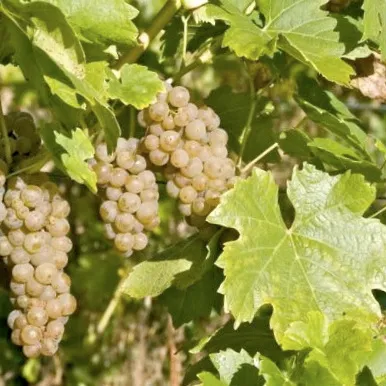
Profile: Solaris
| Berry colour | White grape (B) |
|---|---|
| Species / status | Disease-resistant variety (PIWI) |
| Origin | Germany, Baden (Freiburg viticulture institute) |
| Parentage | Merzling × Gm 6493 (bred by Norbert Becker in 1975) |
| Synonyms | FR 240-75, Freiburg 240-75 |
| Grown in | Germany, Belgium, Netherlands, United Kingdom, Denmark, Sweden, Norway, France |
| Typical aromas | gooseberry, citrus, elderflower, exotic fruit when very ripe |
| Wine style | Lively, aromatic dry whites in cool climates, sweet or very sweet wines when picked very ripe. |
| Food pairings | fish, prawns, poultry, fruit desserts (sweet versions) |
| Identifiers | VIVC no. 20340, Wikidata Q1082330 |
Origin: bred in Freiburg
Solaris was bred in 1975 by the agronomist Norbert Becker, at the Staatliches Weinbauinstitut in Freiburg im Breisgau, in Baden-Württemberg. It was long known by its breeding number, FR 240-75.
It is one of the emblematic grapes of the PIWI family (fungus-resistant varieties), like souvignier gris, also born in Freiburg under the same breeder.
A complex pedigree
Solaris is the result of a cross between two parents that are themselves crosses:
| Parent | Composition | Main contribution |
|---|---|---|
| Merzling (mother) | Seyval blanc × (riesling × pinot gris) | Resistance inherited from seyval blanc, a French hybrid |
| Gm 6493 (father) | Zarya severa × muscat ottonel | Cold resistance and earliness (zarya severa, a line linked to Vitis amurensis), muscat aromas |
Gm 6493 was created in Czechoslovakia in 1964 by Vilém Kraus, then developed at Geisenheim. Older sources wrongly attributed other parents to it. This mix of ancestries (Vitis vinifera, American species and Vitis amurensis) explains both the hardiness of solaris and its aromatic note. See the guide on DNA parentage of grape varieties.
In the vineyard
Solaris stands out first for its earliness: it ripens very early, before chasselas. It quickly accumulates high sugar levels, which makes it suitable for sweet wines, while keeping marked acidity. It is described as robust and cold-resistant, with good tolerance of downy and powdery mildew.
This earliness is a decisive asset in cool climates, where the growing season is too short for most classic grapes.
The wines
Solaris makes fruity, aromatic wines, often described with notes of gooseberry, citrus and elderflower, carried by lively acidity.
- In cool climates, the more moderate sugar content allows clean, lively dry whites.
- When picked very ripe, it lends itself to sweet and very sweet wines.
- It is also used in blends with other resistant varieties.
Where it is grown
In Germany, its area has remained modest (around fifty hectares in the late 2000s, mainly in Baden). Its real area of expansion is northern Europe: Belgium, the Netherlands, England, Denmark, Sweden and Norway, where it is one of the core varieties of young vineyards. It is also permitted in Belgium.
In France, solaris was added to the list of classified wine grape varieties by the order of 19 April 2017, initially on a temporary basis following the opinion given in 2016. The text indicates that it is a variety born of a cross between Vitis vinifera and another Vitis species. For the conditions of use, see the guide on the regulation of disease-resistant grapes and the disease-resistant grapes page.
Further reading
Frequently asked questions
Why is solaris so widely planted in northern Europe?
Because it combines very early ripening, good resistance to fungal diseases and an ability to accumulate a lot of sugar. These qualities allow it to ripen where classic grapes struggle, hence its success in Belgium, the Netherlands, England and Scandinavia.
Is solaris a hybrid?
Yes, in the genetic sense: its pedigree includes non-vinifera ancestors, passed on notably through Merzling (born of seyval blanc) and Gm 6493 (born of zarya severa, itself linked to Vitis amurensis). European regulations nevertheless treat it as a classifiable wine grape variety, and the French list indicates that it comes from a cross between Vitis vinifera and another species.
Can solaris be planted in France?
Yes. Solaris was added to the French list of classified wine grape varieties by the order of 19 April 2017. Its use in an AOC, however, depends on each appellation's specification.
What does solaris wine taste like?
As a dry wine, it makes aromatic, lively whites, often described with notes of gooseberry, citrus and elderflower. Harvested very ripe, it lends itself to sweet and very sweet wines.
Related grapes
- Souvignier gris (pink, Germany, Baden (Freiburg viticulture institute))
- Regent (black, Germany, Pfalz (Geilweilerhof institute, Siebeldingen))
- Floréal (white, France, INRAE (Colmar and Montpellier))
- Muscat à petits grains (white, Mediterranean basin (precise origin unknown))
- Riesling (white, Germany, Rhine Valley)
- Müller-Thurgau (white, Germany, Geisenheim (bred by Hermann Müller in 1882))