Regent: the disease-resistant red from Geilweilerhof
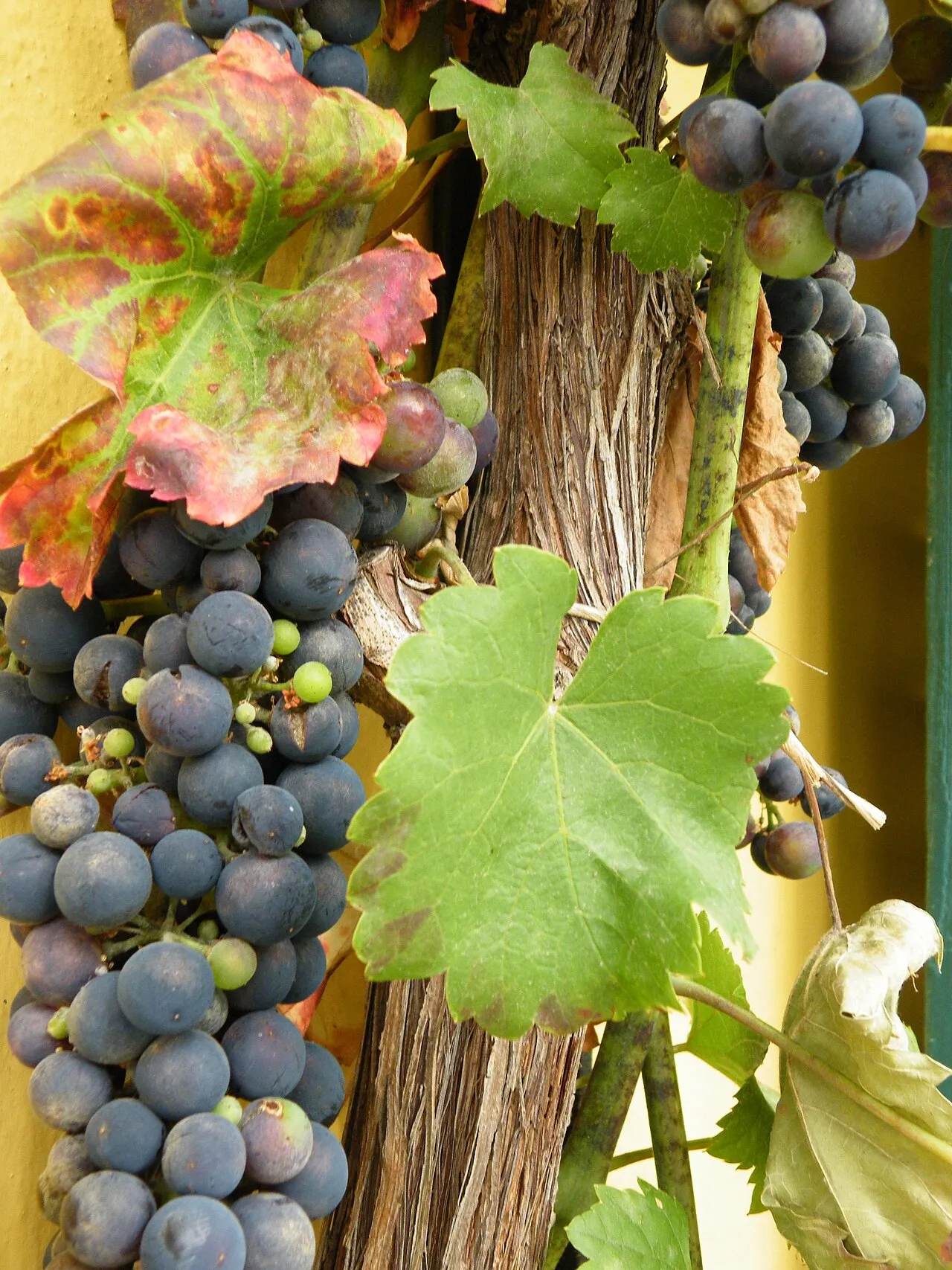
Profile: Regent
| Berry colour | Black grape (N) |
|---|---|
| Species / status | Disease-resistant variety (PIWI) |
| Origin | Germany, Pfalz (Geilweilerhof institute, Siebeldingen) |
| Parentage | Diana × Chambourcin (bred by Gerhardt Alleweldt in 1967) |
| Synonyms | Geilweilerhof 67-198-3, Gf. 67-198-3 |
| Grown in | Germany, Belgium, United Kingdom, United States |
| Typical aromas | cherry, blackcurrant, black fruit |
| Wine style | Intensely coloured reds, with moderate acidity and potentially marked tannins, sometimes aged in barrel. |
| Food pairings | grilled meats, game, dishes in sauce, pressed cheeses |
| Identifiers | VIVC no. 4572, Wikidata Q1361972 |
Origin: bred at Geilweilerhof
Regent was bred in 1967 by Professor Gerhardt Alleweldt (1927-2005) at the grapevine breeding institute of Geilweilerhof, at Siebeldingen in the Pfalz. This institute is now part of the Julius Kühn-Institut (JKI).
The grape’s path was a long one: experimental plantings from 1985, plant variety protection in 1994, then authorisation for cultivation in a first German region in 1996. It is named after the Regent, a famous diamond of the French Crown Jewels, and was long designated by its selection number, Gf. 67-198-3.
Parentage: vinifera and French hybrid
| Parent | Nature | Composition |
|---|---|---|
| Diana | Vitis vinifera | Sylvaner × müller-thurgau |
| Chambourcin | French interspecific hybrid | Parentage revised in 2021: Joannès Seyve 11369 × Plantet |
Chambourcin brings the resistance factors derived from American vines. A study published in 2021 in the journal Vitis confirmed that regent carries the Rpv3.1 locus against downy mildew (most probably inherited from Vitis rupestris) and the Ren3 and Ren9 loci against powdery mildew.
A parent of the ResDur grapes
Regent holds a special place in the history of French resistant grapes. INRAE and the JKI crossed it with the line Mtp 3082-1-42, selected by Alain Bouquet in Montpellier and carrying the Rpv1 and Run1 genes from Muscadinia rotundifolia. This cross gave two black varieties entered in the French catalogue in January 2018:
The INRAE sheets point out that regent carries resistance factors from American vines, mainly V. rupestris and V. aestivalis. By combining them with the Muscadinia genes, the ResDur programme obtained stacked resistances, harder for fungi to overcome.
In the vineyard
Regent is a mid- to late-ripening grape, productive, with medium-sized bunches and berries and an upright habit, suited to vertical trellising. It shows broad resistance to the main fungal diseases, in particular downy mildew. Its flowers, on the other hand, are very susceptible to botrytis in wet weather, which can compromise fruit set in cool, rainy climates.
The wines
Regent makes deeply coloured reds, with moderate acidity and potentially high tannins, with aromas of cherry or blackcurrant. It easily reaches high alcohol levels. In Germany, some growers age it in barrel.
Where it is grown
Germany remains its main country of cultivation, notably in Rheinhessen and the Pfalz: there were 1,754 hectares there in 2019, a declining figure. It is also grown in the United Kingdom and the United States, and authorised in Belgium in several appellations (Côtes de Sambre et Meuse, Hageland, Haspengouw, Heuvelland).
In France, it is not among the resistant varieties added to the list of classified varieties by the decree of 19 April 2017; it is known there mainly as a parent. For the regulatory framework of resistant grapes, see the guide on the regulation of resistant grapes and the page resistant grapes.
Further reading
Frequently asked questions
What are the parents of regent?
Regent comes from a cross between Diana, a vinifera variety derived from sylvaner and müller-thurgau, and chambourcin, a French interspecific hybrid. A study published in 2021 in the journal Vitis clarified the pedigree of chambourcin, which had long been poorly documented.
Which resistance genes does regent carry?
According to the pedigree study published in 2021, it carries the Rpv3.1 locus against downy mildew, most probably inherited from Vitis rupestris, as well as the Ren3 and Ren9 loci against powdery mildew. INRAE combined these factors with the Rpv1 and Run1 genes to create artaban and vidoc.
Is regent a good wine grape?
In Germany, it was recognised in 1996 as suitable for producing quality wines (Qualitätswein), on an equal footing with traditional grapes. It makes deep, coloured reds, with notes of cherry or blackcurrant, sometimes aged in barrel.
Why is it called Regent?
The grape is named after the Regent, a famous diamond of the French Crown Jewels. Before receiving this name, it was designated by its selection number, Geilweilerhof 67-198-3.
Related grapes
- Artaban (black, France, INRAE (Colmar and Montpellier), with the JKI (Germany))
- Vidoc (black, France, INRAE (Colmar and Montpellier), with the JKI (Germany))
- Solaris (white, Germany, Baden (Freiburg viticulture institute))
- Souvignier gris (pink, Germany, Baden (Freiburg viticulture institute))
- Sylvaner (white, Central Europe, probably Austria)
- Müller-Thurgau (white, Germany, Geisenheim (bred by Hermann Müller in 1882))