Portugais bleu: blauer Portugieser, from Austria to the Tarn
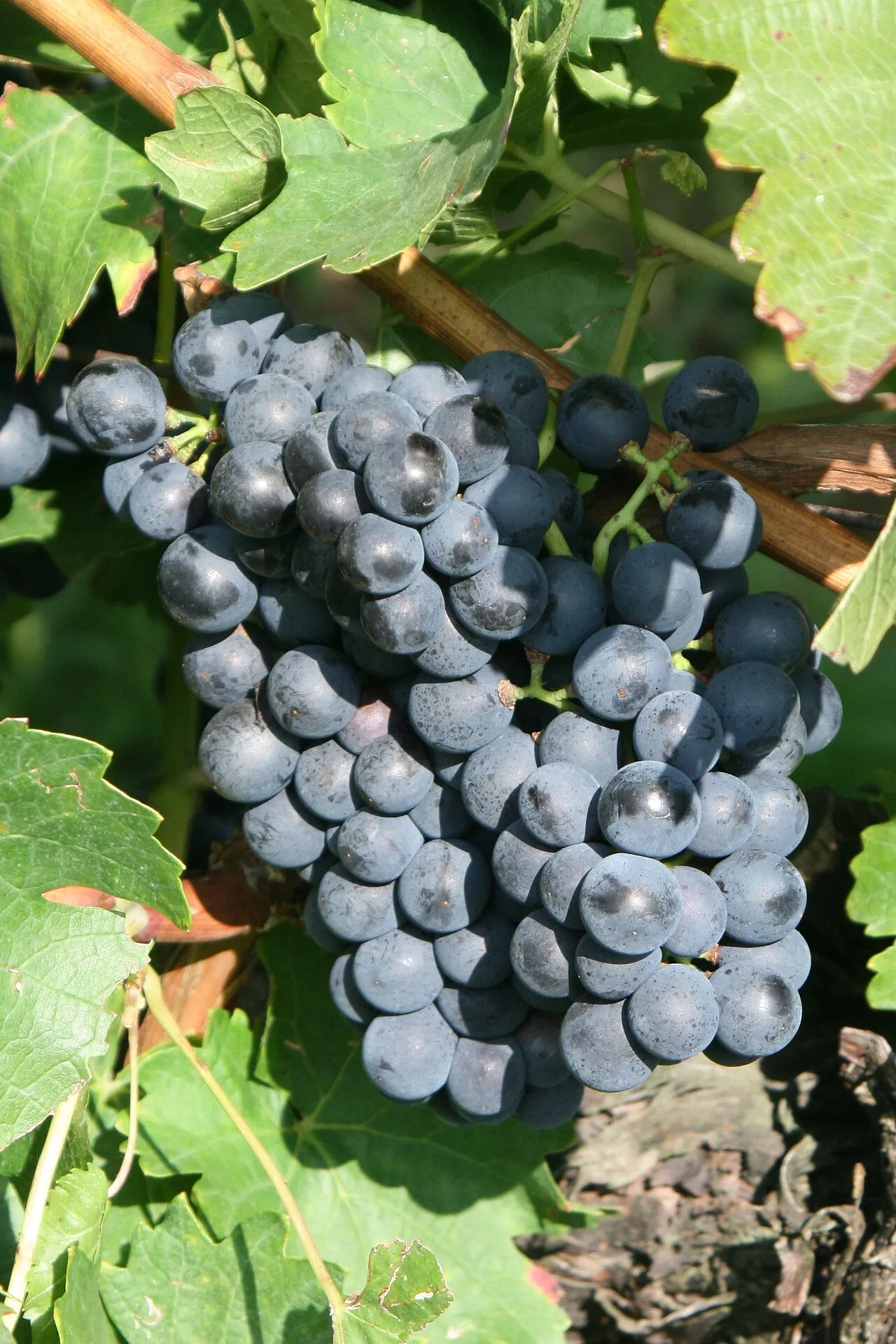
Profile: Portugais bleu
| Berry colour | Black grape (N) |
|---|---|
| Species / status | Vitis vinifera |
| Origin | Central Europe, probably Lower Styria (present-day Slovenia) |
| Parentage | Sylvaner × Blaue Zimmettraube (DNA analysis) |
| Synonyms | Blauer Portugieser, Portugieser, Vöslauer, Kékoportó (old Hungarian name), Modrý Portugal (Czechia) |
| French regions | South-West France |
| Grown in | Germany, Austria, Hungary, Czechia, Slovakia, France |
| Typical aromas | fresh red fruit, strawberry, raspberry, cherry, light floral notes |
| Wine style | Light reds, low in tannin and acidity, and fresh rosés, for drinking young. |
| Food pairings | charcuterie, tartes flambées, poultry, mixed salads, summer cooking |
| Identifiers | VIVC no. 9620, Wikidata Q646799 |
A misleading name
Portugais bleu is one of the most telling examples of a misleading name in the world of wine. Despite its name, this black grape is not Portuguese: it comes from Central Europe and is practically absent from Portugal.
Its German name, blauer Portugieser, was translated into French as “portugais bleu” (“blue Portuguese”). It reflects a legend more than a real origin. On this type of confusion, see our guide on synonyms and homonyms.
The little-known angle: the legend of Baron von Fries
According to an often-repeated story, an Austrian nobleman, Johann von Fries, is said to have brought the grape back from Porto in 1772 to plant it on his estates at Bad Vöslau, south of Vienna. The grape was then supposedly spread in Germany, in the 19th century, by the pharmacist and grower Johann Philipp Bronner.
This story is now regarded as a legend. Old ampelographic sources rather place the grape’s origin in Lower Styria, a region now in Slovenia. Above all, DNA analysis has come down in favour of a Central European origin.
This legend explains its old names: Vöslauer in Austria, and Kékoportó (“blue Porto”) in Hungary, where the name has since been replaced by Portugieser.
Parentage: sylvaner and blaue Zimmettraube
DNA has identified the parents of portugais bleu: sylvaner (grüner Silvaner) and blaue Zimmettraube, an old Central European variety.
| Grape | Link with portugais bleu |
|---|---|
| Sylvaner | Parent |
| Blaue Zimmettraube | Parent |
| Blaufränkisch | Half-sibling (common parent: blaue Zimmettraube) |
| Blauburger | Offspring (portugais bleu × blaufränkisch) |
| Dornfelder | Indirect descendant, from 20th-century German crosses |
See our guide on DNA parentage of grape varieties.
In the vineyard
Portugais bleu is an early-ripening grape, ripening a few days before chasselas, and very fertile. This earliness does, however, make it susceptible to spring frosts, since it buds early. It is also susceptible to powdery mildew, downy mildew and grey rot.
Its naturally low acidity can make the wines a little flabby in hot years. In cool climates, it sometimes needs chaptalisation.
The wines: light, coloured, for drinking young
Portugais bleu makes light reds, with good colour but little astringency, and fresh red fruit. They are everyday wines, for drinking young, possibly served cool. Its colour has also led to its use for deepening paler wines.
In Germany, it is also used to make rosés, notably Weissherbst, a single-variety rosé. In the Ahr, it is sometimes blended with spätburgunder (pinot noir).
Where it is grown
| Country | Regions | Note |
|---|---|---|
| Germany | Pfalz (Palatinate), Rheinhessen, Ahr | One of the important reds, declining |
| Austria | Lower Austria (Thermenregion), Styria | Traditional grape south of Vienna |
| Hungary | Villány, Eger, Szekszárd | Blended with kékfrankos, permitted in Eger Bikavér |
| Czechia, Slovakia | Moravia, Slovakia | Under the name modrý Portugal |
| France | Tarn (Gaillac) | Area in sharp decline |
In Hungary, it took over part of the place of kadarka in the 20th century.
Portugais bleu in France
In France, portugais bleu is concentrated in the Tarn, around Gaillac, in South-West France. Its area there was significant in the late 1970s, before falling sharply. It was used mainly to produce light red wines for everyday drinking, far from the emblematic grapes of red Gaillac such as duras and fer servadou.
Portugais bleu and blaufränkisch: two very different half-siblings
| Point | Portugais bleu | Blaufränkisch |
|---|---|---|
| Common parent | Blaue Zimmettraube | Blaue Zimmettraube |
| Other parent | Sylvaner | Gouais blanc |
| Ripening | Early | Late |
| Acidity | Low | High |
| Style | Light reds and rosés, for drinking young | Coloured, spicy reds, suitable for ageing |
The two grapes come together in blauburger, their cross, bred in Austria in the 20th century.
Genealogy of Portugais bleu
Identified parents (Wikidata): Sylvaner and Blaue Zimmettraube.
Frequently asked questions
Does portugais bleu come from Portugal?
Very probably not. According to tradition, an Austrian nobleman, Johann von Fries, brought it back from Porto in 1772 to his estates at Bad Vöslau, near Vienna. This story is now regarded as a legend: ampelographic sources rather place its origin in Lower Styria, in present-day Slovenia, and DNA links it to Central European grapes.
What are the parents of portugais bleu?
DNA analysis identified it as a natural cross between sylvaner (grüner Silvaner) and blaue Zimmettraube. The latter is also a parent of blaufränkisch, so the two grapes are half-siblings.
Is portugais bleu found in France?
Yes, on small areas. It is found mainly in the Tarn, around Gaillac, but its area there has fallen sharply since the late 1970s. It was long used there to produce light red wines for everyday drinking.
What wine does portugais bleu make?
Light reds, fairly well coloured but low in tannin and acidity, with fresh red fruit, for drinking young. In Germany, it is also used to make rosés, notably Weissherbst, a single-variety rosé.
Related grapes
- Blaufränkisch (black, Central Europe, probably Lower Styria (present-day Slovenia))
- Sylvaner (white, Central Europe, probably Austria)
- Kadarka (black, Balkans or Pannonian basin (debated origin))
- Duras (black, France, Tarn (Gaillac))
- Gamay (black, France, Burgundy)